
ASTM B117 Salt Spray Testing Services
GPI Labs performs ASTM B117 salt spray testing for coated and uncoated metals, protective paint systems, plated finishes, conversion coatings, prepared test panels, production parts, and fabricated components. If you need data for product development, coating qualification, supplier comparisons, quality control, a technical submittal, or independent verification, we can build the test around your material and the requirement you need to meet.
Our materials-focused approach can extend beyond chamber exposure. GPI Labs can prepare substrates, apply coating systems, document film thickness, mask and scribe specimens, conduct the specified exposure, perform the post-test evaluations you require, photograph the results, and issue a laboratory report. You can also send us finished panels or production parts that are ready to test.
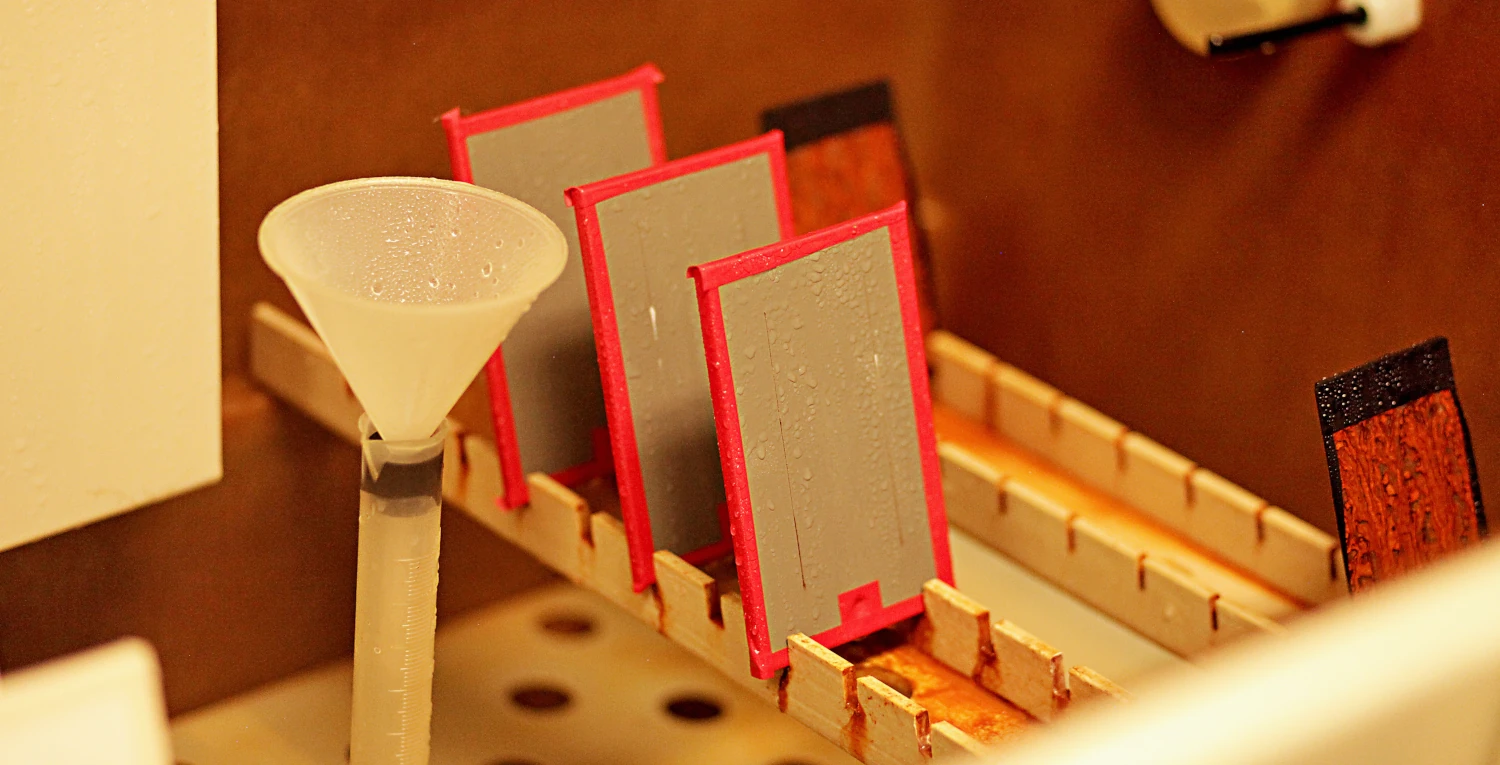
Coated test panels positioned inside the chamber for controlled salt spray corrosion exposure.
Send the applicable requirement, exposure duration, sample quantity and dimensions, preparation needs, evaluation criteria, and requested completion date. If the requirement is incomplete, GPI Labs can review it with you.
What Is ASTM B117 Testing?
ASTM B117 is the Standard Practice for Operating Salt Spray (Fog) Apparatus. It defines the apparatus, operating procedure, and conditions used to maintain a controlled neutral salt-fog environment for evaluating metals and material systems under a repeatable laboratory exposure.
Salt spray testing and salt fog testing describe the same B117 exposure. A sodium-chloride solution is atomized to create a fine fog inside the chamber. The atomizers are directed or baffled so the specimens receive fog fallout rather than a direct liquid spray.
B117 defines the exposure—not a universal pass or fail
ASTM B117 does not prescribe one exposure time, sample design, evaluation method, or acceptance limit for every material. Those details come from your product specification, drawing, or other governing requirement. GPI Labs reviews the requirement with you, explains what it does and does not define, and confirms the remaining decisions before testing begins.
How you can use B117 results
A defined B117 program can compare coating systems, pretreatments, plated finishes, suppliers, production lots, application variables, or material changes. It can also document whether your specimens meet a defined product or purchaser requirement. Because preparation and evaluation strongly affect the usefulness of the results, GPI Labs treats the exposure as one part of your complete materials-testing program.
Salt spray hours do not translate directly into years of outdoor performance. ASTM B117 explains that salt spray data, by itself, has rarely shown a dependable relationship to natural exposure. A defensible service-life comparison needs relevant field history or long-term atmospheric data for the particular material system.
Not sure B117 is the right exposure? Send us your specification or describe what you need to evaluate. We can review whether it calls for neutral salt fog, acidified salt spray, CASS, cyclic corrosion, humidity, condensation, immersion, weathering, or another materials-testing program.
Materials, Finishes, and ASTM B117 Applications
Whether you are developing a coating, qualifying a finish, checking a production process, comparing suppliers, or investigating a performance change, GPI Labs can use B117 exposure to give you a controlled comparison and documented results. We work with coating manufacturers, formulators, finishers, fabricators, product developers, OEMs, engineering groups, and material suppliers.
Common material systems
- Liquid-painted and powder-coated metals.
- Primers, topcoats, and multi-layer protective coating systems.
- Electroplated and mechanically plated finishes.
- Passivated and conversion-coated surfaces.
- Bare metals when the governing requirement specifies B117 exposure.
- Comparative pretreatment, application, cure, or formulation variables.
Common specimen formats
- Laboratory-prepared coating panels.
- Coated or plated panels you supply.
- Fasteners, brackets, stampings, and machined parts.
- Fabricated components and production hardware.
- Scribed and unscribed specimens.
- Control, reference, and comparative sample sets.
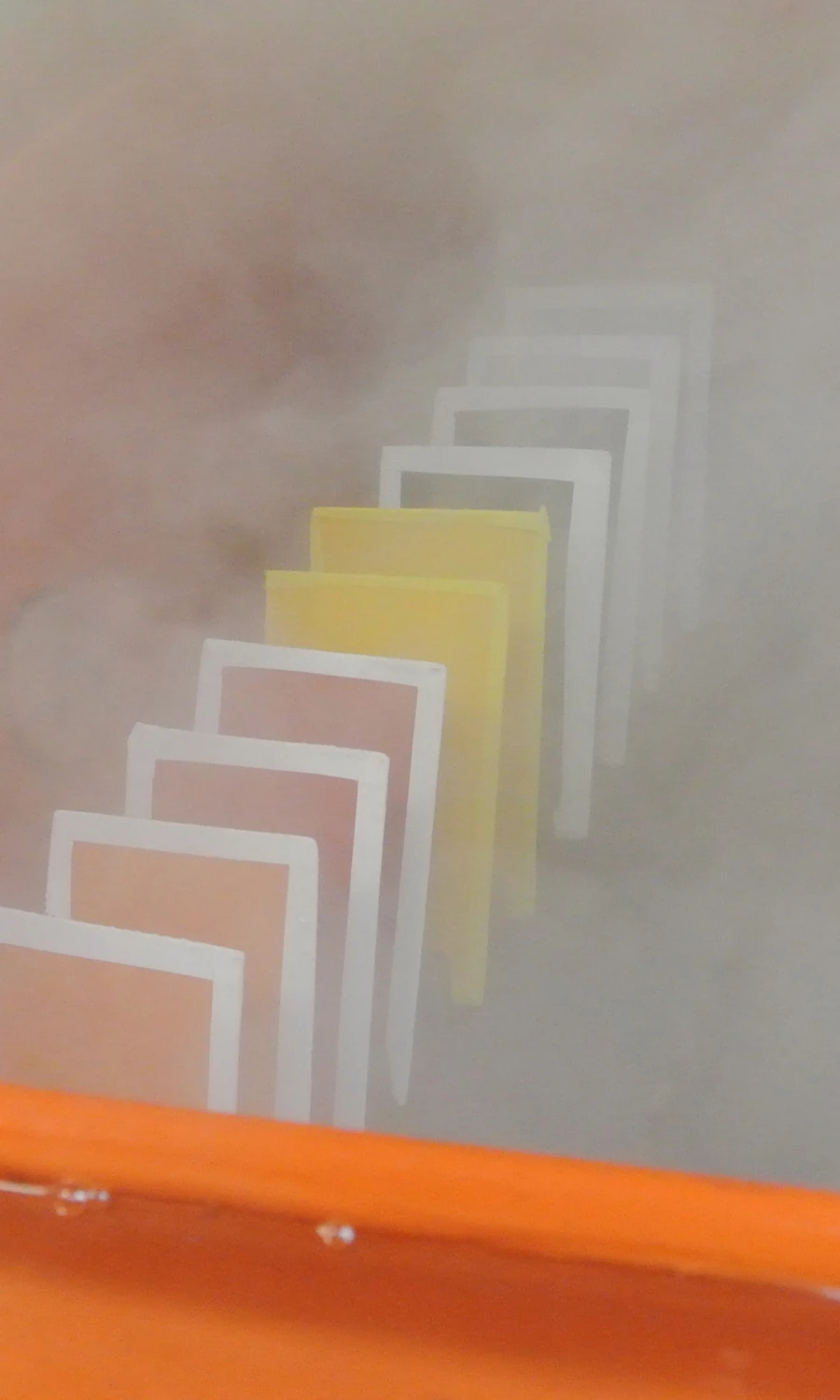
Coated test panels exposed to a controlled salt fog environment inside the corrosion chamber.
What B117 testing can help you determine
- Does a coating or plated finish meet the stated corrosion requirement?
- How do two formulations, suppliers, pretreatments, or application processes compare?
- Does a production lot perform consistently with an approved material or reference system?
- How does corrosion develop at an intentional coating defect or scribe?
- Did a material, process, cure schedule, or film-thickness change affect corrosion performance?
- Can independently documented results support your technical submittal or engineering review?
How GPI Labs Runs an ASTM B117 Test Program
Before testing begins, GPI Labs reviews your requirement with you and confirms sample preparation, chamber setup, exposure duration, inspection timing, evaluation methods, and reporting. If your specification or drawing does not answer every question, we explain the available options and help you establish a complete test plan.
1. We review the requirement and objective
We review the applicable document and revision, your sample identification and quantity, material and finish, areas of interest, preparation, orientation, exposure time, intermediate inspections, post-test handling, evaluation methods, acceptance criteria, photographs, and report format. We also confirm what you need the results to establish—qualification, comparison, development, quality control, or investigation—so the scope includes the details that matter to your decision.
2. We confirm sample preparation and loading
We confirm whether you will send test-ready specimens or want GPI Labs to perform substrate preparation, coating application, film-thickness measurement, masking, edge protection, or mechanical scribing. Racking, orientation, support points, sample spacing, runoff, inspection access, and any special fixtures are resolved before the specimens are placed in the chamber.
3. We establish and monitor the B117 environment
ASTM B117 establishes the following operating requirements for the continuous neutral salt-fog exposure. We monitor the conditions required by your program and record the data needed for your report.
Chamber and solution
- Exposure-zone temperature: 35 ± 2 °C.
- Salt solution: 5 ± 1 parts sodium chloride by mass in 95 parts water.
- Water quality: ASTM D1193 Type IV provisions, with the B117 exceptions for sodium and chloride limits.
- Collected-solution pH: 6.5 to 7.2 when measured at 23 ± 3 °C.
Fog and exposure
- Fog collection: 1.0 to 2.0 mL/h per 80 cm², averaged over at least 16 hours.
- Collected concentration: 5 ± 1% sodium chloride by mass.
- Fog delivery: Atomizers are directed or baffled to prevent direct spray on specimens.
- Exposure: Continuous unless the governing specification states otherwise.
4. We complete the specified inspections and closeout
At your specified inspection points and at the end of exposure, GPI Labs handles the specimens according to the governing requirement. ASTM B117 permits gentle washing or dipping in clean running water no warmer than 38 °C followed by immediate drying unless another procedure is specified. We then complete the photography, visual examination, cleaning, coating removal, scribe measurement, adhesion testing, or other assessment included in your scope.
ASTM B117 Sample Preparation and Coating Application
Sample preparation can determine whether your corrosion comparison is useful. You can send us finished specimens, or GPI Labs can prepare matched coating panels and document the substrate condition, application, film thickness, cure, masking, and scribing before exposure.
Send us test-ready specimens
Supply prepared panels or production parts with their identification, material and finish, applicable specification, exposure duration, areas of interest, and required inspections. Coating, plating, pretreatment, cure, film-thickness, and lot information are useful when they affect the comparison.
Laboratory preparation
GPI Labs can source or fabricate panels, prepare the substrate, apply single- or multi-coat systems, document dry-film thickness, condition the coating, protect edges and backs, and produce controlled scribes for the agreed program.
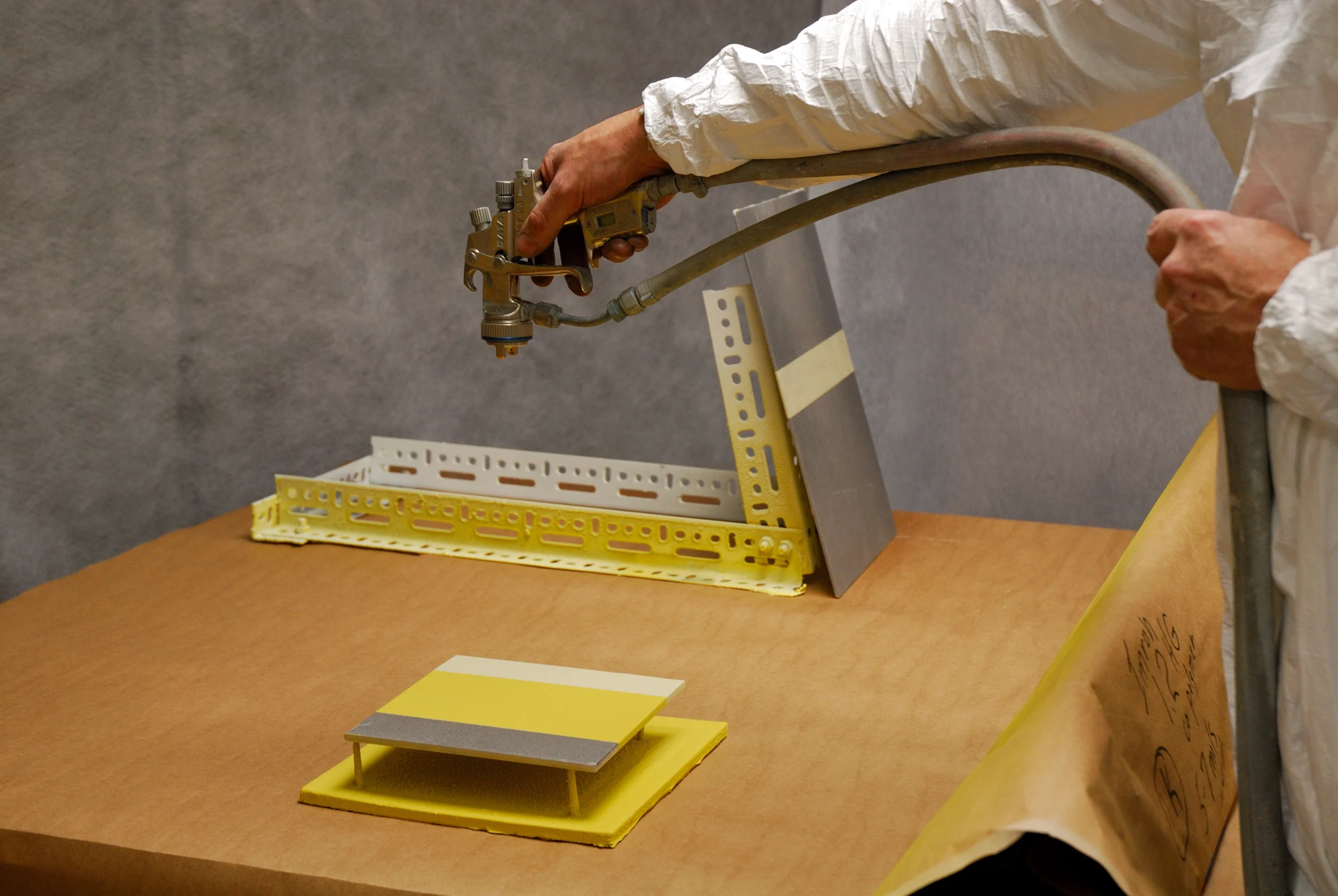
Precision spray application of protective coatings onto prepared test panels and custom geometries, ensuring controlled wet and dry-film thickness (DFT) for standardized environmental testing programs.
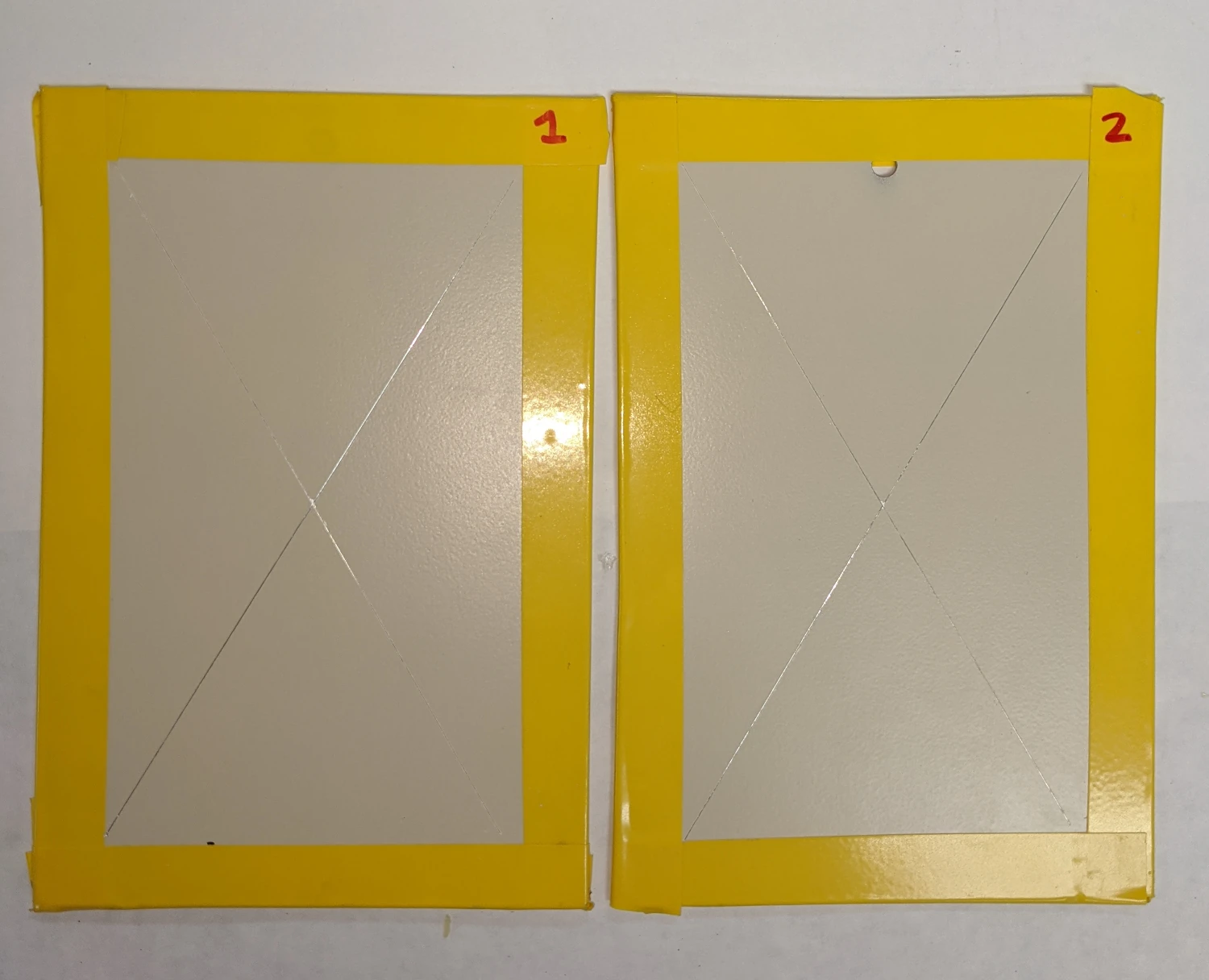
Coated steel test panels with protected edges and diagonal scribes prepared before controlled salt spray exposure.
Sample details that affect exposure and evaluation
- Cleaning: The cleaning method must remove relevant contamination without altering the surface or introducing new contamination.
- Coated specimens: Preparation and handling follow the applicable material specification or agreed plan.
- Scribes: Intentional defects are introduced only when the program calls for them, using the specified geometry and tool.
- Edges and support points: Cut edges, identification areas, backs, and rack-contact points are protected when required.
- Orientation: Under ASTM B117 Section 7.1.1, the surface being evaluated is held 15° to 30° from vertical unless another requirement specifies a different position. Keeping specimens oriented consistently is recommended to limit test-to-test variation.
- Loading: Specimens cannot touch one another or metallic or wicking materials, must receive unobstructed fog exposure, and cannot allow runoff from one specimen to fall onto another.
Send whatever project information is available
Your product specification, drawing note, sample list, duration, preparation instructions, inspection points, evaluation criteria, and reporting requirements all help us set up the work efficiently. You do not need to resolve every detail before contacting GPI Labs. Send us what you have, and we will explain what is still undefined and confirm those decisions with you before the test starts.
Post-Exposure Evaluation of Materials and Coatings
ASTM B117 requires careful examination after exposure but does not provide one rating system or acceptance limit for every product. We perform the evaluations required by your governing document or test plan and record the results for each specimen.
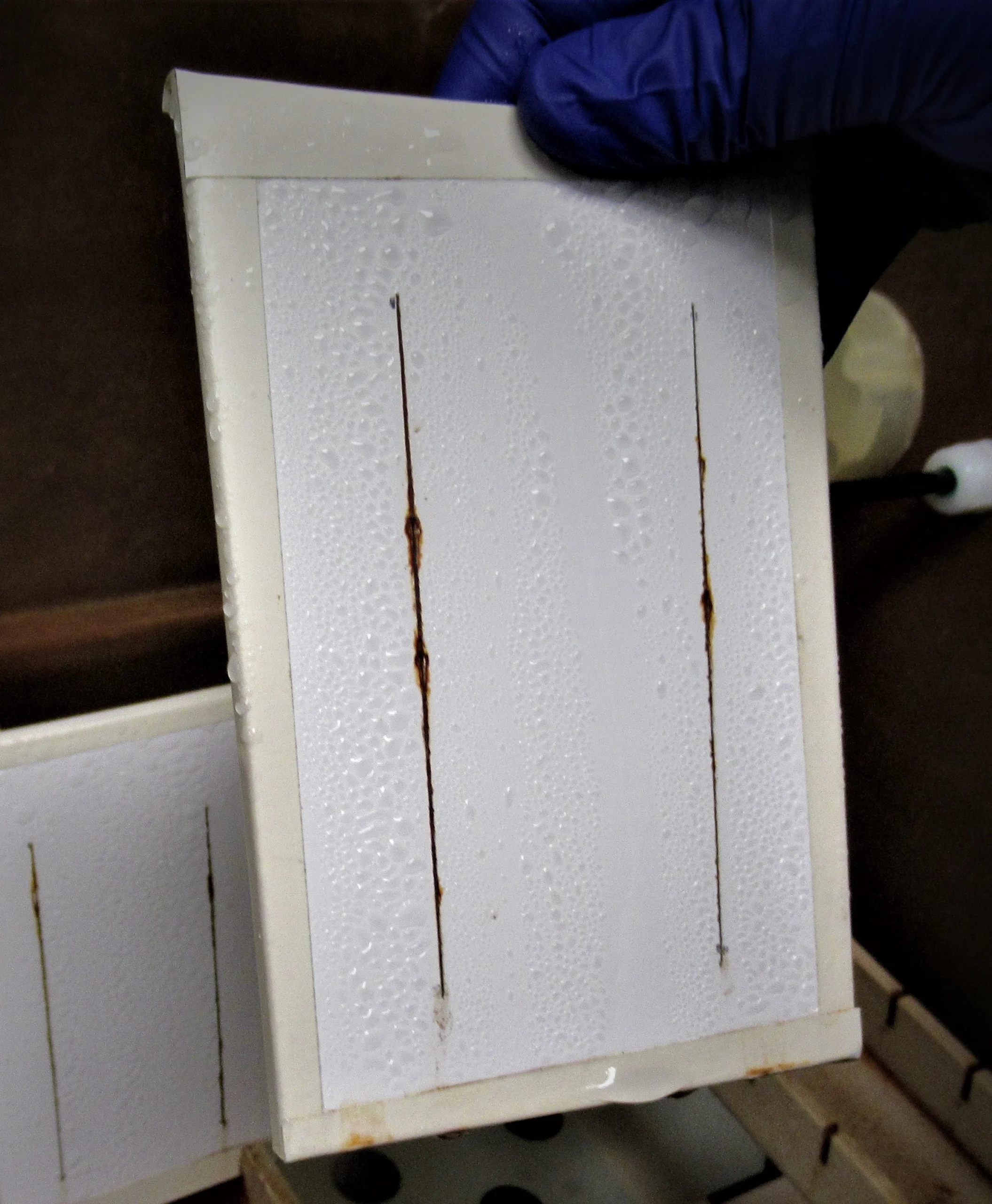
Post-exposure coating evaluation showing a scribed test panel with visible corrosion creepback and rust development, assessed in accordance with ASTM D1654 parameters.
Evaluation can include
- Initial, intermediate, and final visual observations.
- Photographic documentation at the agreed inspection points.
- Time to the first specified corrosion condition.
- Rusting, blistering, cracking, flaking, or other specified coating ratings.
- Corrosion, delamination, or coating loss around an intentional scribe, including ASTM D1654 evaluation when specified.
- Pull-off adhesion, cross-cut adhesion, or another specified coating assessment.
- Measurements, observations, and acceptance criteria you specify.
The evaluation method matters. A visual rating, scribe-creep measurement, adhesion result, or corrosion observation is meaningful only when the specimen preparation, cleaning, measurement procedure, timing, and acceptance criteria are defined. GPI Labs confirms those details with you before they are needed.
Materials expertise beyond the chamber exposure
When you need more than a chamber-hours result, GPI Labs can combine controlled specimen preparation, coating measurements, corrosion exposure, post-test assessment, and comparative review within one documented project. This is particularly useful for formulation screening, process comparisons, supplier evaluations, and investigations involving a coating or material change.
ASTM B117 Laboratory Reporting
Your report reflects the program GPI Labs defines with you. It connects your samples to the applicable requirement, describes the exposure and relevant chamber data, and presents the observations, measurements, and photographs you requested. We identify test limitations, interruptions, and deviations when they affect the reported work.
Typical report content
- GPI Labs, your organization, project, and sample identification.
- Referenced ASTM B117 edition and your governing product or purchaser specification.
- Sample description, material, finish, dimensions, and quantity as applicable.
- Preparation, coating application, film thickness, masking, scribing, support, and orientation when included.
- Exposure duration, dates, chamber conditions, solution information, and collection data applicable to the test.
- Requested inspections, observations, measurements, and evaluation results.
- Photographs you requested as part of the project.
- Interruptions, limitations, or deviations relevant to the results.
Information needed for a quote
- Your applicable standard, product specification, drawing note, or procedure and its revision.
- Total exposure time and the timing of any interim examinations.
- Material, finish or coating system, sample count, dimensions, and weight.
- Whether GPI Labs will receive test-ready specimens or perform preparation, coating, masking, edge protection, or scribing.
- Orientation, racking, special support, or fixture requirements.
- Evaluation methods, rating scales, acceptance criteria, photography, and report format.
- Requested schedule and any confidentiality or witness-testing requirements.
ASTM B117 Testing FAQ
How long does an ASTM B117 test take?
ASTM B117 does not assign one exposure duration to every product. Your governing product or purchaser specification normally states the test time. If it does not, GPI Labs will confirm the duration with you before testing; B117 suggests exposure periods in multiples of 24 hours.
Can GPI Labs prepare and coat the test panels?
Yes. GPI Labs can support panel sourcing or fabrication, surface preparation, coating application, dry-film thickness measurement, conditioning, masking, edge protection, and mechanical scribing. You can also send us coated panels or production parts that are ready to test.
How many samples are required?
ASTM B117 does not establish one sample quantity for every product. Your governing specification or test plan may state the required number. If it does not, we can help you select a practical sample count based on your objective, inspection schedule, comparison groups, and any required controls.
What materials can be tested under ASTM B117?
B117 is commonly specified for painted, powder-coated, plated, passivated, conversion-coated, and bare metallic specimens. The practice does not determine whether B117 is suitable for every material or product; suitability comes from the governing requirement and the purpose of the evaluation.
Does ASTM B117 require scribed panels?
Not for every program. Scribes are used when the governing specification or agreed test plan calls for evaluation of corrosion or coating loss from an intentional defect. The scribe geometry, preparation, cleaning, and measurement method should be defined before testing.
Can GPI Labs evaluate the specimens after exposure?
Yes. GPI Labs can perform agreed visual ratings, scribe measurements, adhesion testing, photography, and observations or measurements you specify. We confirm the applicable method and acceptance criteria with you as part of the project scope.
Does a B117 result predict years of outdoor service?
No. Salt spray testing provides results under a controlled laboratory exposure. ASTM B117 cautions that correlation with natural environments has seldom been established from salt spray data alone. An exact field-life claim requires appropriate supporting service or atmospheric-exposure data.
Request an ASTM B117 Testing Quote
Tell us what material or coating system is being evaluated, which requirement applies, how long the exposure must run, and what observations or acceptance criteria are required. GPI Labs can quote testing for specimens you supply or a more complete program that includes sample preparation, coating application, exposure, evaluation, photography, and reporting.