
PIPELINE MATERIALS, COATING & CORROSION TESTING SERVICES
GPI Labs performs independent materials, protective coating, lining, chemical-resistance, and cathodic-disbondment testing for pipeline coating manufacturers, formulators, pipe and component suppliers, operators, engineering firms, applicators, and project owners. Testing can support product development, material selection, qualification, specification compliance, comparative evaluation, and investigations of coating or lining deterioration.
Pipeline Coating Performance Is an Integrity Issue
In August 2021, a natural-gas transmission pipeline near Coolidge, Arizona ruptured and exploded, destroying a residence, killing two people, and seriously injuring another. The National Transportation Safety Board determined that tented tape wrap led to stress-corrosion cracking and rupture at a longitudinal seam weld. Incorrect records for the coating type also prevented the operator’s risk assessment from fully identifying the threat.
Laboratory testing cannot reproduce installation errors or replace integrity management. It can identify susceptibility to cathodic disbondment, chemical attack, thermal-gradient exposure, loss of adhesion, blistering, and other coating deterioration before a system is selected or placed into service. A federally sponsored corrosion study estimated the annual corrosion cost for U.S. gas and liquid transmission pipelines at approximately $7 billion in 1998 dollars, including corrosion control, maintenance, and failures.
Sources: NTSB — Coolidge, Arizona Pipeline Rupture | FHWA — Corrosion Cost and Preventive Strategies in the United States
Pipeline Coating and Lining Exposure Options
GPI performs cathodic-disbondment, chemical-resistance, conventional immersion, and one-side thermal-gradient exposures for exterior pipeline coatings, internal linings, coated steel, pipe sections, flat panels, and other permitted specimen configurations.
| Exposure or Concern | Example Standard | Primary Test Condition | Typical Use |
|---|---|---|---|
| Ambient cathodic disbondment | ASTM G8 | Coated steel, electrolyte, intentional holiday, and applied cathodic potential at room temperature | Comparative evaluation of exterior pipeline coating resistance to cathodic disbondment |
| Constant elevated-temperature cathodic disbondment | ASTM G42 | Coated pipe immersed in heated electrolyte under electrical stress | Exterior coatings used on pipelines operating above ambient temperature |
| Internally heated cathodic disbondment | ASTM D6676/D6676M | Hot steel beneath the coating with cooler exterior electrolyte | Exterior coatings on pipelines carrying heated oil, gas, or other media |
| Cathodic disbondment across multiple geometries and temperatures | AMPP TM0115 | Attached cell or salt bath with controlled cathodic potential | Comparative coating selection for buried or submerged structures under cathodic protection |
| Chemical and soil-contaminant resistance | ASTM G20 | Long-term contact with selected liquid and vapor phases | Pipeline coatings exposed to chemicals or suspected contaminants along the right-of-way |
| One-side immersion and thermal-gradient exposure | ASTM D6943 Method B / AMPP TM0174 Procedure A | Internal lining exposed to selected liquid and vapor while the reverse side is heated or cooled | Internal pipeline linings and other lined equipment exposed to process fluids and temperature differences |
ASTM G8 Cathodic Disbondment Testing
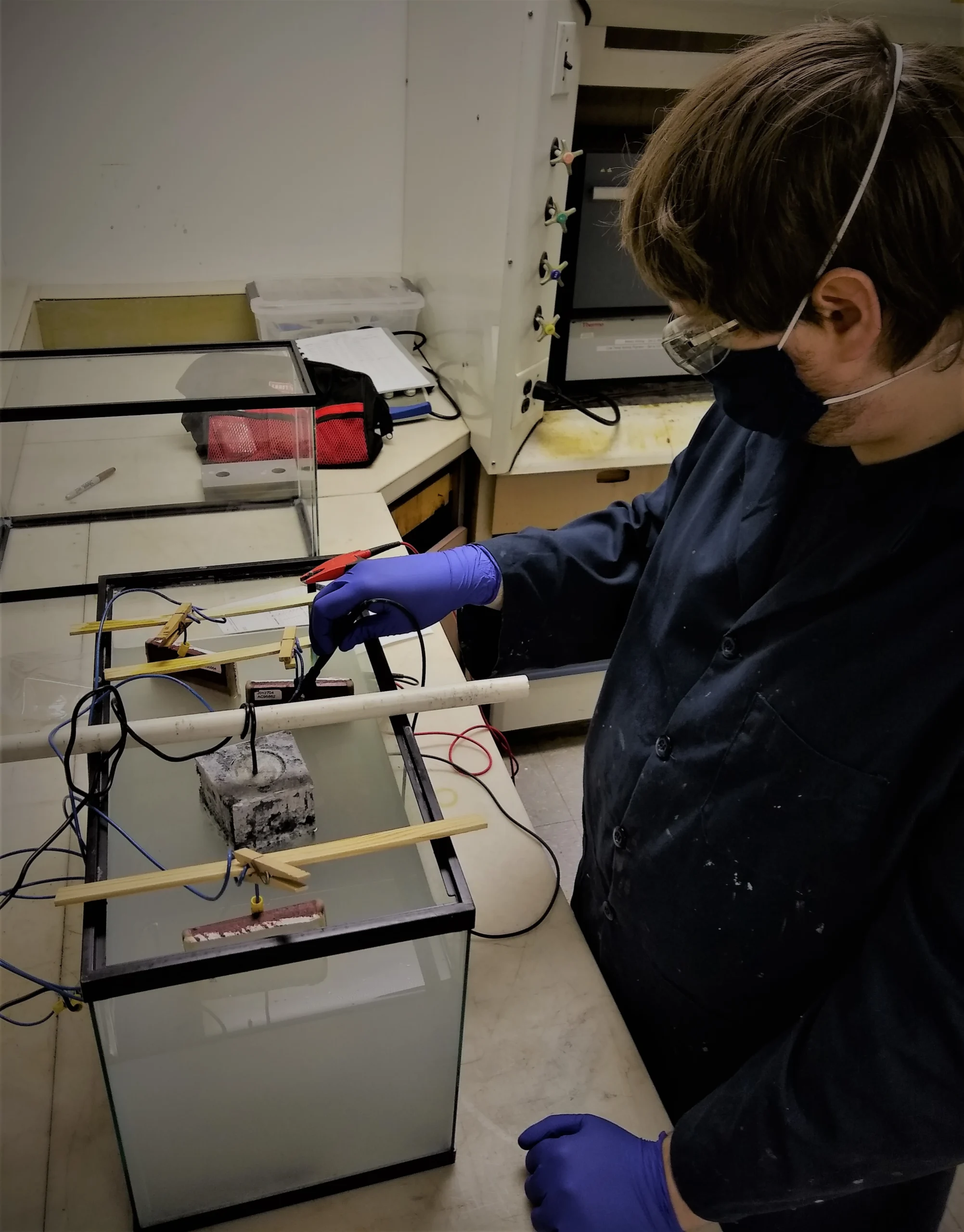
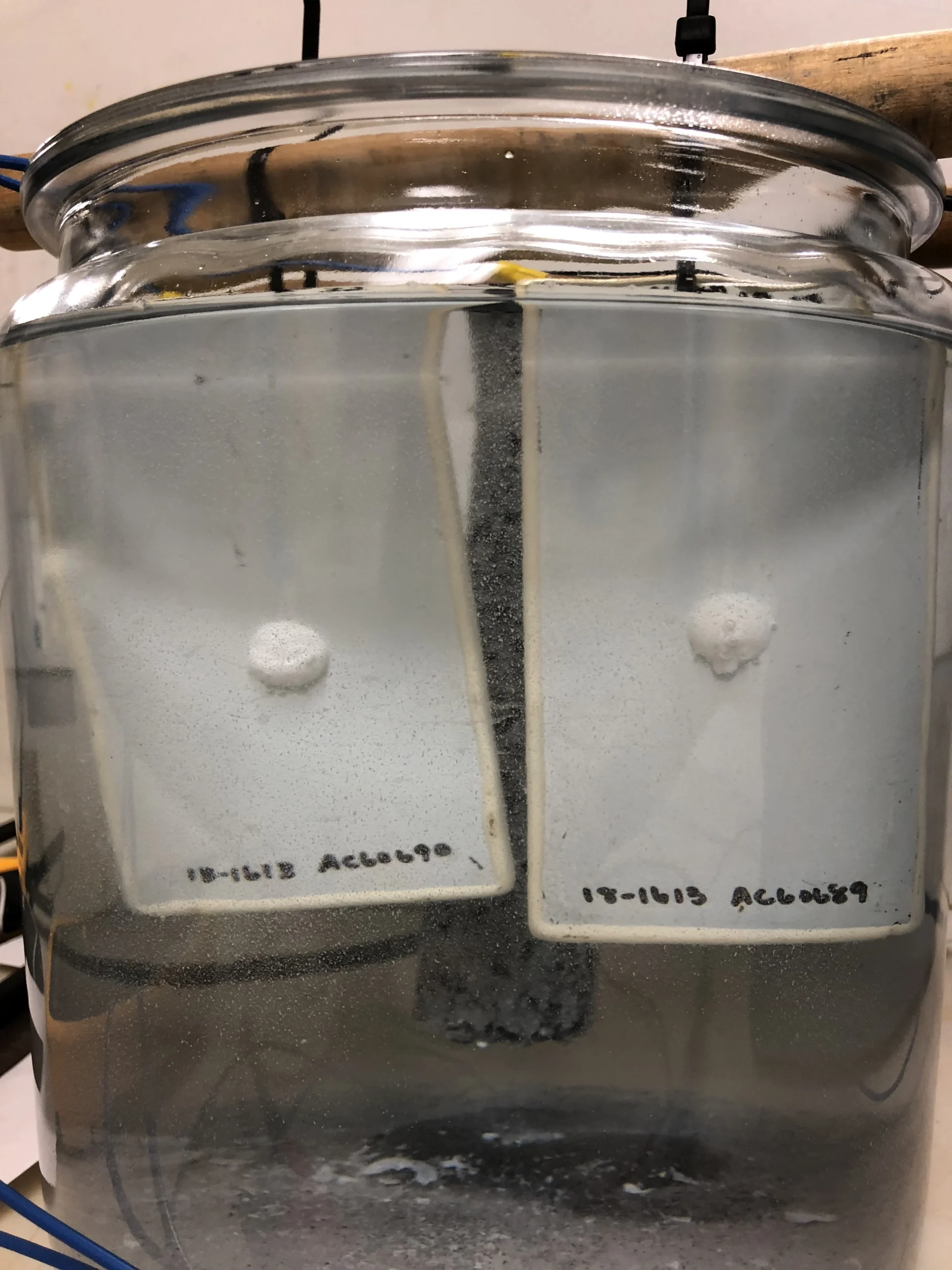
ASTM G8 evaluates how a nonmetallic coating bonded to steel responds when an intentional coating holiday is exposed to an electrolyte and the steel is polarized cathodically at ambient room temperature.
ASTM G8 Background
Exterior pipeline coatings and cathodic protection work as a system. The coating isolates most of the steel from the surrounding electrolyte, while cathodic protection supplies current to steel exposed at holidays, cuts, and other coating damage. G8 was developed to compare how pipeline coating systems behave at those exposed areas under controlled cathodic stress.
The method focuses on the spread of disbondment from an intentional holiday. It is comparative: different coatings can disbond to different degrees, and the same measured disbondment does not necessarily represent the same loss of protection for every coating technology.
Pipeline coatings are used together with cathodic protection. Where the coating is damaged, the exposed steel becomes a cathodic site. Reactions at that site can create an alkaline environment beneath the coating edge and weaken the bond between the coating and steel. The test accelerates that process so coating systems can be compared under controlled conditions.
Test configuration
- Coated steel pipe, flat plate, or curved plate as allowed by the cited standard.
- Controlled intentional holiday through the coating to the steel.
- Immersion bath or attached electrolyte cell.
- Sacrificial-anode or impressed-current polarization as specified.
- Ambient room-temperature exposure.
Recorded results
- Coating, substrate, preparation, thickness, cure, and specimen identification.
- Applied potential, electrolyte, temperature, and exposure duration.
- Electrical measurements required by the selected procedure.
- Coating condition and disbondment developed from the intentional holiday.
- Comparison with an unexposed reference area or reference specimen.
Standard reference: ASTM G8 — Cathodic Disbonding of Coated Steel
ASTM G42 and ASTM D6676/D6676M Testing
ASTM G42 and ASTM D6676/D6676M both evaluate cathodic disbondment at elevated temperature, but they create different thermal conditions. The distinction matters when the operating pipeline is hotter than the surrounding soil or water.
Elevated-Temperature Cathodic Disbondment Background
Ambient testing does not represent every pipeline. Pipelines carrying heated oil, gas, or process media can expose exterior coatings to higher steel temperatures, increase permeation, alter adhesion, and change the coating’s response to cathodic protection.
G42 addresses cathodic disbondment in a constant elevated-temperature immersion environment. D6676/D6676M addresses a different condition: heat originates within the pipe or beneath the panel and travels outward through the steel and coating. That separation allows a test program to distinguish general elevated-temperature exposure from the thermal gradient created by a hot pipeline in cooler surroundings.
ASTM G42 — Elevated-Temperature Electrolyte
G42 subjects an intentionally holidayed exterior pipeline coating to electrical stress while the specimen is submerged or immersed in electrolyte maintained at an elevated temperature. The procedure provides a constant elevated-temperature exposure rather than reproducing heat flowing outward from the pipe wall.
The standard procedure monitors the applied potential and current and concludes with physical examination of the coating around the intentional holiday. The governing specification defines the required temperature and any duration beyond the standard period.
Standard reference: ASTM G42 — Cathodic Disbonding at Elevated Temperatures
ASTM D6676/D6676M — Interior Heating
D6676/D6676M heats the steel from the pipe interior or reverse side while the coating remains in the exterior electrolyte. This creates a temperature gradient through the steel and coating, representing an exterior coating on a pipeline carrying heated oil, gas, or other media.
Pipe sections, samples cut from pipe, or flat plates may be used as permitted by the method. Coatings that depend on application tension, such as some tape systems, require representative pipe specimens rather than cut coupons or flat plates.
Standard reference: ASTM D6676/D6676M — Cathodic Disbonding Using Interior Heating
AMPP TM0115 Cathodic Disbondment Testing
AMPP TM0115 provides a unified procedure for comparing the cathodic-disbondment resistance of protective coating systems on buried or submerged steel structures under cathodic protection across a range of specimen geometries and test temperatures.
AMPP TM0115 Background
Cathodic-disbondment results are sensitive to specimen geometry, surface preparation, coating thickness and cure, holiday size, electrolyte, applied potential, temperature, anode arrangement, and the way the coating is cut and measured after exposure. Differences in any of those parameters can make results from separate laboratories difficult to compare.
TM0115 brings those variables into one procedure covering attached-cell and salt-bath configurations from ambient through elevated temperatures. It also isolates the anode so chlorine generated there does not migrate to the cathodic site and chemically attack the coating in a way that would distort the intended comparison.
The method can use flat panels, curved panels, or tubes in an attached cell or salt bath. The test solution, drilled holiday, applied potential, specimen preparation, temperature control, anode isolation, monitoring, and final disbondment determination are defined so candidate systems can be compared on a consistent basis.
Program controls
- Specified surface preparation and coating application.
- Dry-film-thickness measurements before and after exposure.
- Holiday inspection before testing.
- Minimum specimen quantity required by the method.
- Controlled cathodic potential and reference-electrode verification.
- Temperature, current, and electrolyte-pH monitoring.
Final determination
- Rinsing and handling within the specified post-test procedure.
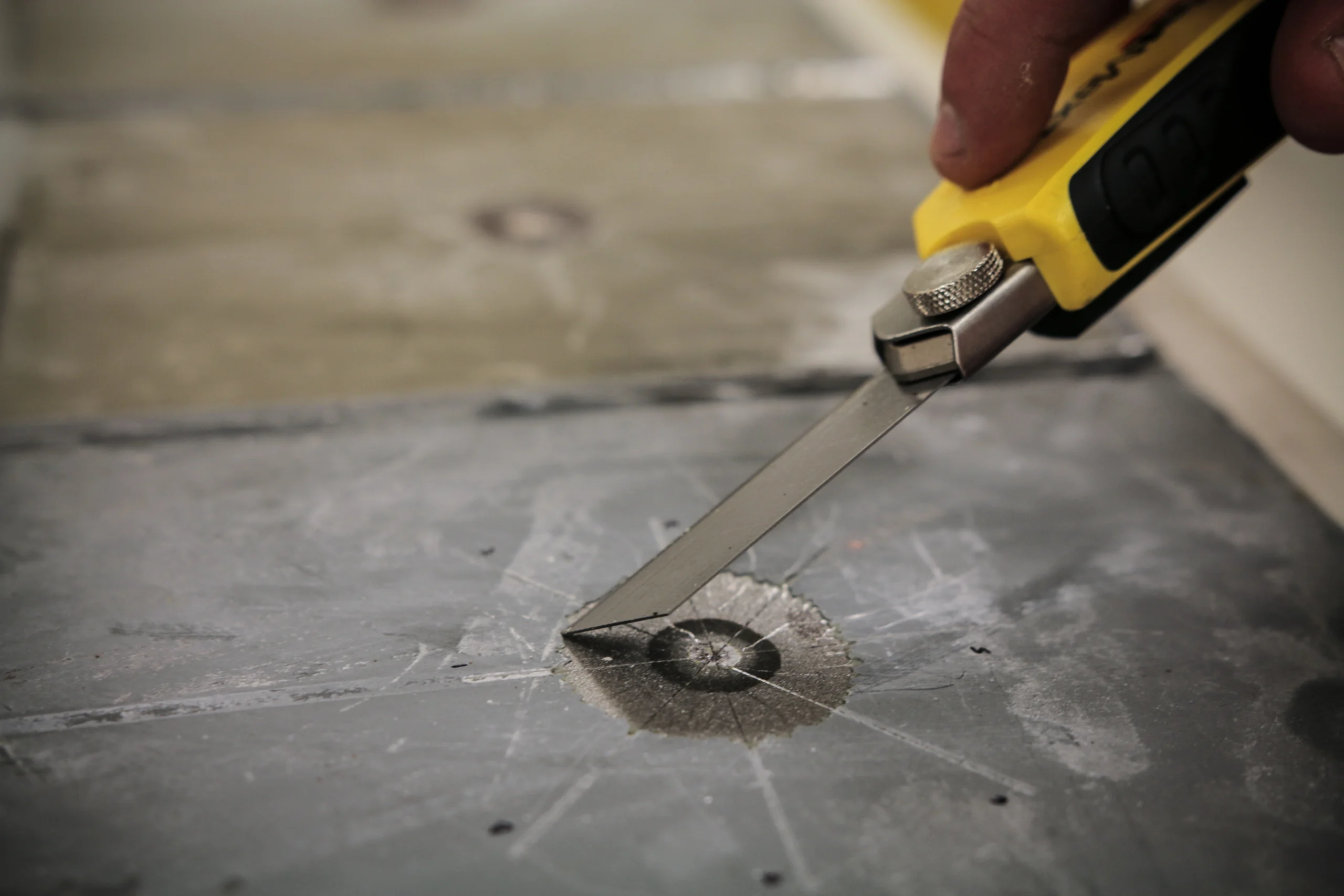
- Radial cuts through the coating around the drilled holiday.
- Knife evaluation of coating disbondment.
- Separate radial measurements and average disbondment radius.
- Comparison with the applicable project or product acceptance limit.
- Documentation of test conditions and any agreed deviations.
A ranking method, not a service-life prediction
TM0115 states that its results rank candidate coating systems for cathodic-disbondment resistance at different service temperatures. The method is not intended to simulate every field condition or predict service life. It also excludes tape or sleeve coatings with soft adhesives that may flow at the test temperature.
Standard reference: AMPP TM0115 — Cathodic Disbondment Test for Coated Steel Structures Under Cathodic Protection
ASTM G20 Chemical Resistance and Atlas Cell Exposure Testing
Chemical immersion and one-side cell exposure address pipeline environments that cathodic-disbondment testing does not. These methods expose coatings and linings to chemical contact, liquid and vapor phases, and, in one-side cells, controlled heat flow through the coated substrate.
ASTM G20 Chemical Resistance of Pipeline Coatings
ASTM G20 Background
Pipeline coating qualification cannot assume that every right-of-way presents the same soil chemistry. Leaked products, industrial chemicals, acids, alkalis, hydrocarbons, salts, and other contaminants may contact a coating in both liquid and vapor form.
G20 provides a controlled way to screen or compare coating resistance in a selected chemical environment. It also allows chemical exposure to be followed by cathodic- disbondment or mechanical testing when visual appearance alone does not show whether the coating has lost bond or other properties.
ASTM G20 evaluates pipe-coating resistance to selected reagents or suspected soil contaminants. Coated pipe specimens remain in closed containers where the coating is exposed to both the liquid and vapor phases of the selected reagent. The standard does not prescribe one universal chemical: reagent, concentration, temperature, duration, and reported properties are selected to reflect conditions expected along the pipeline right-of-way or within the product being carried.
Evaluation can document loss of gloss, texture development, decomposition, discoloration, softening, swelling, bubbling, blistering, cracking, solubility, and loss of bond at intentional holidays. Cathodic-disbondment or mechanical-property testing can follow the chemical exposure when the agreed program requires it.
Standard reference: ASTM G20 — Chemical Resistance of Pipeline Coatings
Atlas Cell and Conventional Immersion Testing
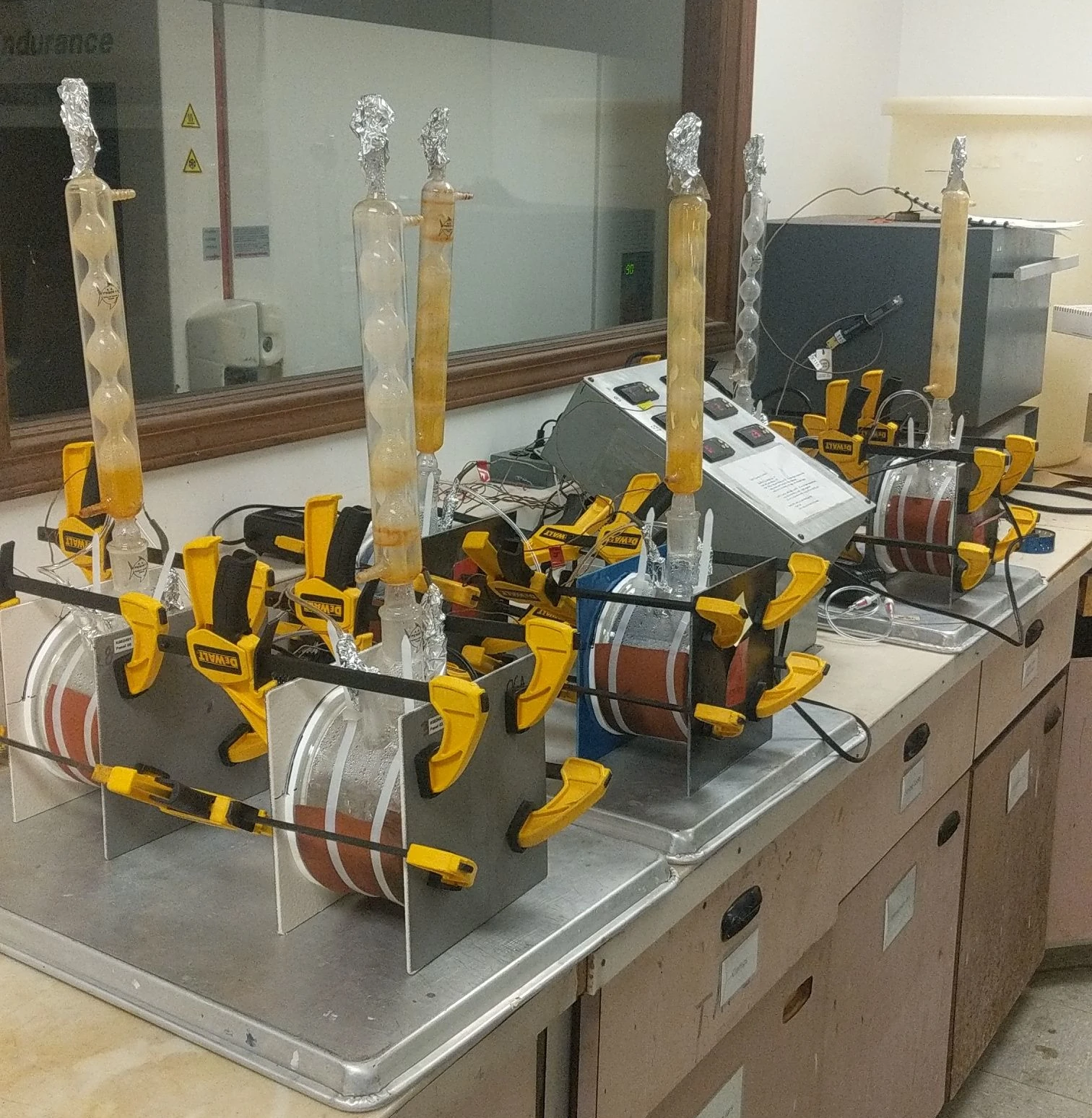
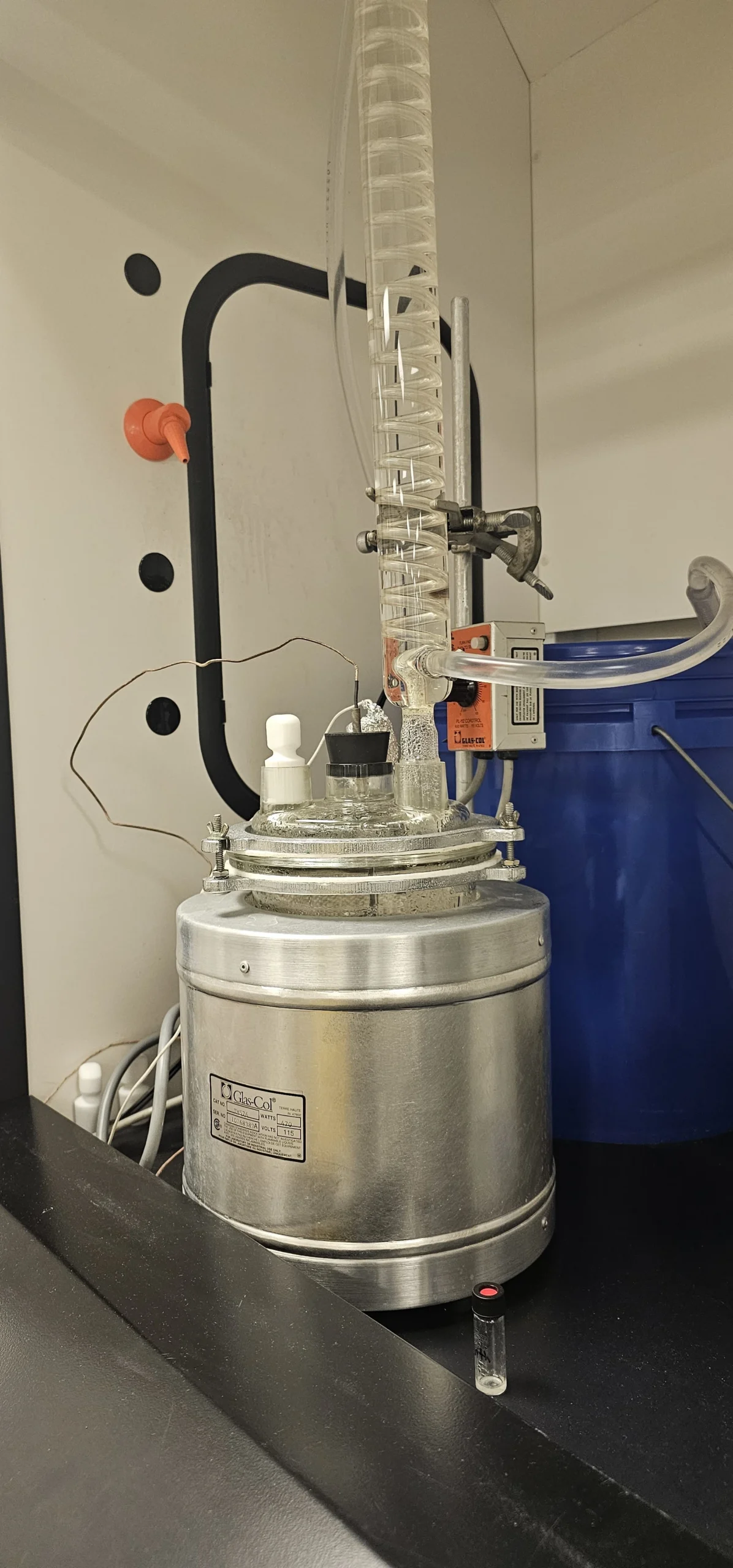
An Atlas Cell is the one-sided configuration used to expose an internal coating or lining to a selected liquid and its vapor while the reverse side of the steel panel remains externally accessible. Heating or cooling the reverse side creates a defined temperature gradient through the panel and coating. Conventional immersion is different: it partially or completely immerses a fully coated specimen without that one-sided cell configuration.
Atlas Cell Test Background
Conventional immersion exposes a fully coated specimen at one temperature. That is useful for chemical-resistance screening, but it does not reproduce the heat flow through an uninsulated pipe, tank, or vessel wall when the process fluid and exterior environment are at different temperatures.
A one-side cell uses the coated panel as part of the test vessel. The lining contacts the liquid and vapor inside the cell while the uncoated reverse side can be heated or cooled independently. ASTM D6943 provides the thermal-gradient approaches, while AMPP TM0174 distinguishes one-side exposure from conventional isothermal immersion.
Atlas Cell is the long-established industry name for this one-sided test apparatus. ASTM C868, first approved in 1977, standardized chemical-resistance testing of protective linings using a four-neck cylindrical borosilicate glass cell. Older specifications and technical literature may therefore cite ASTM C868 for Atlas Cell testing. The current ASTM practice is ASTM D6943, which covers constant-temperature immersion, thermal-gradient exposure, and constant-temperature exposure at increased pressure as separate methods.
ASTM D6943 Method B
D6943 Method B defines two thermal-gradient directions. Method B1 uses a cooler uncoated exterior and a hotter cell interior, producing the conventional cold-wall condition. Method B2 heats the uncoated exterior while the internal test medium remains cooler. Heating and cooling cycles may be specified for Method B2.
When temperatures are not otherwise specified, the method provides default conditions of 23 ± 2°C external and 60 ± 2°C internal for B1 and the reverse for B2. The test medium is selected to correspond with anticipated service.
D6943 Method C exposes the coating or lining to the selected test medium at constant temperature and increased pressure. It provides a controlled pressurized exposure for evaluating chemical resistance under the conditions specified by the test program.
Standard reference: ASTM D6943 — Immersion Testing of Industrial Protective Coatings and Linings
AMPP TM0174 Procedure A
Procedure A uses the one-sided Atlas Cell configuration. The coated face of a metallic panel contacts the liquid and vapor phases inside the cell while the reverse side remains accessible for heating or cooling. This permits a controlled thermal gradient through the panel and lining, including the cold-wall condition.
AMPP TM0174 Procedure B
Procedure B partially or completely immerses a fully coated specimen in the selected test liquid under isothermal conditions. The test program defines the medium, temperature, duration, and degree of immersion for the conventional immersion exposure.
Standard reference: AMPP TM0174 — Protective Coatings and Linings in Immersion Service
Pipeline Coating Testing and Post-Exposure Evaluation
GPI can perform the specified exposure alone or provide specimen documentation, scheduled inspections, final coating evaluation, comparative analysis, and independent reporting as part of the same program.
Before and during exposure
- Review of the cited standard and project-specific requirements.
- Specimen geometry, quantity, substrate, and coating-system review.
- Documentation of surface preparation, application, cure, and dry-film thickness when supplied or required.
- Pre-exposure visual inspection and holiday detection when applicable.
- Preparation of intentional holidays to the specified geometry.
- Control of electrolyte, chemical medium, potential, temperature, pressure, and duration required by the scope.
- Scheduled electrical measurements, pH checks, inspections, and photography.
After exposure
- Cathodic disbondment: knife evaluation, radial measurements, area, or equivalent-circle reporting as required.
- Blistering and rusting: rating using the specified ASTM method.
- Adhesion: knife, tape, or pull-off evaluation when included in the test plan.
- Physical changes: softening, swelling, cracking, peeling, lifting, erosion, or delamination.
- Appearance: gloss, color, clarity, and comparison with an unexposed reference.
- Test-medium changes: color, turbidity, precipitate, pH, or agreed chemical analysis.
- Acceptance: pass/fail findings when the customer supplies defined criteria.
Common evaluation standards
Depending on the governing requirement, post-exposure evaluations may reference ASTM D610 for rusting, ASTM D714 for blistering, ASTM D523 for gloss, ASTM D3363 for pencil hardness, ASTM D6677 for knife adhesion, ASTM D3359 for tape adhesion, or ASTM D4541 for pull-off adhesion. The exposure standard and project specification determine whether evaluation must occur immediately after testing, after cooling, or following an agreed recovery period.
Reporting can include
- Complete specimen and coating-system identification supplied for the project.
- Referenced standard, selected procedure, test conditions, duration, and deviations.
- Before-and-after photographs and scheduled observations.
- Electrical, temperature, pH, and other required exposure records.
- Individual specimen ratings, measurements, failure modes, and acceptance findings.
- Comparative presentation of candidate coatings, controls, or service conditions.
Accelerated results require the correct interpretation
These procedures can compare coating systems, document compliance, and expose specific failure mechanisms under controlled conditions. Test days should not be converted directly into years of pipeline service unless a quantitative correlation has been established for the particular coating, substrate, application, and environment.
Pipeline Testing Programs GPI Supports
Organizations
- Pipeline coating and lining manufacturers.
- Coating formulators and raw-material suppliers.
- Pipe, fitting, valve, joint, and component manufacturers.
- Oil, natural-gas, water, slurry, and industrial pipeline operators.
- Engineering, integrity-management, and consulting firms.
- Coating applicators and pipeline contractors.
- Asset owners, purchasers, and third-party evaluators.
Program objectives
- New coating and lining development.
- Material screening and comparative ranking.
- Supplier qualification and product approval.
- Specification-compliance testing.
- Operating-temperature or chemical-service qualification.
- Competitive product benchmarking.
- Failure-investigation follow-up and reproduction testing.
Send GPI the cited specification, coating or lining system, substrate, specimen information, expected service temperature and medium, required duration, and acceptance criteria.
Pipeline Materials, Coating and Corrosion Testing FAQ
What is cathodic disbondment testing?
Cathodic disbondment testing evaluates the loss of adhesion that can develop around a coating holiday when coated steel is placed in an electrolyte and subjected to cathodic polarization. The resulting disbondment is measured or rated using the procedure required by the governing standard.
What is the difference between ASTM G8 and ASTM G42?
ASTM G8 evaluates cathodic disbondment at ambient room temperature. ASTM G42 evaluates exterior pipeline coatings under cathodic stress in an elevated-temperature electrolyte.
What is the difference between ASTM G42 and ASTM D6676/D6676M?
ASTM G42 creates a constant elevated-temperature immersion condition. ASTM D6676/D6676M heats the steel from the pipe interior or reverse side, creating a temperature gradient through the substrate and exterior coating.
What does ASTM G20 evaluate?
ASTM G20 evaluates pipeline-coating resistance to selected reagents or suspected soil contaminants through long-term contact with both liquid and vapor phases. The reagent, concentration, temperature, duration, and reported properties are selected to reflect the anticipated environment.
What is an Atlas Cell test?
An Atlas Cell is a one-side exposure configuration in which the coated face of a panel contacts the internal test liquid and vapor while the reverse side remains externally accessible. Heating or cooling the reverse side can create a controlled thermal gradient through the panel and lining.
Is every ASTM D6943 Method B test a cold-wall exposure?
No. ASTM D6943 Method B includes two gradient directions. Method B1 uses a cooler exterior and hotter cell interior, creating the conventional cold-wall condition. Method B2 uses a hotter exterior and cooler internal test medium.
Can GPI use a customer-supplied chemical or process fluid?
The applicable method and laboratory safety review determine whether a customer-defined or customer-supplied medium can be used. The agreed test plan must identify its composition, concentration, temperature, handling requirements, duration, and disposal requirements.
Can GPI evaluate specimens after exposure?
Yes. GPI can provide exposure-only testing or perform agreed evaluations including cathodic-disbondment measurement, blistering, rusting, adhesion, hardness, gloss or color change, softening, swelling, cracking, peeling, delamination, and customer-defined pass/fail determinations.
Discuss Your Pipeline Materials, Coating or Lining Test Program
Tell GPI Labs what coating, lining, material, pipe, or component you are evaluating; the applicable standard or service environment; specimen size and quantity; temperature, chemical medium, cathodic-protection condition, and duration; and the evaluations required after exposure. GPI can review the requirement and define the laboratory scope.