
PROTECTIVE COATING & LINING TESTING FOR WATER AND WASTEWATER INFRASTRUCTURE
Water and wastewater infrastructure is expensive to build, difficult to access, and expected to remain in service for decades. When a pipe, tank, manhole, wet well, or treatment structure deteriorates prematurely, the cost can include emergency response, shutdowns, excavation, bypass pumping, environmental cleanup, structural repair, and replacement.
$625 Billion in Drinking-Water Infrastructure Needs
Source: U.S. EPA — 7th Drinking Water Infrastructure Needs Survey and Assessment
$630.1 Billion in Clean-Water Infrastructure Needs
The Potomac Interceptor
In January 2026, a section of the Potomac Interceptor, a major sewer system serving the Washington, D.C. region, collapsed in Maryland. DC Water estimated that approximately 243 million gallons of wastewater overflowed following the collapse.
Sources: DC Water — Potomac Interceptor Overflow Findings | DC Water — Repair and Recovery Update
GPI Water & Wastewater Coating, Lining and Material Testing Services
GPI Labs provides severe wastewater exposure, water immersion, continuous-condensation, and freeze/thaw testing for protective coatings, linings, materials, and coated products.
GPI supports water and wastewater coating programs that reference broader infrastructure specifications such as AWWA C210 and AWWA C222, along with individual methods including ASTM G210, ASTM D870, ASTM D2247, ASTM D6944, and ASTM D2243. Depending on the governing specification and project objective, GPI can perform an individual exposure or coordinate multiple corrosion, environmental, physical-property, adhesion, and coating-integrity evaluations as part of a broader qualification or comparative program.
Environmental exposures
- Severe wastewater liquid and sewer-gas exposure.
- Controlled water immersion.
- 100% RH with condensation on the specimens.
- Wet freeze/thaw/immersion cycling.
- Dry heating and freezing cycles.
- Freeze/thaw resistance of liquid water-borne coatings.
Program support
- Specification and test-plan review.
- Specimen identification and pre-exposure documentation.
- Controlled environmental exposure.
- Scheduled inspections and photography.
- Post-exposure coating and lining evaluation.
- Comparative, screening, and qualification programs.
- Independent test reporting.
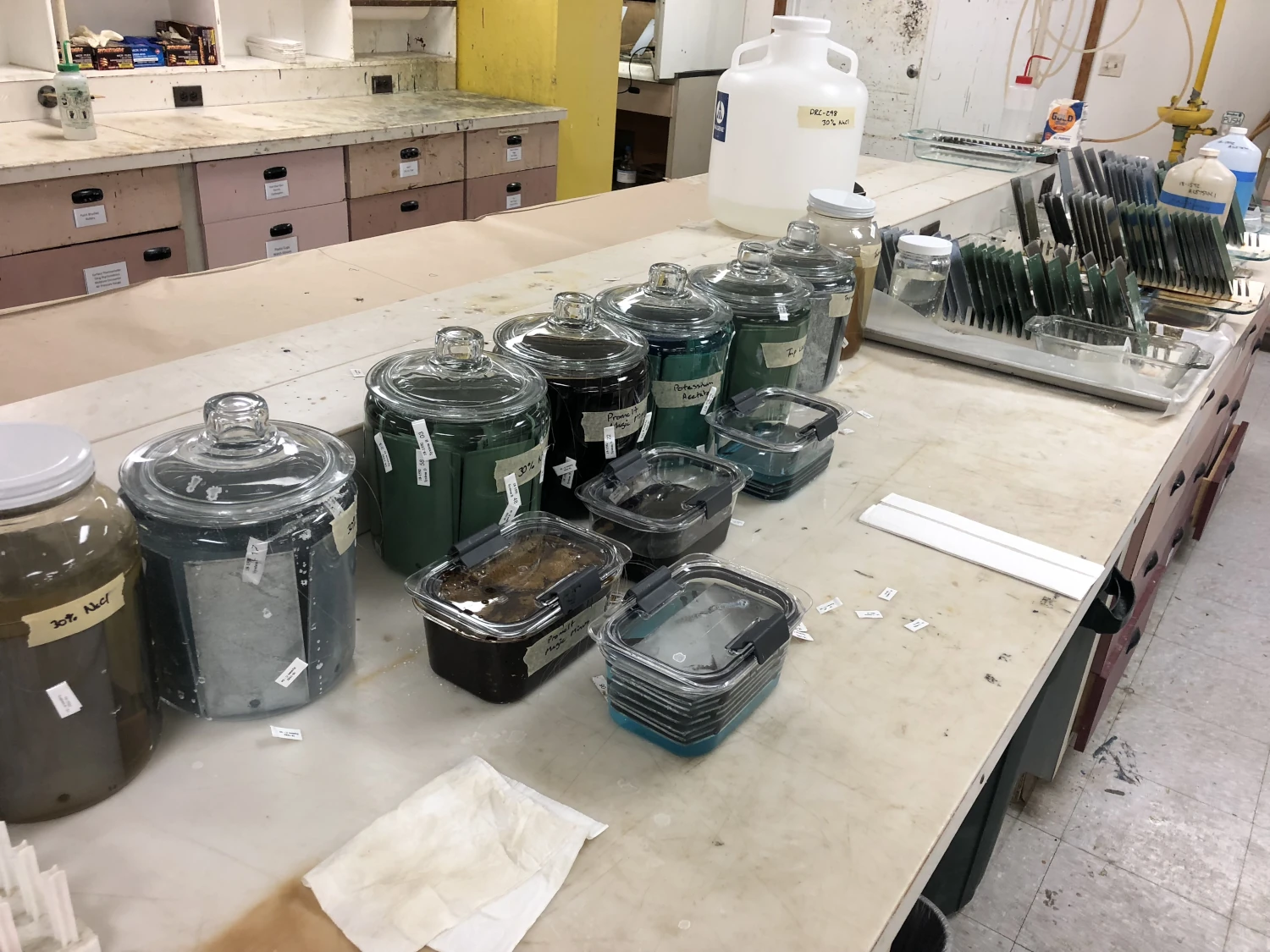
Send GPI Labs the applicable specification, material or coating system, service environment, specimen information, required exposure, and evaluation criteria.
AWWA C210 & C222 Coating and Lining Testing
Water infrastructure coating programs are often governed by broader product and application standards rather than a single laboratory exposure. GPI Labs supports testing associated with AWWA C210 for liquid-epoxy coatings and linings and AWWA C222 for polyurethane coatings and linings used on steel water pipe, fittings, joints, and related components.
These standards bring together several aspects of coating-system performance. Depending on the applicable standard, coating technology, purchaser requirements, and project specification, a qualification program can incorporate chemical and water resistance, cathodic disbondment, adhesion, coating integrity, flexibility, impact, abrasion, dielectric properties, water absorption, hardness, and other physical or performance evaluations. GPI can coordinate the applicable laboratory work and report the results as a defined testing program.
AWWA C210 — Liquid-Epoxy Coatings & Linings
AWWA C210 addresses liquid-epoxy protective systems for steel water pipe and fittings. GPI can support testing used to evaluate epoxy coating and lining systems for qualification, comparative evaluation, or compliance with a project specification referencing AWWA C210.
AWWA C222 — Polyurethane Coatings & Linings
AWWA C222 addresses polyurethane protective systems for steel water pipe and fittings. Its qualification framework incorporates multiple corrosion-related, chemical, mechanical, electrical, water-resistance, and adhesion evaluations that GPI can perform as part of a coordinated polyurethane coating or lining program.
Testing to the Governing Specification
The required laboratory scope depends on the AWWA edition cited by the project, purchaser requirements, coating system, substrate, and any supplemental specification. GPI can review the supplied requirements, identify the applicable test methods, perform the requested testing, and provide independent documentation of the results.
Water and Wastewater Exposure Test Methods
These methods answer different questions. Test selection should be based on the governing specification, product, service environment, substrate, and required performance evaluation.
Exposure methods
| Exposure or Concern | ASTM Method | Primary Test Condition | Typical Application |
|---|---|---|---|
| Severe sewer headspace and wastewater exposure | ASTM G210 | Acidic saline liquid + simulated sewer gases | Sewer coatings and linings, manholes, wet wells, and wastewater structures |
| Continuous water immersion | ASTM D870 | Partial or complete immersion in controlled water | Submerged coatings, linings, coated pipe, tanks, and components |
| 100% RH and persistent condensation | ASTM D2247 | Heated saturated air with condensation on all specimen surfaces | Coatings exposed to continuously condensing environments |
| Wet freeze/thaw cycling | ASTM D6944 Method A | Heating + water immersion + freezing while wet | Cured protective coatings exposed to water and freezing |
| Dry thermal cycling | ASTM D6944 Method B | Repeated heating + freezing | Cured coatings exposed to large temperature changes |
| Water-borne coating storage and transportation | ASTM D2243 | Freeze/thaw cycling of the liquid coating | Resistance to freezing before the coating is applied |
Potable-water durability testing and product certification are different services
ASTM G210 Severe Wastewater Testing
ASTM G210 defines the apparatus and operating procedure used to expose protective coatings and linings to the pertinent attributes of a severe domestic wastewater headspace environment.
ASTM G210 Background and Development
ASTM G210 grew from the Severe Wastewater Analysis Test concept, developed to reproduce the combined liquid and corrosive headspace conditions found in severe domestic wastewater service. The ASTM development work was identified as WK33537 within Subcommittee G01.05 on Laboratory Corrosion Tests.
The work became ASTM G210-13 in 2013. ASTM reapproved the standard in 2023 as G210-13(2023). Its two-phase apparatus remains unusual among coating exposures because specimens alternate between a prescribed acidic saline liquid and a hot, humid sewer-gas headspace rather than remaining in a single exposure environment.
Background: ASTM International — Severe Wastewater Testing Apparatus / WK33537
The test chamber contains two exposure zones. The liquid phase contains a prescribed acid and saline solution. The vapor phase contains air, humidity, and a prescribed sewer-gas mixture containing hydrogen sulfide, carbon dioxide, and methane. The chamber is maintained at 65 ± 3°C to create accelerated exposure conditions.
Standard G210 exposure sequence
- Specimens are mounted on a carousel inside the sealed apparatus.
- The carousel lowers the specimens into the liquid phase for 15 minutes.
- The specimens return to the vapor phase for the balance of the cycle.
- Three liquid-immersion cycles occur per working day.
- The standard exposure continues for 28 days.
- The completed standard program includes 60 immersions and 20 gas purges.
Combined Liquid and Headspace Exposure
The repeated liquid immersions wet the protective system with the prescribed acidic saline solution. Between immersions, the specimens remain in a hot, humid headspace containing hydrogen sulfide, carbon dioxide, and methane. Alternating between these phases challenges the coating or lining’s barrier properties under both severe liquid contact and simulated wastewater-headspace exposure rather than evaluating either environment by itself.
The specified temperature, aqueous solution, gas mixture, and duration constitute the standard practice. Adjustments can be made when the client and laboratory agree that a different condition is needed to represent a particular environment; any deviation must be identified in the report.
Products commonly evaluated using G210
- Protective sewer coatings and linings.
- Manhole lining and rehabilitation systems.
- Wet wells and lift-station components.
- Wastewater treatment structures and equipment.
- Coated steel, ductile iron, concrete, and composite specimens.
- Protective materials intended for severe wastewater headspace service.
G210 requires specialized equipment and gas handling
ASTM cautions that the practice can be extremely hazardous because it involves sewer gases, sulfuric acid, elevated temperature, and specialized apparatus. GPI performs the exposure under controlled laboratory procedures appropriate for the prescribed hydrogen sulfide, carbon dioxide, and methane gas mixture.
Standard reference: ASTM G210 — Operating the Severe Wastewater Analysis Testing Apparatus
ASTM D870 Immersion and ASTM D2247 Condensation Testing
D870 and D2247 both evaluate coating resistance to water, but they produce different exposures. D870 immerses the specimen in water; D2247 keeps the specimen surface wet through condensation in a 100% relative-humidity atmosphere.
ASTM D870 — Water Immersion
ASTM D870 Background
ASTM D870 was originally approved in 1946 and remains one of the longstanding ASTM practices for evaluating coating resistance to water immersion. The basic exposure has stayed intentionally simple: keep a coated specimen partially or completely immersed under controlled water conditions and document the resulting coating response.
The practice is not limited to small panels. ASTM notes that the apparatus can range from a simple laboratory vessel to very large tanks capable of testing coated pipe and other large coated products.
Coated specimens are partially or completely immersed in distilled or demineralized water at ambient or elevated temperature. Unless another temperature is specified, the water is maintained at 38 ± 2°C and circulated so the bath does not become stratified or oxygen-depleted at lower levels.
The exposure can be used to evaluate blistering, softening, color change, adhesion loss, or other specified deterioration associated with prolonged water immersion. The practice can accommodate flat specimens, coated pipe, and other coated products.
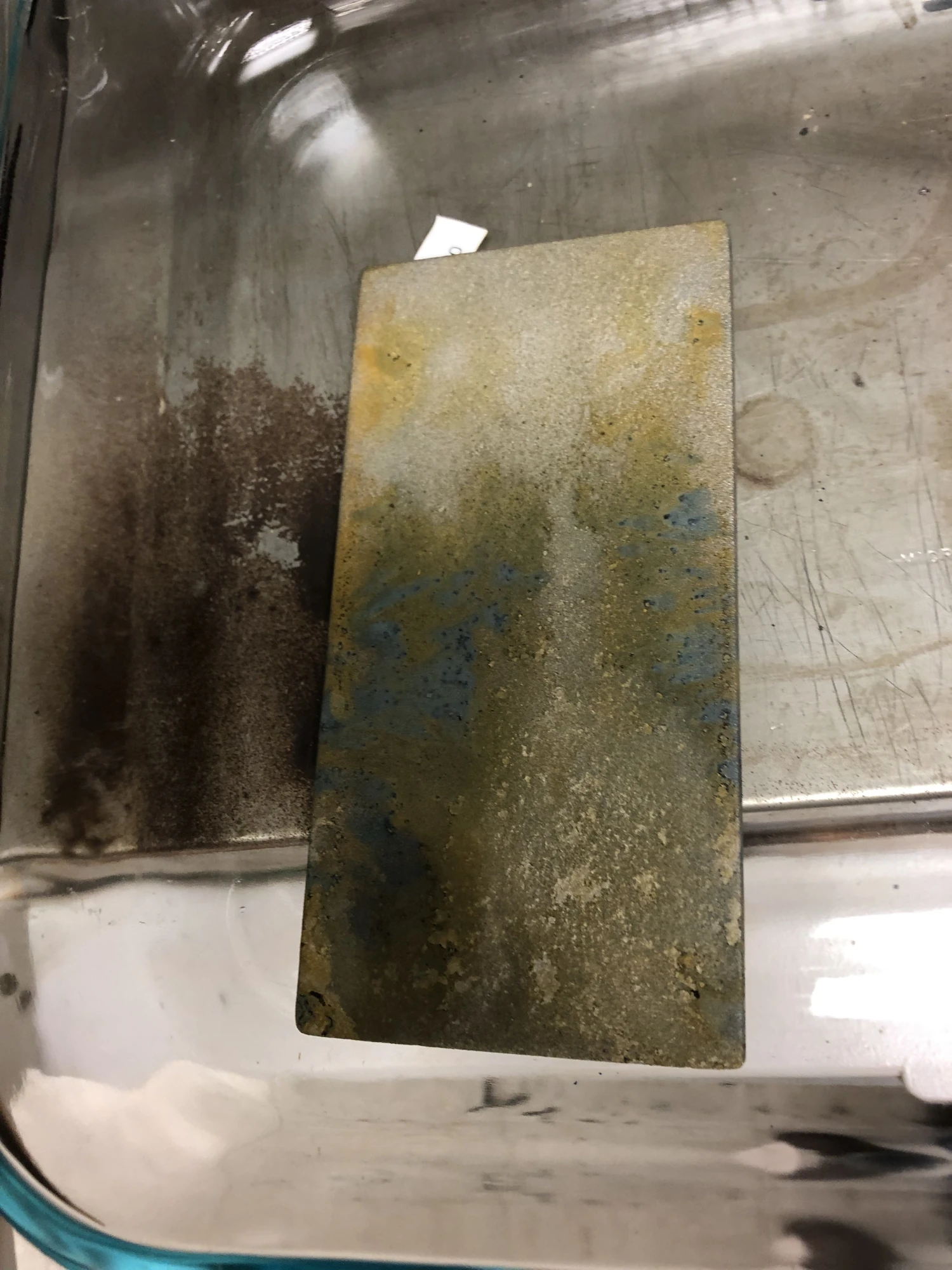
Immersion Response: Continuous immersion allows water to permeate the coating and can reveal loss of barrier performance, adhesion, hardness, or other properties under submerged conditions. It isolates immersion resistance without adding sewer gas, condensation cycling, or freezing.
Standard reference: ASTM D870 — Water Resistance of Coatings Using Water Immersion
ASTM D2247 — 100% RH and Condensation
ASTM D2247 Background
ASTM D2247 was originally approved in 1966. The method was established to evaluate water resistance in a saturated atmosphere where condensation actually forms on the specimens.
That distinction remains important. D2247 is not simply a high-relative-humidity exposure. The chamber must create the temperature differential needed to deposit condensate on the test surfaces throughout the intended exposure area.
D2247 exposes specimens to heated, saturated air at 100% relative humidity. Unless another temperature is specified, the air adjacent to the specimens is maintained at 38°C. A slight temperature differential causes condensation to form on all specimen surfaces.
The method can be used for flat panels, three-dimensional objects, and large products when the chamber provides condensation throughout the intended exposure area. Evaluation can include blistering, rusting, adhesion loss, softening, embrittlement, and other specified changes.
Condensation Response: The temperature differential keeps condensation forming on the coating instead of merely surrounding it with humid air. This challenges resistance to persistent surface wetness and water permeation above the waterline or in enclosed, continuously condensing environments.
Standard reference: ASTM D2247 — Water Resistance of Coatings in 100% Relative Humidity
Immersion and condensation are not interchangeable
A submerged lining and a coating exposed above the waterline can experience very different moisture conditions. Where both exposures are relevant, GPI can perform D870 and D2247 as separate parts of the same evaluation program.
ASTM D6944 Thermal Cycling of Cured Coatings
ASTM D6944 determines the resistance of cured coatings or coating systems to repeated thermal cycles. Method A includes water immersion before freezing; Method B uses a dry heating-and-freezing cycle.
ASTM D6944 Background
ASTM D6944 was first approved in 2003 to evaluate how applied and cured coating systems respond to repeated thermal cycling. The method is intended to assess effects such as adhesion loss, checking, cracking, blistering, and other coating changes caused by thermal stress.
Its two procedures separate different service concerns. Method A introduces water before freezing so the system is cycled while wet. Method B removes the immersion stage and concentrates on repeated dry heating and freezing.
Method A — Freeze/Thaw/Immersion
4 hours at 50 ± 3°C in air → 4 hours immersed in 25 ± 3°C tap water → 16 hours at −29 ± 3°C in air
The standard procedure uses 30 cycles unless another number is agreed upon. Specimen surfaces remain wet during transfer from immersion into freezing.
Wet Freeze/Thaw Response: Heating conditions the cured system, immersion introduces water, and the wet transfer carries that water directly into the freezing stage. The combined cycle challenges adhesion and coating integrity under thermal stress and water-assisted freeze/thaw exposure.
Method B — Freeze/Thaw
8 hours at 50 ± 3°C in air → 16 hours at −29 ± 3°C in air
Method B removes the immersion stage and evaluates the cured system through repeated dry heating and freezing. The standard procedure again uses 30 cycles unless another number is agreed upon.
Dry Thermal-Cycle Response: The hot-to-cold transition repeatedly expands and contracts the coating and substrate without a water-immersion stage. Method B isolates dry thermal stress, helping distinguish temperature-driven checking, cracking, or adhesion loss from damage that depends on water uptake.
GPI can document checking, cracking, blistering, adhesion, and other agreed performance criteria during or after exposure. D6944 assesses coating response to thermal cycling; it does not provide a quantitative prediction of service life.
Standard reference: ASTM D6944 — Resistance of Cured Coatings to Thermal Cycling
ASTM D2243 Freeze-Thaw Resistance of Water-Borne Coatings
D2243 evaluates a different stage of the coating lifecycle. It determines whether a liquid water-borne coating tolerates freeze/thaw cycling that may occur during cold-weather transportation or storage before the coating is applied.
ASTM D2243 Background
ASTM D2243 was originally approved in 1964 for a practical problem associated with water-borne coatings: containers can freeze and thaw during cold-weather storage or transportation before the coating is ever applied.
The test therefore evaluates the liquid coating in the container, not a cured coating film. A cycled sample is compared with an uncycled control for changes in viscosity, in-can condition, application behavior, and resulting film properties.
17 hours at −18°C → 7 hours undisturbed at room temperature
This produces one 24-hour freeze/thaw cycle. One to five cycles are usual unless another number is specified or agreed upon.
Liquid-Coating Stability: Repeated freezing and thawing can destabilize a water-borne coating more severely than steady frozen storage. Comparing the cycled material with an uncycled control shows whether freezing affects its in-can condition, viscosity, application properties, or the appearance of the resulting film.
After cycling, GPI can compare the test coating with an uncycled control for settling, gelation, coagulation, viscosity change, hiding, gloss, speckiness, agglomeration, color change, and other differences identified by the method or project requirement.
D2243 and D6944 answer different questions
D2243 evaluates the liquid water-borne coating before application. D6944 evaluates an applied and cured coating system through thermal or wet freeze/thaw cycling.
Standard reference: ASTM D2243 — Freeze-Thaw Resistance of Water-Borne Coatings
Coating Qualification and Post-Exposure Evaluation
GPI can perform the controlled exposure alone, coordinate broader coating-qualification testing, or evaluate specimens after exposure. The governing specification or agreed test plan defines the methods, conditioning, measurements, and acceptance criteria used for the program.
Qualification testing can extend beyond environmental exposure
Programs referencing AWWA C210, AWWA C222, or related project specifications may combine environmental exposure with methods for cathodic disbondment, pull-off adhesion, impact resistance, abrasion resistance, flexibility, dielectric properties, water absorption, hardness, chemical resistance, and coating integrity. GPI can help organize the applicable methods into a single laboratory scope instead of treating each test as an unrelated request.
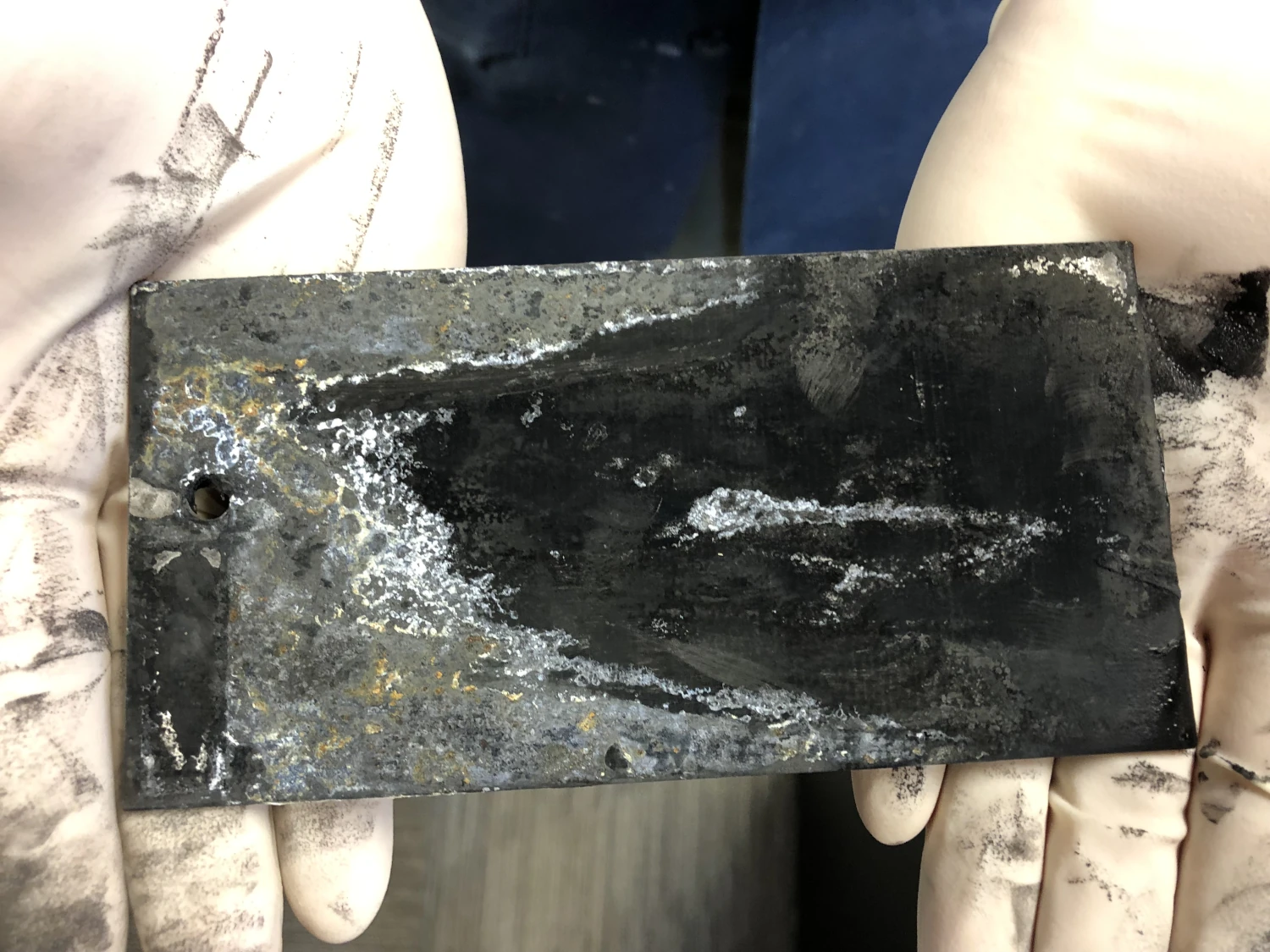
Visual and coating-condition evaluations
- Blistering: size and frequency of blisters using the specified rating method.
- Rusting and corrosion: visible corrosion, rust grade, and affected area.
- Checking and cracking: degree and pattern of coating breakdown.
- Color and gloss change: comparison with unexposed or control specimens.
- Softening and embrittlement: visible or physical changes after exposure.
- Other observed deterioration: delamination, swelling, discoloration, or customer-defined effects.
Adhesion and comparative evaluations
- Tape adhesion: classification of coating removal when specified.
- Pull-off adhesion: measured tensile adhesion and documented failure mode.
- Wet-condition evaluation: inspection within the method’s required post-exposure window.
- Recovered-condition evaluation: reinspection after an agreed drying or recovery period.
- Control comparison: exposed specimens compared with unexposed controls or materials of known performance.
- Customer-defined acceptance: pass/fail determination against project-specific limits.
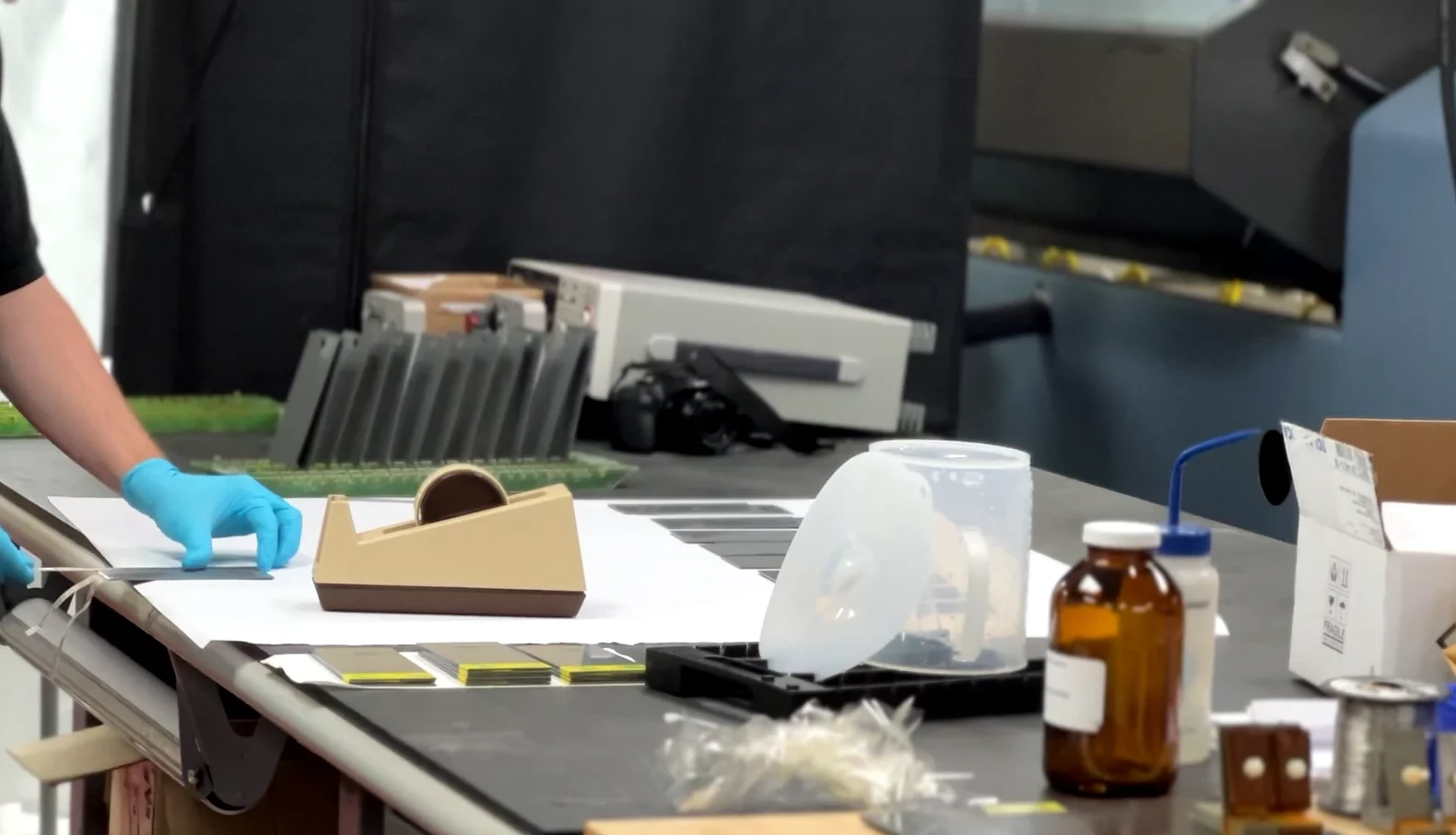
Evaluation methods are selected with the exposure
Depending on the governing requirement, evaluations may reference established ASTM methods such as ASTM D610 for rusting, ASTM D714 for blistering, ASTM D660 for checking, ASTM D661 for cracking, ASTM D3359 for tape adhesion, or ASTM D4541 for pull-off adhesion. GPI can review the specification before testing so the exposure, inspection schedule, conditioning period, and final evaluation produce a complete and usable result.
Reporting can include
- Specimen identification, substrate, surface preparation, coating, thickness, and cure information supplied for the program.
- Exposure method, conditions, duration, and any documented deviations.
- Scheduled observations and before-and-after photography.
- Individual specimen ratings, measurements, failure modes, and pass/fail findings when criteria are provided.
- Comparative presentation of multiple materials, coating systems, or controls.
Test hours are not a direct service-life conversion
Accelerated exposure can compare systems, identify performance differences, and document compliance with a defined requirement. It should not be converted directly into years of field service unless a quantitative correlation has been established for the specific material system and environment.
Water and Wastewater Testing Programs GPI Supports
Organizations
- Protective coating and lining manufacturers.
- Coating formulators and raw-material suppliers.
- Pipe, manhole, rehabilitation-system, and equipment manufacturers.
- Engineering and consulting firms.
- Water and wastewater utilities and authorities.
- Municipalities and infrastructure owners.
- Contractors, applicators, and third-party evaluators.
Program objectives
- Product development and formulation screening.
- Protective coating and lining qualification.
- Specification-compliance testing.
- Comparative testing and competitive benchmarking.
- Supplier and material evaluation.
- Failure-investigation follow-up testing.
- Customer-defined environmental exposure programs.
Water and Wastewater Coating Testing FAQ
Does GPI Labs perform AWWA C210 and AWWA C222 coating testing?
Yes. GPI supports laboratory testing associated with AWWA C210 liquid-epoxy coating and lining programs and AWWA C222 polyurethane coating and lining programs for steel water pipe and related components. Depending on the cited standard and project requirements, the scope can combine environmental, chemical, corrosion-related, mechanical, electrical, water-resistance, adhesion, and coating-integrity evaluations.
What ASTM test is used for severe wastewater and sewer environments?
ASTM G210 is designed around a severe domestic wastewater environment. Its apparatus combines an acidic saline liquid phase with a humid vapor phase containing a prescribed mixture of hydrogen sulfide, carbon dioxide, and methane.
What is the difference between ASTM G210 and ASTM D870?
ASTM G210 combines severe liquid exposure with a simulated wastewater headspace containing sewer gases. ASTM D870 evaluates coatings through controlled water immersion and does not reproduce the sewer-gas vapor environment created by G210.
What is the difference between ASTM D870 and ASTM D2247?
ASTM D870 partially or completely immerses coated specimens in water. ASTM D2247 uses heated, saturated air at 100% relative humidity to produce condensation on all specimen surfaces. They evaluate different modes of water exposure.
Which ASTM test includes freezing after water immersion?
ASTM D6944 Method A combines elevated-temperature air exposure, water immersion, and subzero air exposure. Specimen surfaces remain wet during transfer from immersion into freezing.
What is the difference between ASTM D6944 and ASTM D2243?
ASTM D6944 evaluates an applied and cured coating system through thermal or wet freeze/thaw cycling. ASTM D2243 evaluates the freeze/thaw resistance of a liquid water-borne coating during storage or transportation before application.
Can GPI evaluate specimens after the exposure?
Yes. GPI can provide exposure-only testing or perform agreed post-exposure evaluations such as blistering, rusting, checking, cracking, tape adhesion, pull-off adhesion, color or gloss change, wet-condition inspection, recovered-condition inspection, and customer-defined pass/fail determinations.
Can GPI run several exposure methods on the same coating system?
Yes. When supported by the governing requirements or project objective, GPI can coordinate severe wastewater, immersion, condensation, thermal, and freeze/thaw exposures as separate parts of a broader evaluation program.
Does this testing certify a coating for contact with drinking water?
No. These methods evaluate environmental durability and coating performance. They do not by themselves establish drinking-water-contact compliance or replace certifications required for potable-water products.
Discuss Your Water or Wastewater Testing Program
Tell GPI Labs what material, coating, lining, component, or system you are evaluating; the applicable specification or service environment; specimen size and quantity; required exposure; and the evaluations you need after testing. GPI can review the requirement and define the appropriate laboratory scope.
PROTECTIVE COATING, LINING & MATERIAL TESTING FOR WATER AND WASTEWATER INFRASTRUCTURE
Water and wastewater infrastructure is expensive to build, difficult to access, and expected to remain in service for decades. When a pipe, tank, manhole, wet well, or treatment structure deteriorates prematurely, the cost can include emergency response, shutdowns, excavation, bypass pumping, environmental cleanup, structural repair, and replacement.
$625 Billion in Drinking-Water Infrastructure Needs
Source: U.S. EPA — 7th Drinking Water Infrastructure Needs Survey and Assessment
$630.1 Billion in Clean-Water Infrastructure Needs
The Potomac Interceptor
In January 2026, a section of the Potomac Interceptor, a major sewer system serving the Washington, D.C. region, collapsed in Maryland. DC Water estimated that approximately 243 million gallons of wastewater overflowed following the collapse.
The collapse shows how quickly a failure in difficult-to-access wastewater infrastructure can become a major environmental and public-works emergency.
Sources: DC Water — Potomac Interceptor Overflow Findings | DC Water — Repair and Recovery Update
GPI Water & Wastewater Coating, Lining and Material Testing Services
GPI Labs provides severe wastewater exposure, water immersion, continuous-condensation, and freeze/thaw testing for protective coatings, linings, materials, and coated products.
GPI supports water and wastewater coating programs that reference broader infrastructure specifications such as AWWA C210 and AWWA C222, along with individual methods including ASTM G210, ASTM D870, ASTM D2247, ASTM D6944, and ASTM D2243. Depending on the governing specification and project objective, GPI can perform an individual exposure or coordinate multiple corrosion, environmental, physical-property, adhesion, and coating-integrity evaluations as part of a broader qualification or comparative program.
Environmental exposures
- Severe wastewater liquid and sewer-gas exposure.
- Controlled water immersion.
- 100% RH with condensation on the specimens.
- Wet freeze/thaw/immersion cycling.
- Dry heating and freezing cycles.
- Freeze/thaw resistance of liquid water-borne coatings.
Program support
- Specification and test-plan review.
- Specimen identification and pre-exposure documentation.
- Controlled environmental exposure.
- Scheduled inspections and photography.
- Post-exposure coating and lining evaluation.
- Comparative, screening, and qualification programs.
- Independent test reporting.
Send GPI Labs the applicable specification, material or coating system, service environment, specimen information, required exposure, and evaluation criteria.
AWWA C210 & C222 Coating and Lining Testing
Water infrastructure coating programs are often governed by broader product and application standards rather than a single laboratory exposure. GPI Labs supports testing associated with AWWA C210 for liquid-epoxy coatings and linings and AWWA C222 for polyurethane coatings and linings used on steel water pipe, fittings, joints, and related components.
These standards bring together several aspects of coating-system performance. Depending on the applicable standard, coating technology, purchaser requirements, and project specification, a qualification program can incorporate chemical and water resistance, cathodic disbondment, adhesion, coating integrity, flexibility, impact, abrasion, dielectric properties, water absorption, hardness, and other physical or performance evaluations. GPI can coordinate the applicable laboratory work and report the results as a defined testing program.
AWWA C210 — Liquid-Epoxy Coatings & Linings
AWWA C210 addresses liquid-epoxy protective systems for steel water pipe and fittings. GPI can support testing used to evaluate epoxy coating and lining systems for qualification, comparative evaluation, or compliance with a project specification referencing AWWA C210.
AWWA C222 — Polyurethane Coatings & Linings
AWWA C222 addresses polyurethane protective systems for steel water pipe and fittings. Its qualification framework incorporates multiple corrosion-related, chemical, mechanical, electrical, water-resistance, and adhesion evaluations that GPI can perform as part of a coordinated polyurethane coating or lining program.
Testing to the Governing Specification
The required laboratory scope depends on the AWWA edition cited by the project, purchaser requirements, coating system, substrate, and any supplemental specification. GPI can review the supplied requirements, identify the applicable test methods, perform the requested testing, and provide independent documentation of the results.
Water and Wastewater Exposure Test Methods
These methods answer different questions. Test selection should be based on the governing specification, product, service environment, substrate, and required performance evaluation.
Exposure methods
| Exposure or Concern | ASTM Method | Primary Test Condition | Typical Application |
|---|---|---|---|
| Severe sewer headspace and wastewater exposure | ASTM G210 | Acidic saline liquid + simulated sewer gases | Sewer coatings and linings, manholes, wet wells, and wastewater structures |
| Continuous water immersion | ASTM D870 | Partial or complete immersion in controlled water | Submerged coatings, linings, coated pipe, tanks, and components |
| 100% RH and persistent condensation | ASTM D2247 | Heated saturated air with condensation on all specimen surfaces | Coatings exposed to continuously condensing environments |
| Wet freeze/thaw cycling | ASTM D6944 Method A | Heating + water immersion + freezing while wet | Cured protective coatings exposed to water and freezing |
| Dry thermal cycling | ASTM D6944 Method B | Repeated heating + freezing | Cured coatings exposed to large temperature changes |
| Water-borne coating storage and transportation | ASTM D2243 | Freeze/thaw cycling of the liquid coating | Resistance to freezing before the coating is applied |
Current editions referenced on this page: ASTM G210-13(2023), ASTM D870-25, ASTM D2247-25, ASTM D6944-15(2025), ASTM D2243-20, AWWA C210-24, and AWWA C222-25. Project specifications may require an earlier edition; testing should follow the edition cited by the governing requirement.
Potable-water durability testing and product certification are different services
The methods described on this page evaluate coating, lining, and material durability. They do not by themselves establish compliance with drinking-water-contact requirements such as NSF/ANSI/CAN 61 or replace other certification requirements that may apply to a potable-water product or project.
ASTM G210 Severe Wastewater Testing
ASTM G210 defines the apparatus and operating procedure used to expose protective coatings and linings to the pertinent attributes of a severe domestic wastewater headspace environment.
ASTM G210 Background and Development
ASTM G210 grew from the Severe Wastewater Analysis Test concept, developed to reproduce the combined liquid and corrosive headspace conditions found in severe domestic wastewater service. The ASTM development work was identified as WK33537 within Subcommittee G01.05 on Laboratory Corrosion Tests.
The work became ASTM G210-13 in 2013. ASTM reapproved the standard in 2023 as G210-13(2023). Its two-phase apparatus remains unusual among coating exposures because specimens alternate between a prescribed acidic saline liquid and a hot, humid sewer-gas headspace rather than remaining in a single exposure environment.
Background: ASTM International — Severe Wastewater Testing Apparatus / WK33537
The test chamber contains two exposure zones. The liquid phase contains a prescribed acid and saline solution. The vapor phase contains air, humidity, and a prescribed sewer-gas mixture containing hydrogen sulfide, carbon dioxide, and methane. The chamber is maintained at 65 ± 3°C to create accelerated exposure conditions.
Standard G210 exposure sequence
- Specimens are mounted on a carousel inside the sealed apparatus.
- The carousel lowers the specimens into the liquid phase for 15 minutes.
- The specimens return to the vapor phase for the balance of the cycle.
- Three liquid-immersion cycles occur per working day.
- The standard exposure continues for 28 days.
- The completed standard program includes 60 immersions and 20 gas purges.
Combined Liquid and Headspace Exposure
The repeated liquid immersions wet the protective system with the prescribed acidic saline solution. Between immersions, the specimens remain in a hot, humid headspace containing hydrogen sulfide, carbon dioxide, and methane. Alternating between these phases challenges the coating or lining’s barrier properties under both severe liquid contact and simulated wastewater-headspace exposure rather than evaluating either environment by itself.
The specified temperature, aqueous solution, gas mixture, and duration constitute the standard practice. Adjustments can be made when the client and laboratory agree that a different condition is needed to represent a particular environment; any deviation must be identified in the report.
Products commonly evaluated using G210
- Protective sewer coatings and linings.
- Manhole lining and rehabilitation systems.
- Wet wells and lift-station components.
- Wastewater treatment structures and equipment.
- Coated steel, ductile iron, concrete, and composite specimens.
- Protective materials intended for severe wastewater headspace service.
G210 requires specialized equipment and gas handling
ASTM cautions that the practice can be extremely hazardous because it involves sewer gases, sulfuric acid, elevated temperature, and specialized apparatus. GPI performs the exposure under controlled laboratory procedures appropriate for the prescribed hydrogen sulfide, carbon dioxide, and methane gas mixture.
Standard reference: ASTM G210 — Operating the Severe Wastewater Analysis Testing Apparatus
ASTM D870 Immersion and ASTM D2247 Condensation Testing
D870 and D2247 both evaluate coating resistance to water, but they produce different exposures. D870 immerses the specimen in water; D2247 keeps the specimen surface wet through condensation in a 100% relative-humidity atmosphere.
ASTM D870 — Water Immersion
ASTM D870 Background
ASTM D870 was originally approved in 1946 and remains one of the longstanding ASTM practices for evaluating coating resistance to water immersion. The basic exposure has stayed intentionally simple: keep a coated specimen partially or completely immersed under controlled water conditions and document the resulting coating response.
The practice is not limited to small panels. ASTM notes that the apparatus can range from a simple laboratory vessel to very large tanks capable of testing coated pipe and other large coated products.
Coated specimens are partially or completely immersed in water under controlled conditions. The governing specification or agreed test plan establishes the water temperature, exposure duration, specimen preparation, and evaluation criteria. D870 defines the procedures used to obtain, measure, and control the immersion exposure.
The exposure can be used to evaluate blistering, softening, color change, adhesion loss, or other specified deterioration associated with prolonged water immersion. The practice can accommodate flat specimens, coated pipe, and other coated products.
Immersion Response: Continuous immersion allows water to permeate the coating and can reveal loss of barrier performance, adhesion, hardness, or other properties under submerged conditions. It isolates immersion resistance without adding sewer gas, condensation cycling, or freezing.
Standard reference: ASTM D870 — Water Resistance of Coatings Using Water Immersion
ASTM D2247 — 100% RH and Condensation
ASTM D2247 Background
ASTM D2247 was originally approved in 1966. The method was established to evaluate water resistance in a saturated atmosphere where condensation actually forms on the specimens.
That distinction remains important. D2247 is not simply a high-relative-humidity exposure. The chamber must create the temperature differential needed to deposit condensate on the test surfaces throughout the intended exposure area.
D2247 exposes specimens to an atmosphere maintained at 100% relative humidity so condensation forms on all specimen surfaces. A slight temperature differential within the exposure area causes the warmer saturated air to deposit water on the cooler specimens. The governing specification or agreed test plan establishes the specific exposure temperature, duration, specimen preparation, and evaluation criteria.
The method can be used for flat panels, three-dimensional objects, and large products when the chamber provides condensation throughout the intended exposure area. Evaluation can include blistering, rusting, adhesion loss, softening, embrittlement, and other specified changes.
Condensation Response: The temperature differential keeps condensation forming on the coating instead of merely surrounding it with humid air. This challenges resistance to persistent surface wetness and water permeation above the waterline or in enclosed, continuously condensing environments.
Standard reference: ASTM D2247 — Water Resistance of Coatings in 100% Relative Humidity
Immersion and condensation are not interchangeable
A submerged lining and a coating exposed above the waterline can experience very different moisture conditions. Where both exposures are relevant, GPI can perform D870 and D2247 as separate parts of the same evaluation program.
ASTM D6944 Thermal Cycling of Cured Coatings
ASTM D6944 determines the resistance of cured coatings or coating systems to repeated thermal cycles. Method A includes water immersion before freezing; Method B uses a dry heating-and-freezing cycle.
ASTM D6944 Background
ASTM D6944 was first approved in 2003 to evaluate how applied and cured coating systems respond to repeated thermal cycling. The method is intended to assess effects such as adhesion loss, checking, cracking, blistering, and other coating changes caused by thermal stress.
Its two procedures separate different service concerns. Method A introduces water before freezing so the system is cycled while wet. Method B removes the immersion stage and concentrates on repeated dry heating and freezing.
Method A — Freeze/Thaw/Immersion
4 hours at 50 ± 3°C in air → 4 hours immersed in 25 ± 3°C tap water → 16 hours at −29 ± 3°C in air
The standard procedure uses 30 cycles unless another number is agreed upon. Specimen surfaces remain wet during transfer from immersion into freezing.
Wet Freeze/Thaw Response: Heating conditions the cured system, immersion introduces water, and the wet transfer carries that water directly into the freezing stage. The combined cycle challenges adhesion and coating integrity under thermal stress and water-assisted freeze/thaw exposure.
Method B — Freeze/Thaw
8 hours at 50 ± 3°C in air → 16 hours at −29 ± 3°C in air
Method B removes the immersion stage and evaluates the cured system through repeated dry heating and freezing. The standard procedure again uses 30 cycles unless another number is agreed upon.
Dry Thermal-Cycle Response: The hot-to-cold transition repeatedly expands and contracts the coating and substrate without a water-immersion stage. Method B isolates dry thermal stress, helping distinguish temperature-driven checking, cracking, or adhesion loss from damage that depends on water uptake.
GPI can document checking, cracking, blistering, adhesion, and other agreed performance criteria during or after exposure. D6944 assesses coating response to thermal cycling; it does not provide a quantitative prediction of service life.
Standard reference: ASTM D6944 — Resistance of Cured Coatings to Thermal Cycling
ASTM D2243 Freeze-Thaw Resistance of Water-Borne Coatings
D2243 evaluates a different stage of the coating lifecycle. It determines whether a liquid water-borne coating tolerates freeze/thaw cycling that may occur during cold-weather transportation or storage before the coating is applied.
ASTM D2243 Background
ASTM D2243 was originally approved in 1964 for a practical problem associated with water-borne coatings: containers can freeze and thaw during cold-weather storage or transportation before the coating is ever applied.
The test therefore evaluates the liquid coating in the container, not a cured coating film. A cycled sample is compared with an uncycled control for changes in viscosity, in-can condition, application behavior, and resulting film properties.
Method A — Standard Freeze/Thaw
17 hours at −18°C → 7 hours undisturbed at room temperature
Method A produces one 24-hour freeze/thaw cycle. One to five cycles are usual unless another number is specified or agreed upon.
Method B — Extended Thaw
17 hours at −18°C → 31 hours total thaw at room temperature
Method B uses the same freezing period but extends the room-temperature thaw by an additional 24 hours, producing a 48-hour cycle. ASTM added this option to provide additional differentiation for some low-VOC paints.
Liquid-Coating Stability: Repeated freezing and thawing can destabilize a water-borne coating more severely than steady frozen storage. Comparing the cycled material with an uncycled control shows whether freezing affects its in-can condition, viscosity, application properties, or the appearance of the resulting film.
After cycling, GPI can compare the test coating with an uncycled control for settling, gelation, coagulation, viscosity change, hiding, gloss, speckiness, agglomeration, color change, and other differences identified by the method or project requirement.
D2243 and D6944 answer different questions
D2243 evaluates the liquid water-borne coating before application. D6944 evaluates an applied and cured coating system through thermal or wet freeze/thaw cycling.
Standard reference: ASTM D2243-20 — Freeze-Thaw Resistance of Water-Borne Coatings
Coating Qualification and Post-Exposure Evaluation
GPI can perform the controlled exposure alone, coordinate broader coating-qualification testing, or evaluate specimens after exposure. The governing specification or agreed test plan defines the methods, conditioning, measurements, and acceptance criteria used for the program.
Qualification testing can extend beyond environmental exposure
Programs referencing AWWA C210, AWWA C222, or related project specifications may combine environmental exposure with methods for cathodic disbondment, pull-off adhesion, impact resistance, abrasion resistance, flexibility, dielectric properties, water absorption, hardness, chemical resistance, and coating integrity. GPI can help organize the applicable methods into a single laboratory scope instead of treating each test as an unrelated request.
Visual and coating-condition evaluations
- Blistering: size and frequency of blisters using the specified rating method.
- Rusting and corrosion: visible corrosion, rust grade, and affected area.
- Checking and cracking: degree and pattern of coating breakdown.
- Color and gloss change: comparison with unexposed or control specimens.
- Softening and embrittlement: visible or physical changes after exposure.
- Other observed deterioration: delamination, swelling, discoloration, or customer-defined effects.
Adhesion and comparative evaluations
- Tape adhesion: classification of coating removal when specified.
- Pull-off adhesion: measured tensile adhesion and documented failure mode.
- Wet-condition evaluation: inspection within the method’s required post-exposure window.
- Recovered-condition evaluation: reinspection after an agreed drying or recovery period.
- Control comparison: exposed specimens compared with unexposed controls or materials of known performance.
- Customer-defined acceptance: pass/fail determination against project-specific limits.
Evaluation methods are selected with the exposure
Depending on the governing requirement, evaluations may reference established ASTM methods such as ASTM D610 for rusting, ASTM D714 for blistering, ASTM D660 for checking, ASTM D661 for cracking, ASTM D3359 for tape adhesion, or ASTM D4541 for pull-off adhesion. GPI can review the specification before testing so the exposure, inspection schedule, conditioning period, and final evaluation produce a complete and usable result.
Reporting can include
- Specimen identification, substrate, surface preparation, coating, thickness, and cure information supplied for the program.
- Exposure method, conditions, duration, and any documented deviations.
- Scheduled observations and before-and-after photography.
- Individual specimen ratings, measurements, failure modes, and pass/fail findings when criteria are provided.
- Comparative presentation of multiple materials, coating systems, or controls.
Test hours are not a direct service-life conversion
Accelerated exposure can compare systems, identify performance differences, and document compliance with a defined requirement. It should not be converted directly into years of field service unless a quantitative correlation has been established for the specific material system and environment.
Water and Wastewater Testing Programs GPI Supports
Organizations
- Protective coating and lining manufacturers.
- Coating formulators and raw-material suppliers.
- Pipe, manhole, rehabilitation-system, and equipment manufacturers.
- Engineering and consulting firms.
- Water and wastewater utilities and authorities.
- Municipalities and infrastructure owners.
- Contractors, applicators, and third-party evaluators.
Program objectives
- Product development and formulation screening.
- Protective coating and lining qualification.
- Specification-compliance testing.
- Comparative testing and competitive benchmarking.
- Supplier and material evaluation.
- Failure-investigation follow-up testing.
- Customer-defined environmental exposure programs.
Water and Wastewater Coating Testing FAQ
Does GPI Labs perform AWWA C210 and AWWA C222 coating testing?
Yes. GPI supports laboratory testing associated with AWWA C210 liquid-epoxy coating and lining programs and AWWA C222 polyurethane coating and lining programs for steel water pipe and related components. Depending on the cited standard and project requirements, the scope can combine environmental, chemical, corrosion-related, mechanical, electrical, water-resistance, adhesion, and coating-integrity evaluations.
What ASTM test is used for severe wastewater and sewer environments?
ASTM G210 is designed around a severe domestic wastewater environment. Its apparatus combines an acidic saline liquid phase with a humid vapor phase containing a prescribed mixture of hydrogen sulfide, carbon dioxide, and methane.
What is the difference between ASTM G210 and ASTM D870?
ASTM G210 combines severe liquid exposure with a simulated wastewater headspace containing sewer gases. ASTM D870 evaluates coatings through controlled water immersion and does not reproduce the sewer-gas vapor environment created by G210.
What is the difference between ASTM D870 and ASTM D2247?
ASTM D870 partially or completely immerses coated specimens in water. ASTM D2247 uses heated, saturated air at 100% relative humidity to produce condensation on all specimen surfaces. They evaluate different modes of water exposure.
Which ASTM test includes freezing after water immersion?
ASTM D6944 Method A combines elevated-temperature air exposure, water immersion, and subzero air exposure. Specimen surfaces remain wet during transfer from immersion into freezing.
What is the difference between ASTM D6944 and ASTM D2243?
ASTM D6944 evaluates an applied and cured coating system through thermal or wet freeze/thaw cycling. ASTM D2243 evaluates the freeze/thaw resistance of a liquid water-borne coating during storage or transportation before application.
Can GPI evaluate specimens after the exposure?
Yes. GPI can provide exposure-only testing or perform agreed post-exposure evaluations such as blistering, rusting, checking, cracking, tape adhesion, pull-off adhesion, color or gloss change, wet-condition inspection, recovered-condition inspection, and customer-defined pass/fail determinations.
Can GPI run several exposure methods on the same coating system?
Yes. When supported by the governing requirements or project objective, GPI can coordinate severe wastewater, immersion, condensation, thermal, and freeze/thaw exposures as separate parts of a broader evaluation program.
Does this testing certify a coating for contact with drinking water?
No. These methods evaluate environmental durability and coating performance. They do not by themselves establish drinking-water-contact compliance or replace certifications required for potable-water products.
Discuss Your Water or Wastewater Testing Program
Tell GPI Labs what material, coating, lining, component, or system you are evaluating; the applicable specification or service environment; specimen size and quantity; required exposure; and the evaluations you need after testing. GPI can review the requirement and define the appropriate laboratory scope.