
Space-launch and propulsion hardware can be exposed to intense heat, oxidation, combustion products, marine salts, humidity, and repeated thermal cycling. Protective coatings used on this equipment have to resist corrosion while remaining intact through severe temperature changes.
Organic polymer coatings are widely used because they can be applied and cured relatively easily while forming an effective barrier between metal and its environment. Their usefulness declines as temperature rises and the polymer begins to soften, decompose, crack, or lose adhesion.
Ceramic materials tolerate much higher temperatures, but ceramic coatings can require specialized processes such as thermal spraying, chemical vapor deposition, or physical vapor deposition. One area of coating research focuses on materials that can be applied in a liquid form and later converted into a more heat-resistant ceramic structure.
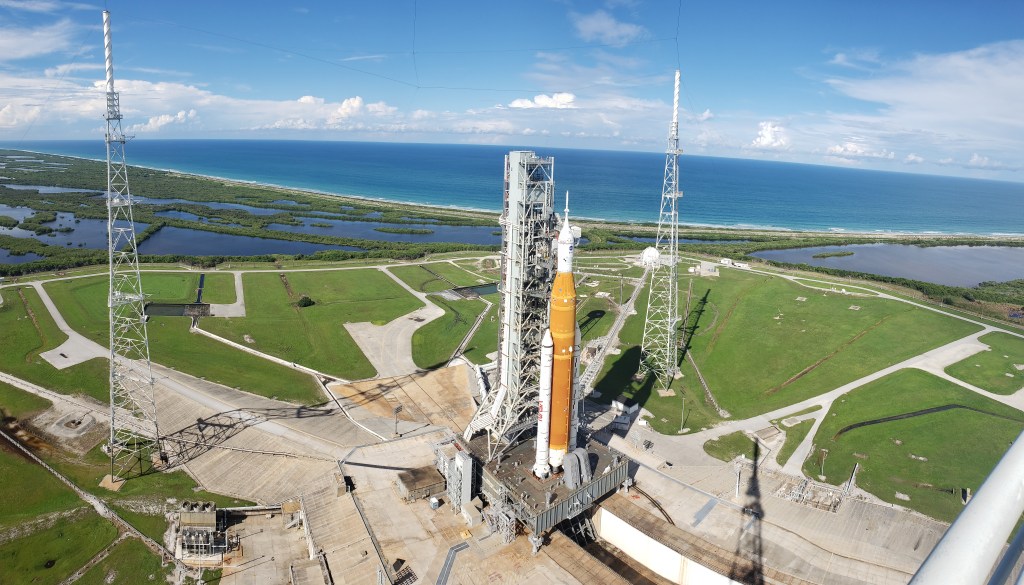
NASA’s Space Launch System and Orion at Launch Pad 39B. NASA reports that the refurbished flame trench and flame deflector are exposed to peak temperatures of approximately 2,200 °F during launch. Image: NASA. View the NASA source.
Launch Pad Corrosion and Thermal Exposure
NASA’s Kennedy Space Center operates in an aggressive coastal environment. Launch structures and ground-support equipment are exposed to ocean salt spray, heat, humidity, and sunlight. During the Space Shuttle era, solid rocket booster exhaust added acidic combustion products to that environment.
NASA reports that Shuttle exhaust deposited small alumina particles carrying hydrochloric acid around the launch complex. A heavy launch could introduce an estimated 70 tons of 0.1 M hydrochloric acid. Marine chlorides and acidic rocket exhaust placed additional demands on coatings, structural steel, piping, fasteners, and other exposed hardware. NASA describes the coating environment here.
On May 31, 2008, Space Shuttle Discovery launched from Pad 39A on mission STS-124. After the launch, NASA found that approximately 3,540 refractory bricks had broken loose from a section of the flame-trench wall measuring roughly 20 by 75 feet.
NASA’s investigation documented severe deterioration of the epoxy and extensive corrosion of the steel anchoring system beneath the refractory lining. Hot exhaust gases entered the wall system, pressure developed behind the bricks, and the deteriorated anchors could no longer hold the refractory material in place.

STS-124 exposed several related material stresses at once. The flame trench had been subjected to Atlantic salt, water from the sound-suppression system, acidic rocket exhaust, high temperatures, aging materials, and severe mechanical loading. The corroded anchoring system became part of a larger structural failure during launch.
Test Panel Preparation
GPI Laboratories supplied the steel substrates used by researchers at North Dakota State University’s Department of Coatings and Polymeric Materials. The study used low-carbon, cold-rolled steel panels approximately 6 inches long, 3 inches wide, and 3/16 inch thick. The panels were abrasive-blast cleaned to SSPC-SP 5 white metal before the experimental coatings were applied.
Consistent substrate preparation reduces variables in comparative coating work. Surface cleanliness, surface profile, contamination, coating application, film thickness, and cure can all affect adhesion and corrosion performance. Starting with comparable panels makes differences in coating formulation and exposure conditions easier to evaluate.
GPI routinely prepares specimens for coating and corrosion programs, including panel sourcing and fabrication, substrate preparation, coating application, film-thickness documentation, masking, scribing, and preparation of matched specimens for controlled environmental exposure.
Polysiloxane to SiOC
Ravi Arukula, Taehyun Kim, Joshua Dockter, and Xiaoning Qi of North Dakota State University published the work in npj Materials Degradation as “Corrosion Resistant Coating Fabrication Through Synergies Between SiOC Conversion and Iron Oxidation at High Temperatures.”
The researchers worked with polysiloxane, a silicone-based polymer that can be formulated and applied as a liquid coating. At sufficiently high temperatures, the polymer changes chemically and leaves behind a silicon-, oxygen-, and carbon-based material known as silicon oxycarbide, or SiOC. SiOC has a much more ceramic-like structure than the original polymer.
During conversion, volatile material leaves the coating and the remaining material contracts. Polymer-derived ceramic coatings can lose close to 50 percent of their volume during this process. The steel underneath does not contract with the coating, so the resulting stress can produce cracks, fragmentation, and loss of adhesion.
Cracks extending through the coating provide a direct route for water, chlorides, oxygen, and other corrosive materials to reach the steel substrate. Preventing or controlling this shrinkage is therefore central to producing a useful polymer-derived ceramic coating on metal.
The investigators added glass frit—finely divided glass—to the polysiloxane formulation. Coatings containing 0%, 35%, 45%, and 55% glass frit were evaluated after treatment at 427 °C, 538 °C, and 760 °C, approximately 800 °F, 1,000 °F, and 1,400 °F.
Coating Characterization
Electrochemical impedance spectroscopy measured the barrier properties of the coatings before and after heat treatment and corrosion exposure. Optical and electron microscopy were used to examine coating surfaces, cross-sections, cracks, and the interface between the coating and steel.
FTIR, Raman spectroscopy, X-ray diffraction, and X-ray photoelectron spectroscopy identified chemical structures and corrosion products that formed as treatment temperature increased. Pencil hardness, nanoindentation, thermogravimetric analysis, and surface-profile measurements documented changes in mechanical and thermal properties.
Heat-treated and untreated specimens were then exposed to 168 hours of ASTM B117 neutral salt spray. Visible corrosion and electrochemical measurements were compared to determine whether the coating still functioned as a barrier after thermal treatment.
Effect of Glass Frit
The unfilled polysiloxane formulation developed substantial cracking and fragmentation at the intermediate treatment temperatures. Those defects exposed the steel and created pathways for corrosion during the later salt-spray exposure.
The glass-filled coatings remained more intact after heat treatment and generally showed much less corrosion during subsequent salt-spray testing. The formulation containing 55% glass frit and treated at 760 °C showed only negligible surface corrosion products after neutral salt-spray exposure.
The glass frit did more than occupy space within the coating. As temperature increased, the softened glass, the converting polysiloxane, and oxidation products from the steel interacted to form the final coating structure.
An Oxidation Barrier
Iron oxide beneath a protective coating usually indicates that corrosion has started at the steel surface. In these specimens, however, iron oxides and iron oxyhydroxides formed during high-temperature treatment and became incorporated into the developing glass and SiOC coating.
The polysiloxane converted into a ceramic-like SiOC network while the glass frit softened and redistributed within the film. At the same time, oxidation products formed at the steel surface and migrated into the coating. Chemical analysis confirmed iron oxides and oxyhydroxides within coatings treated at the higher temperatures.
The authors concluded that these oxidation products acted much like an active filler, helping offset the shrinkage associated with polymer-to-ceramic conversion. The glass-filled systems produced coherent, well-adhered, crack-free films that retained corrosion resistance after treatment at temperatures as high as 760 °C.
Oxidation of the steel became part of the coating-forming process. Iron oxides from the substrate entered the developing SiOC and glass structure and contributed to the final protective film.
Potential High-Temperature Applications
Aircraft turbine engines face a related combination of heat and corrosion. NASA describes hot corrosion as a process in which sodium chloride contamination can react with sulfur associated with fuel combustion and produce sodium sulfate deposits on hot engine components. These deposits can attack protective oxide layers and accelerate oxidation of turbine materials.
NASA developed dedicated equipment to reproduce those conditions. Its Replaceable Blade Turbine Facility exposed turbine materials to corrosive combustion gases at temperatures up to approximately 1,830 °F. Jet fuel and salt were introduced into the system and the resulting hot, pressurized flow was directed onto turbine materials. The facility was later upgraded into the Hot Corrosion Test Facility and used to evaluate high-temperature materials and protective coatings.
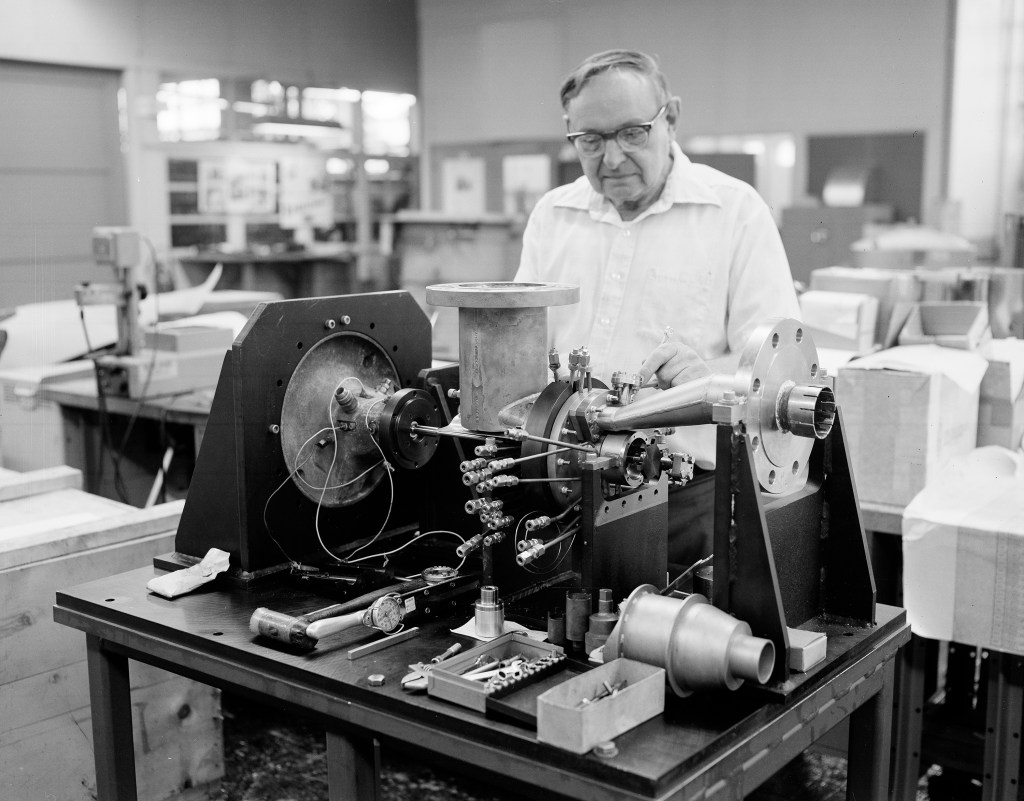
Replaceable Blade Turbine Rig
NASA technician assembling the Replaceable Blade Turbine Rig before installation in the Special Projects Laboratory in 1981.
Image: NASA/Dan Laity.
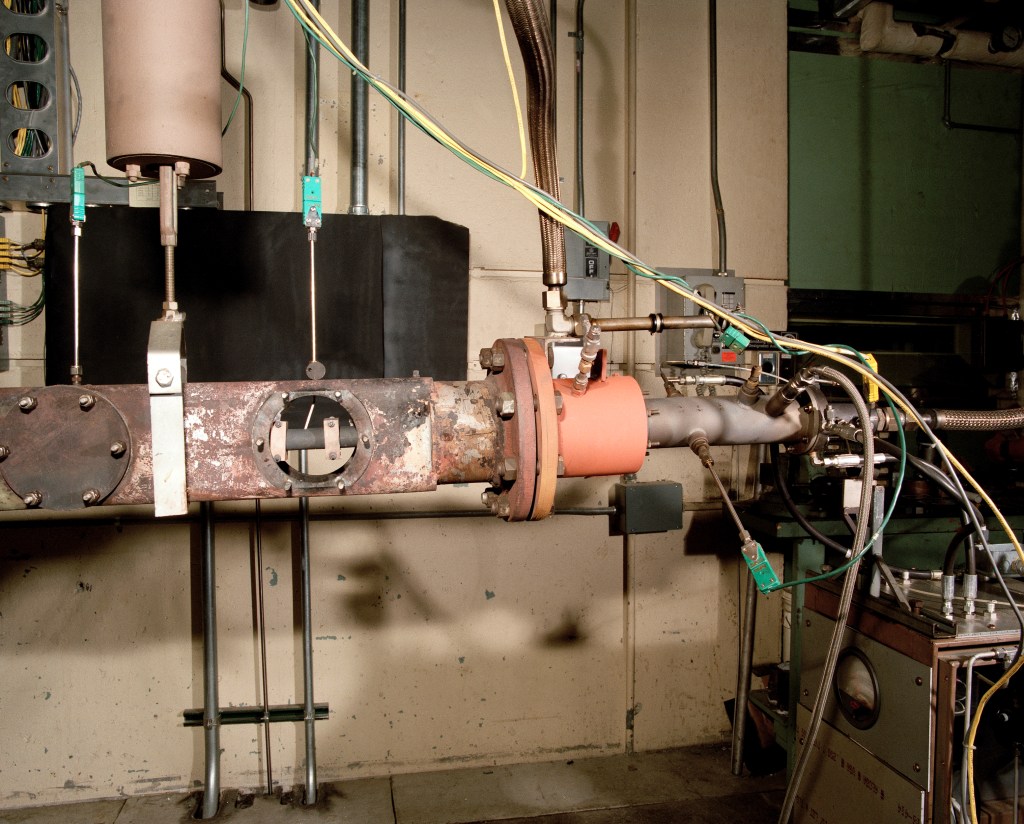
Hot Corrosion Test Rig
NASA’s Hot Corrosion Test Rig in the Special Projects Laboratory in 1992, used to investigate high-temperature oxidation and corrosion of turbine materials and protective coatings.
Image: NASA/Quentin Schwinn.
The North Dakota State University research addresses the same general engineering requirement from a different direction: a liquid-applied polysiloxane coating that can be converted into a ceramic-like barrier after application to steel.
Materials with that combination of application flexibility, heat resistance, and corrosion protection could be useful in space-launch hardware, aircraft systems, exhaust components, turbines, power-generation equipment, furnaces, and other equipment exposed to both high temperature and corrosive environments.
NASA Launch Pad 39B
NASA’s overview of Launch Pad 39B shows the flame trench, launch structure, and ground systems used for Artemis missions.
Video: NASA Kennedy Space Center. Watch on YouTube.
Coating Evaluation at GPI Laboratories
GPI Laboratories performs many of the coating-preparation, exposure, and evaluation methods used in research and product-development programs. These capabilities include controlled specimen preparation, coating application, film-thickness measurement, corrosion exposure, optical microscopy, coating cross-section evaluation, FTIR analysis, physical testing, and post-exposure examination.
GPI’s ASTM B117 testing programs can begin with test-ready customer specimens or include panel sourcing, substrate preparation, controlled coating application, dry-film-thickness measurement, conditioning, masking, scribing, corrosion exposure, photography, post-test evaluation, and reporting.
GPI also performs optical microscopy, prepared coating cross-section evaluation, film-thickness measurement, adhesion and other physical testing, FTIR analysis, and controlled environmental exposures. These methods can be combined within coating-development, qualification, comparative-testing, and failure-investigation programs.
A controlled coating program starts with documented specimen preparation, applies a defined environmental or mechanical stress, and then examines the material after exposure. That sequence allows coating manufacturers, material suppliers, engineers, and product developers to compare formulations, application variables, and failure mechanisms under controlled conditions.
ASTM B117 Salt Spray Testing
Controlled neutral salt-fog exposure for coatings, metals, prepared test panels, production parts, and comparative coating programs.
ASTM B117 TestingCoating Failure Investigation
Microscopy, coating cross sections, FTIR, physical testing, controlled exposure, and comparative evaluation of failed and reference materials.
Failure InvestigationMaterials & Corrosion Testing
Corrosion, weathering, immersion, humidity, coating-performance, analytical, and custom materials-testing programs.
Explore Laboratory ServicesSources & Further Reading
- Arukula, Kim, Dockter & Qi — Corrosion Resistant Coating Fabrication Through Synergies Between SiOC Conversion and Iron Oxidation at High Temperatures
- NASA Kennedy Space Center — Corrosion Program
- NASA Kennedy Space Center — Coatings Data and the Shuttle Launch Environment
- NASA System Failure Case Study — STS-124 Launch Pad 39A Flame Trench Damage
- NASA — Launch Pad 39B and Artemis Launch Infrastructure
- NASA Glenn Research Center — High-Temperature and Hot-Corrosion Materials Research