
ISO 12944-6 Laboratory Testing Services
GPI Labs performs ISO 12944-6 testing for protective paint systems used on carbon steel, hot-dip galvanized steel, and steel with thermally sprayed metallic coatings. Our laboratory can support the full qualification process—from substrate preparation and controlled coating application through exposure, post-test evaluation, photography, and final reporting.
Programs are built around the applicable atmospheric corrosivity category or immersion category and the requested durability range. Depending on that classification, testing may include ISO 6270-1 water condensation, ISO 9227 neutral salt spray, ISO 2812-2 water immersion, or Annex B cyclic ageing combining fluorescent UV/condensation, neutral salt spray, and low-temperature exposure.
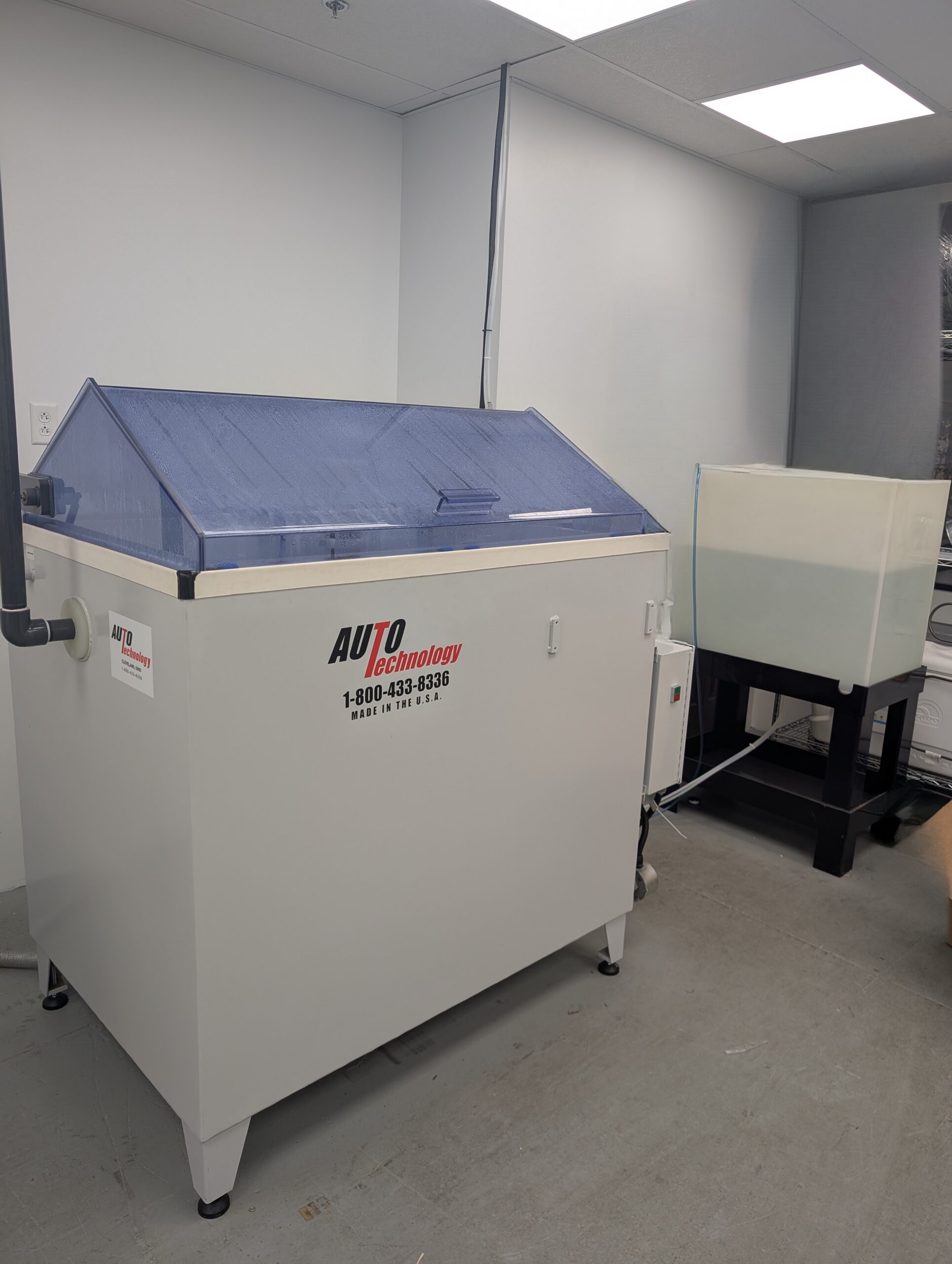
GPI Labs uses controlled ISO 9227 neutral salt spray exposure as part of applicable ISO 12944-6 protective coating qualification programs.
Send the target category, durability range, coating system, substrate, and any customer-specific reporting requirements.
What Is ISO 12944-6?
ISO 12944-6 specifies laboratory test methods and test conditions used to assess protective paint systems for steel structures. It addresses atmospheric corrosivity categories C2 through C5 and immersion categories Im1 through Im3 defined in ISO 12944-2.
Laboratory durability is not an exact service-life prediction
ISO 12944-6 results are intended to assist in selecting suitable paint systems. The durability designation is a technical planning concept, not a warranty period, and accelerated laboratory exposure does not reproduce every factor present during natural service.
Coating systems within the scope
ISO 12944-6 covers protective paint systems designed for application to uncoated carbon steel, hot-dip galvanized steel conforming to ISO 1461, and steel carrying thermally sprayed metallic coatings in accordance with ISO 2063-1 and ISO 2063-2. It does not cover protective paint systems applied to electroplated or previously painted steel.
Testing an offshore or related marine coating system?
ISO 12944-9 addresses CX offshore atmospheres, Im4 submerged service, and combined splash-and-tidal-zone exposure. See our ISO 12944-9 offshore coating testing services for cyclic ageing, artificial seawater immersion, cathodic disbondment, paint fingerprinting, and related qualification requirements.
Who requests ISO 12944-6 testing?
- Protective paint and industrial coating manufacturers.
- Primer, epoxy, polyurethane, zinc-rich, and multi-coat system formulators.
- Powder coating manufacturers and applicators.
- Steel fabricators, OEMs, and infrastructure suppliers.
- Bridge, energy, utility, industrial, and marine project stakeholders.
- Engineering firms, government contractors, and third-party evaluators.
Typical projects include new-product qualification, formulation screening, independent verification of internal results, customer or specification submittals, competitive comparisons, and investigation of disputed coating performance.
Looking for other coating, corrosion, weathering, or analytical methods? Visit the GPI Labs materials testing services overview.
How GPI Labs Runs an ISO 12944-6 Test Program
ISO 12944-6 is not one universal chamber exposure. The required work depends on the substrate, the atmospheric or immersion category, and the durability range being evaluated. GPI Labs reviews those requirements before testing and defines the necessary specimen sets, exposure methods, durations, evaluations, and reporting scope.
1. We confirm the qualification target
A project normally begins with the requested classification—C2 through C5 for atmospheric service or Im1 through Im3 for immersion or burial—and the applicable durability range. We also review the substrate, coating-system construction, nominal dry-film thickness, application instructions, and any owner or customer specification that supplements ISO 12944-6.
2. We identify the required laboratory exposures
Based on the selected classification, GPI Labs establishes the applicable combination of laboratory methods. Atmospheric programs use separate panel sets for each required exposure. Where ISO 12944-6 permits more than one test regime, the selected approach is confirmed with the customer before work begins.
Atmospheric coating systems
- ISO 6270-1: Water condensation exposure.
- ISO 9227: Neutral salt spray exposure.
- Annex B: Cyclic ageing combining fluorescent UV/condensation, neutral salt spray, and low-temperature exposure for classifications that permit or require it.
Immersion and burial systems
- ISO 2812-2: Water immersion exposure.
- Additional exposure: Condensation or neutral salt spray when relevant to partial or temporary immersion or burial.
What happens during Annex B cyclic ageing?
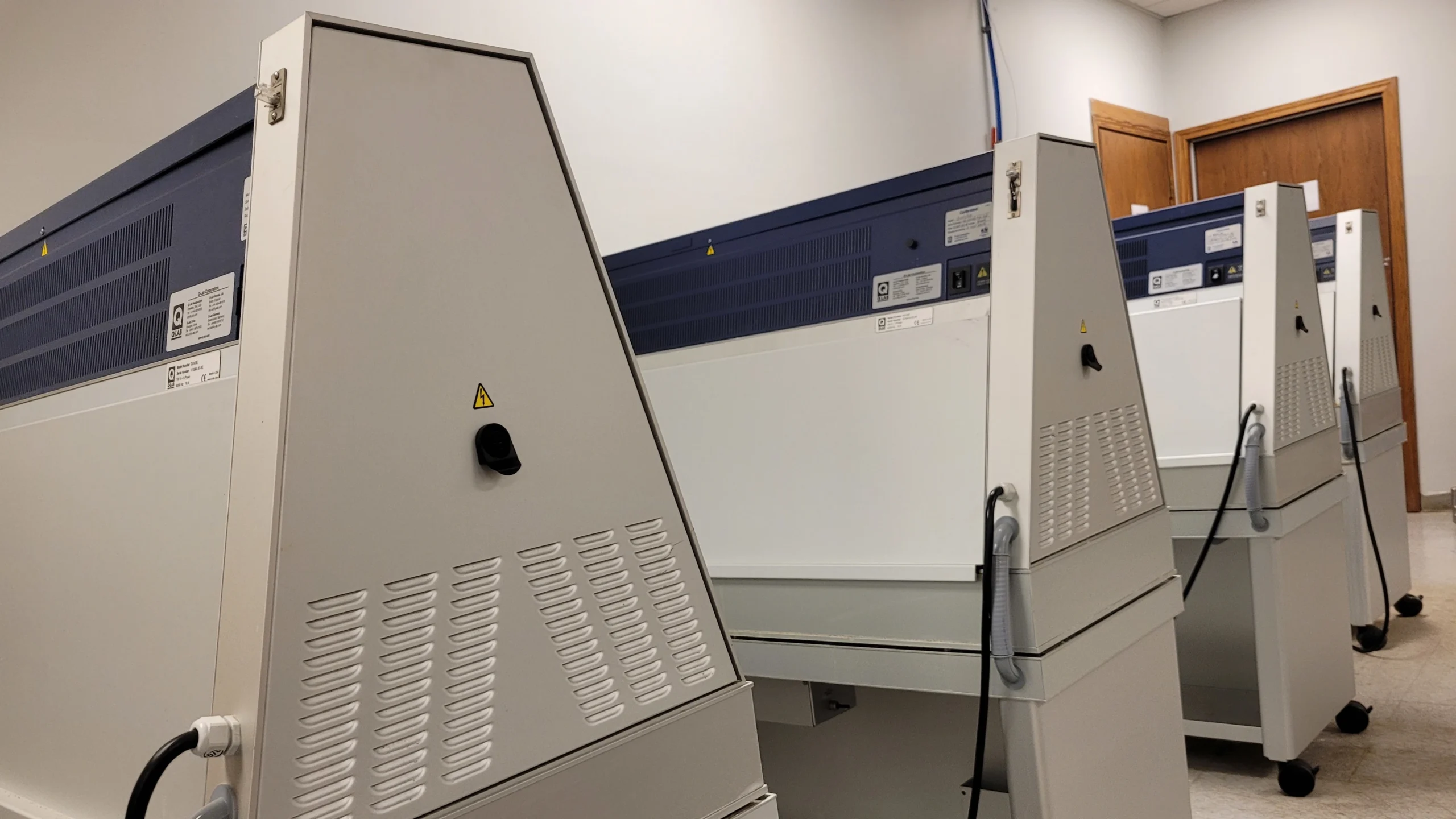
GPI Labs fluorescent UV weathering chambers perform the UV-A and condensation portion of applicable ISO 12944-6 Annex B cyclic ageing programs.
One Annex B cycle lasts 168 hours and subjects the coating system to three different environments in sequence:
- 72 hours of fluorescent UV and condensation: ISO 16474-3 Method A, Cycle 1 alternates UV-A exposure with moisture condensation at controlled temperatures.
- 72 hours of neutral salt spray: ISO 9227 NSS exposes the scribed coating system to a continuous neutral salt fog environment.
- 24 hours at low temperature: The panels complete the weekly cycle at −20 ± 2 °C before the next cycle begins.
Annex B is an alternative to the separate condensation and neutral salt spray regime for C4 Very High and C5 High. It is the specified regime for C5 Very High. GPI Labs tracks each transfer and exposure segment so the required sequence and accumulated duration remain documented throughout the program.
3. We run the specified program—not a generic salt-spray test
The exposure method and duration are tied to the requested classification. For example, a C3 High program under ISO 12944-6 requires separate specimens for 240 hours of ISO 6270-1 condensation and 480 hours of ISO 9227 neutral salt spray. More severe classifications can require longer exposures or cyclic ageing. GPI Labs documents the selected program in the project scope so the customer knows which specimens will undergo each test.
4. We perform and document the agreed post-exposure evaluations
After exposure, GPI Labs can perform the applicable visual, scribe, and adhesion assessments. Results are recorded by specimen and can be supported with photographs. Depending on the agreed scope, GPI Labs can compare the results with the applicable ISO 12944-6 acceptance criteria or provide the documented results for the customer’s final determination. Agreed deviations and customer-specific additions are identified in the report.
ISO 12944-6 Sample Preparation and Coating Application
GPI Labs can test customer-supplied coated panels or prepare complete panel sets in-house. Controlled preparation is especially useful when customers need matched specimens, documented surface conditions, consistent coating application, or an independent laboratory to manage the entire program.
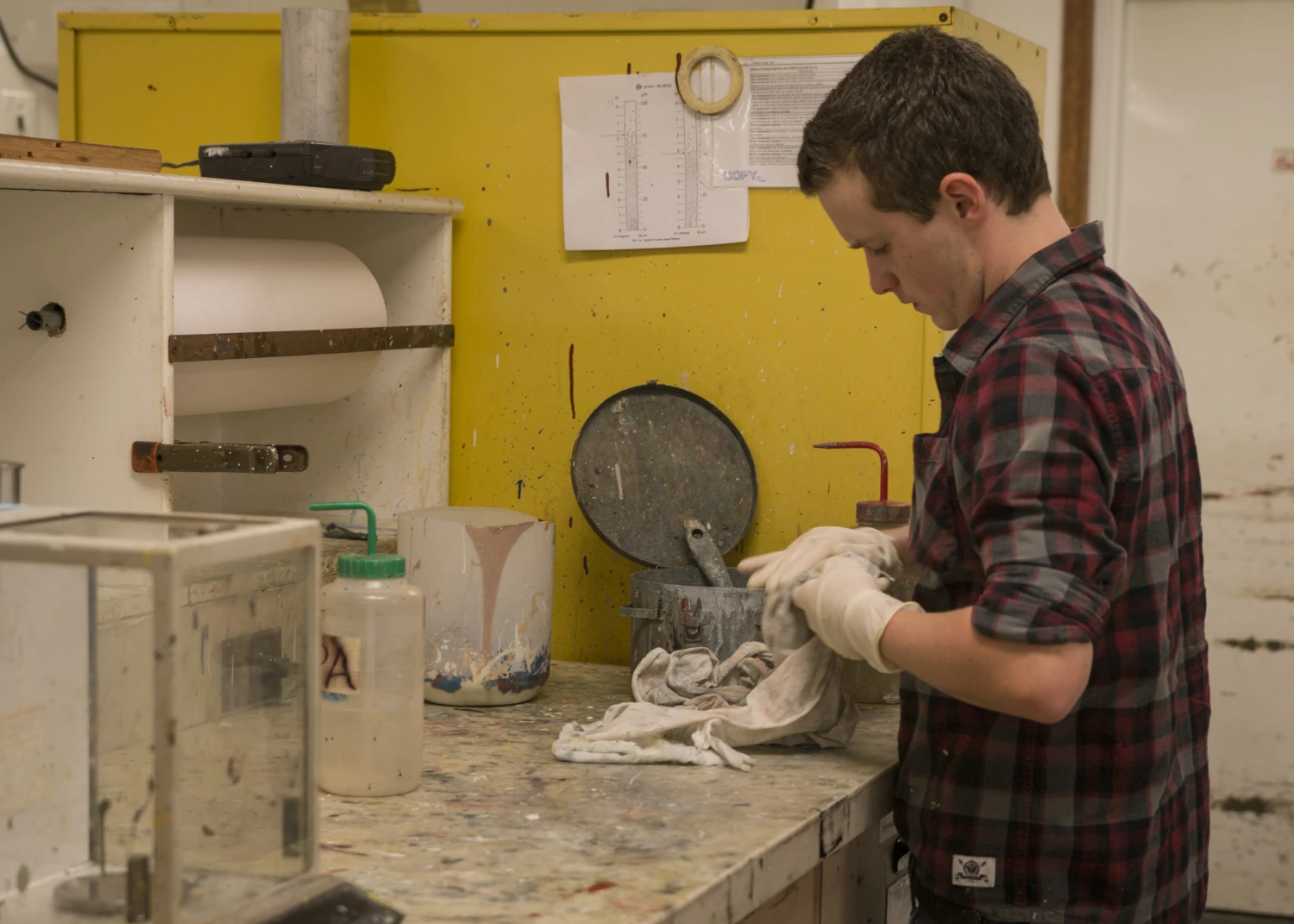
A GPI Labs technician prepares a coated test panel specimen before corrosion exposure to support consistent protective coating evaluation.
Panel and substrate requirements
- Unless otherwise agreed, GPI Labs will use carbon-steel panels of the same type of steel intended for practical use.
- The standard specifies a minimum panel size of 150 mm × 75 mm and a minimum thickness of 3 mm.
- Unless otherwise agreed, carbon steel is blast-cleaned to at least ISO 8501-1 preparation grade Sa 2½ with a medium (G) surface profile.
- Hot-dip galvanized and thermally sprayed metallic substrates are prepared as agreed for the coating system and intended program.
- Unless otherwise agreed, three panels are prepared for each exposure test.
Controlled coating application
GPI Labs can apply single-coat and multi-coat systems according to the paint manufacturer’s instructions, including specified wet-film thickness, nominal dry-film thickness, recoat windows, cure intervals, and conditioning. Each coat is inspected for uniformity and visible application defects before the panels enter exposure.
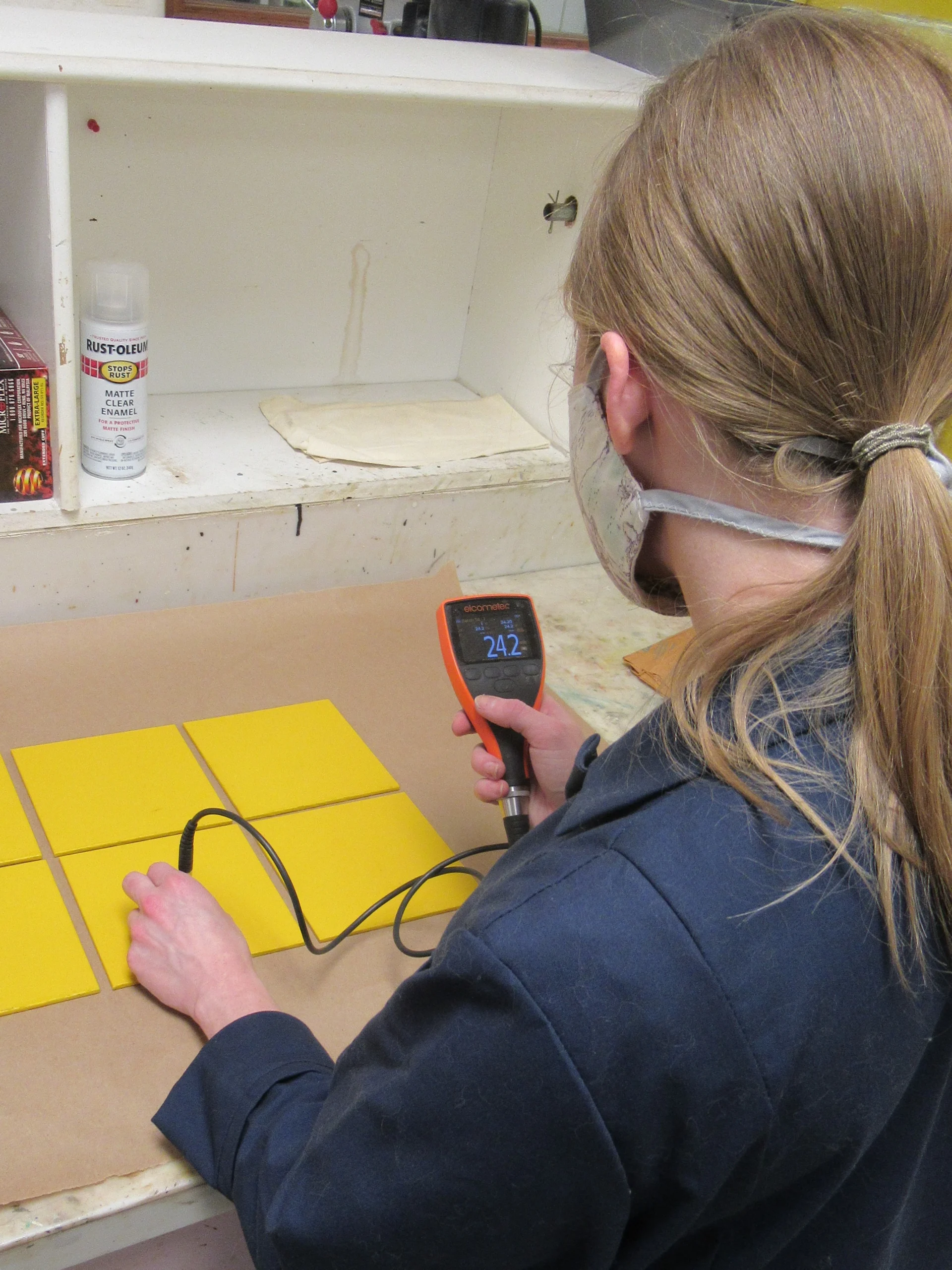
Dry-film thickness measurements document the applied coating system before exposure and help verify that prepared specimens meet the agreed program.
Dry-film thickness and conditioning
Dry-film thickness on rough carbon-steel and thermally sprayed metallic surfaces is checked using the ISO 19840 approach; thickness on hot-dip galvanized surfaces is checked using ISO 2808 unless the parties agree otherwise. GPI Labs documents the results and, when included in the agreed scope, can compare them with the applicable dry-film-thickness acceptance requirements and ISO 12944-6 limits for each applied coat. Excessively thick specimens can misrepresent coating performance. The coated specimens are normally conditioned for two weeks at 23 ± 2 °C and 50 ± 5% relative humidity before testing unless another arrangement is agreed.
Masking and mechanical scribing
Edges and backs are protected as required. Panels assigned to neutral salt spray or applicable cyclic ageing exposure receive a controlled scribe that penetrates through the coating to the substrate in accordance with Annex A. Consistent scribe production matters because post-exposure corrosion is measured from this intentional defect.
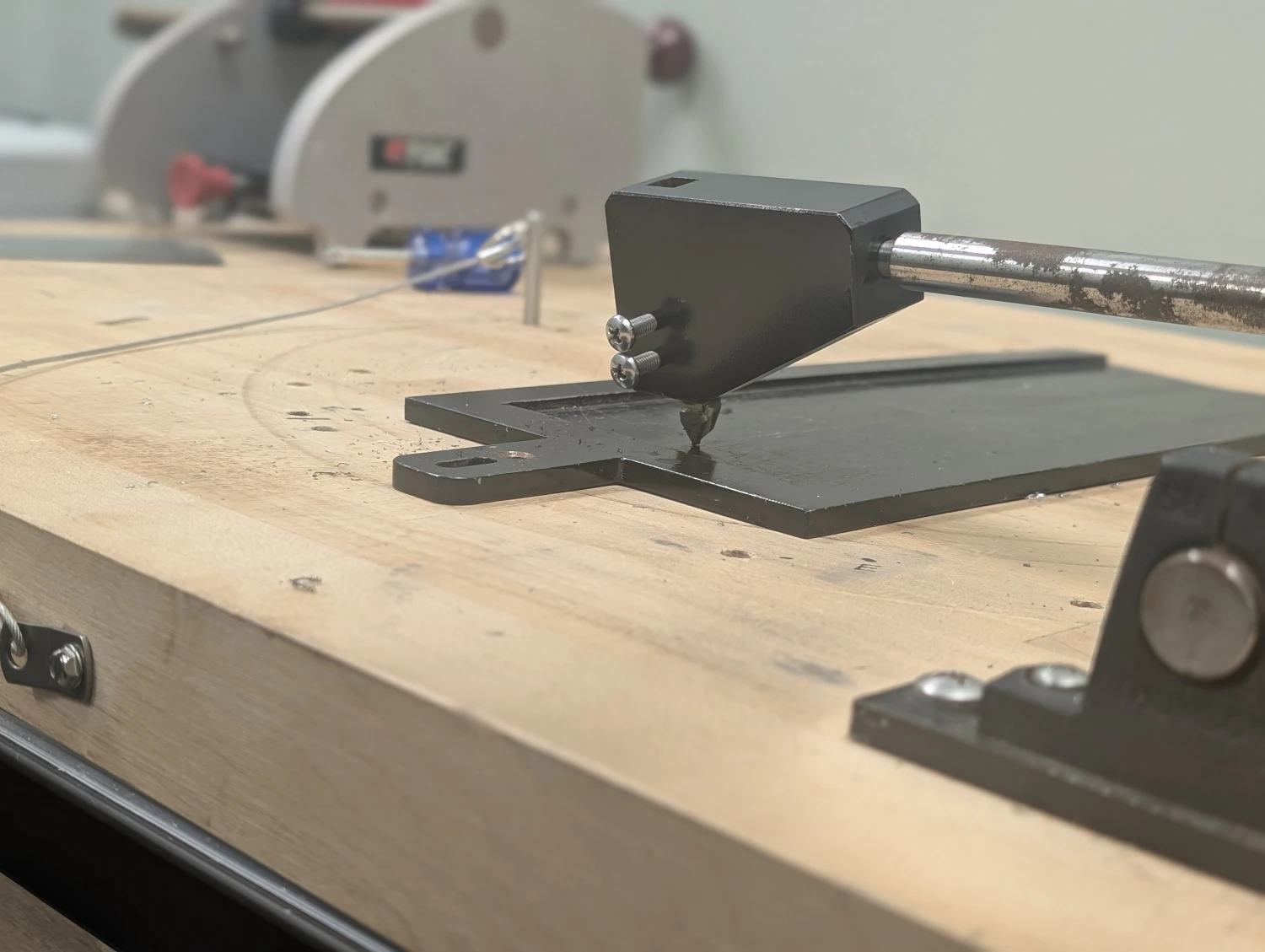
Mechanical scribing equipment produces a controlled artificial defect through the coating before exposure.
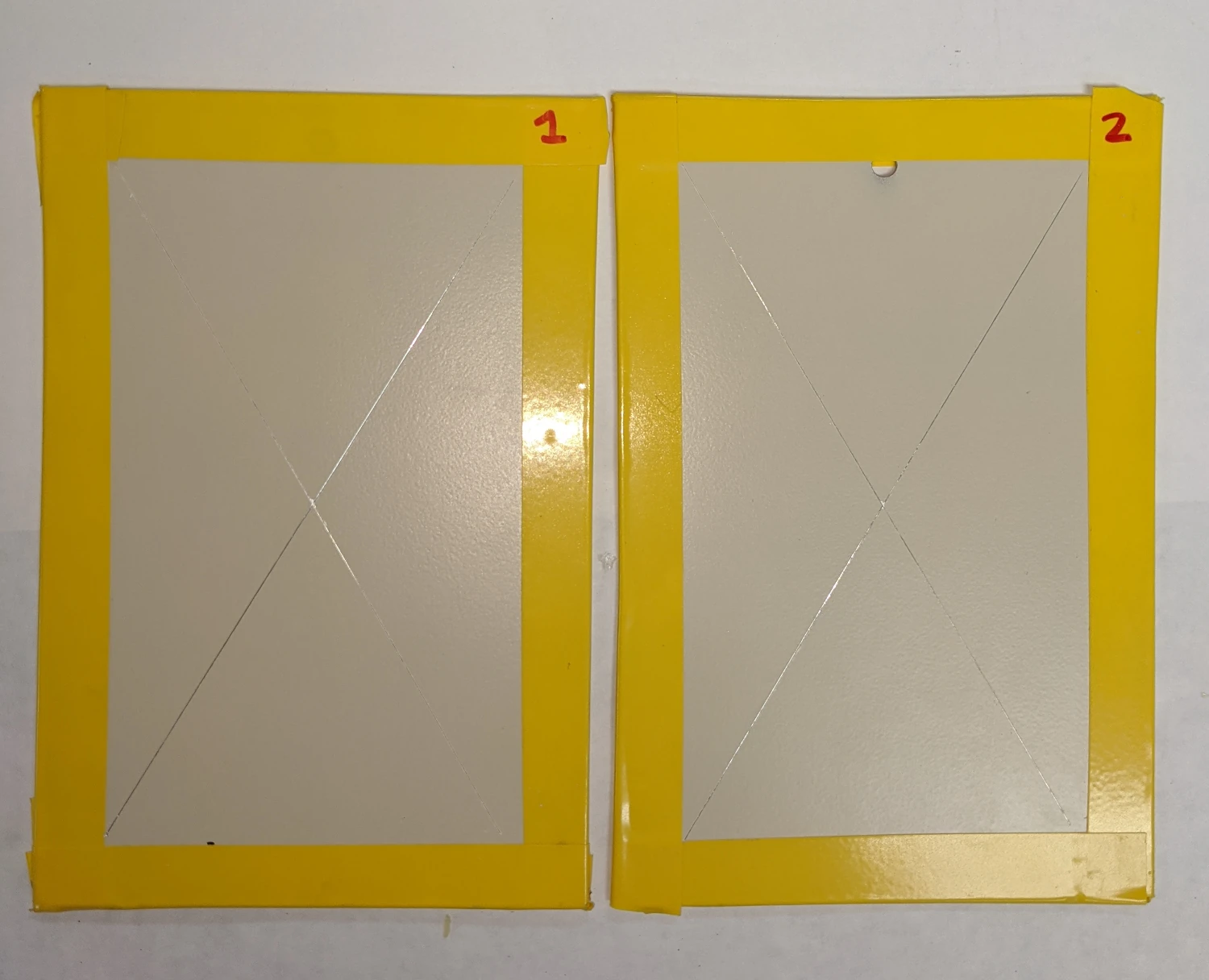
Masked and scribed coated-steel panels prepared for an ISO 9227 exposure within an ISO 12944-6 qualification program.
Coating Evaluation and Acceptance Criteria
Chamber exposure is only part of an ISO 12944-6 program. GPI Labs can perform the applicable visual, scribe, and adhesion assessments and document the results for each panel. When acceptance evaluation is included in the agreed scope, GPI Labs can compare those results with the applicable criteria; otherwise, the report provides the documented results for the customer’s final determination.
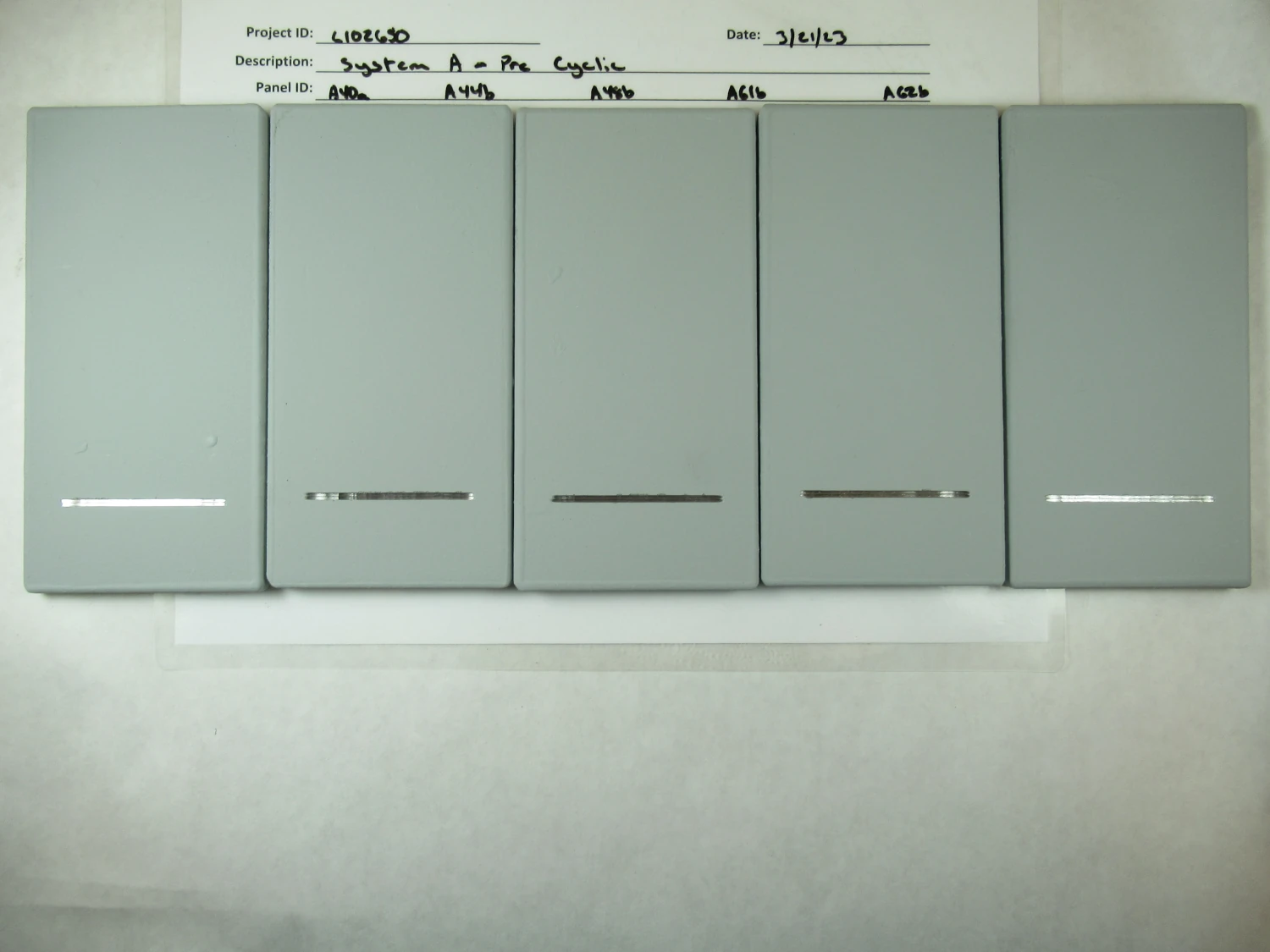
Test panels prepared with standardized artificial scribe lines following ISO 12944-6 Annex A and ISO 4628-8 procedures prior to cyclic corrosion exposure at GPI Labs.
Post-test assessments may include
- Blistering: ISO 4628-2.
- Rusting: ISO 4628-3.
- Cracking: ISO 4628-4.
- Flaking: ISO 4628-5.
- Delamination and corrosion around the scribe: ISO 4628-8 and the ISO 12944-6 Annex A procedure, as applicable.
- Pull-off adhesion: ISO 4624.
- Cross-cut testing: ISO 2409.
The applicable adhesion assessment is established from the coating system, film thickness, and agreed test plan. Measurements are performed before and after artificial ageing where required. When included in the agreed scope, GPI Labs can compare the exposed results with the applicable ISO 12944-6 criteria.
Acceptance criteria apply panel by panel
Unless otherwise agreed, three panels are prepared for each exposure test. ISO 12944-6 bases acceptance on the individual specimens: at least two of the three panels must meet the applicable requirements. GPI Labs reports individual-panel observations and measurements. When acceptance evaluation is included in the agreed scope, GPI Labs can determine whether the panel set meets these requirements; otherwise, the customer can use the reported results for its final determination.
Accurate scribe evaluation
The laboratory removes loose or poorly adherent coating as specified and takes repeated measurements along the artificial defect. Corrosion from the scribe is calculated from the measured affected width after subtracting the original scribe width, with the result reported to 0.1 mm. This distinction prevents the scribe itself from being counted as coating-system failure.
Independent review when interpretation matters
GPI Labs can perform independent post-exposure evaluation when a coating manufacturer, owner, engineering firm, or customer needs confirmation of scribe measurements, visual ratings, adhesion results, or overall qualification findings.
ISO 12944-6 Laboratory Reporting
GPI Labs reports are structured to support coating qualification, engineering review, customer submittals, product development, and independent verification. Reporting is matched to the agreed project scope and records the details needed to understand how each result was produced.
Typical report content
- Laboratory and customer identification.
- Referenced edition and applicable test methods.
- Target corrosivity or immersion category and durability range.
- Substrate identification, dimensions, and surface preparation.
- Paint products, coating-system sequence, colors, and batch information.
- Application method, nominal and measured dry-film thickness, and conditioning.
- Exposure conditions, duration, interruptions, and relevant observations.
- Individual-panel visual ratings, scribe measurements, and adhesion results.
- Photographic documentation, including the scribe before and after ageing and pull-off failure surfaces when applicable.
- Zinc-layer or thermally sprayed metallic-coating thickness when applicable.
- Deviations from the prescribed or agreed procedures.
- Comparison with the applicable acceptance requirements when included in the agreed scope.
Customer-supplied or laboratory-prepared specimens
Customer-supplied panels
Send prepared panels with coating-system identification, application records, target classification, and any customer specification that modifies the standard program. GPI Labs can review the submission before exposure begins.
Full-service preparation
GPI Labs can source or fabricate panels, prepare the surface, apply the coating system, document dry-film thickness, mask and scribe specimens, perform exposures, evaluate results, and issue the final report.
Information needed for a quote
- Requested ISO 12944-6 category and durability range.
- Substrate type and whether panels will be supplied or prepared by GPI Labs.
- Coating-system layers, nominal dry-film thicknesses, and cure requirements.
- Number of coating systems, references, or comparative products.
- Required completion date and reporting format.
- Any owner, OEM, certification, or customer-specific additions.
ISO 12944-6 Testing FAQ
Can GPI Labs prepare and coat the test panels?
Yes. GPI Labs can support substrate sourcing, panel fabrication, abrasive blasting, surface-profile verification, coating application, dry-film thickness measurement, conditioning, masking, and scribing. Customer-supplied coated panels can also be tested.
How many panels are required for ISO 12944-6?
Unless the interested parties agree otherwise, ISO 12944-6 calls for three panels per exposure test. Atmospheric exposure methods use separate panel sets, so the total quantity depends on the selected category, durability range, test regime, and any unexposed controls.
Does ISO 12944-6 testing predict coating service life?
No. The results help assess and select suitable protective paint systems under defined laboratory conditions. They do not predict an exact number of years in service or establish a warranty period.
Is ISO 9227 salt spray always required?
No. The required exposure depends on the corrosivity or immersion category and durability range. Some classifications use condensation alone; others combine condensation and neutral salt spray, require water immersion, or permit or require cyclic ageing.
What is the difference between ISO 12944-6 and ISO 12944-9?
ISO 12944-6 addresses protective paint systems for the C2–C5 atmospheric categories and Im1–Im3 immersion categories. The ISO 12944-9 testing program addresses offshore and related structures, including the CX and Im4 environments within its scope. GPI Labs can quote the applicable part after reviewing the intended exposure and specification.
Can GPI Labs evaluate panels exposed by another laboratory?
Yes, when the specimen condition and available exposure documentation allow a meaningful evaluation. GPI Labs can provide independent visual ratings, scribe measurements, adhesion testing, photography, and a report describing the received condition and evaluation basis.
Request an ISO 12944-6 Testing Quote
Tell us which coating system, substrate, corrosivity or immersion category, durability range, and reporting requirements apply. GPI Labs can quote customer-supplied specimens or a complete program including panel preparation, coating application, exposure, evaluation, and reporting.