
ISO 12944-9 Offshore Coating Testing Services
GPI Labs performs ISO 12944-9 testing for protective paint systems intended for offshore atmospheres, submerged service, and combined splash-and-tidal exposure. Our laboratory can manage the complete qualification process, including paint identification, test-panel preparation, controlled coating application, 4,200-hour exposures, post-test evaluation, photography, and final reporting.
The required program depends on whether the system is being qualified for CX offshore atmospheric service, Im4 immersion, or the combined CX/Im4 conditions found in splash and tidal zones. GPI Labs reviews the intended environment and coating-system construction before defining the required cyclic ageing, artificial seawater immersion, cathodic disbondment, and evaluation work.
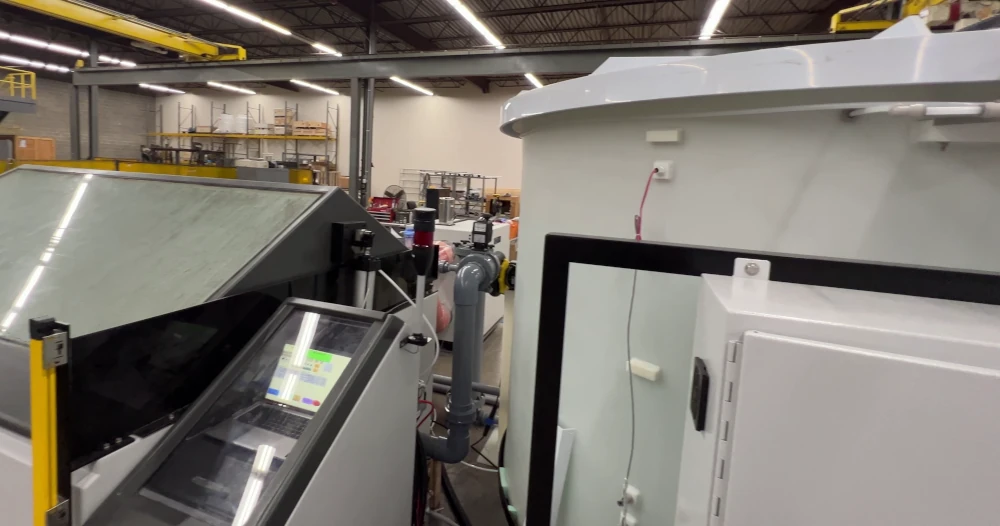
GPI Labs’ immersion chamber supports long-duration artificial seawater exposure and includes mechanical cooling to -20 °C for the low-temperature portion of applicable ISO 12944-9 Annex B cyclic-ageing programs.
Send the intended service environment, substrate, coating-system build, product data sheets, and any owner or certification requirements.
What Does ISO 12944-9 Cover?
ISO 12944-9 specifies protective paint-system requirements and laboratory performance tests for offshore and related carbon-steel structures exposed to severe marine environments. It addresses high-durability systems for CX offshore atmospheres, Im4 sea or brackish water immersion, and the combined CX/Im4 conditions present in splash and tidal zones.
Environments addressed by the standard
- CX offshore atmosphere: Structures exposed above the waterline to an extremely corrosive marine atmosphere.
- Im4 submerged service: Carbon-steel structures permanently immersed in sea or brackish water, including systems used with cathodic protection.
- Splash and tidal zones: Areas repeatedly wetted and dried by waves, spray, tides, loading, or ballasting and therefore exposed to a combination of CX and Im4 stresses.
Surfaces and service conditions
The standard applies to carbon steel, including uncoated steel, qualifying metal-coated surfaces, steel carrying a prefabrication primer, and previously painted steel after complete removal of the existing coating system. It does not apply to surfaces beneath insulation or concrete. The coating systems are intended for service temperatures from -20 °C to +80 °C; Im4 submerged systems are limited to an ambient operating temperature of 50 °C.
ISO 12944-6 or ISO 12944-9?
ISO 12944-6 addresses C2 through C5 atmospheric categories and Im1 through Im3 immersion categories. ISO 12944-9 addresses offshore CX, Im4, and splash-and-tidal qualification. If the project does not involve offshore or related marine service, review our ISO 12944-6 laboratory testing services.
For other corrosion, weathering, coating, and analytical methods, visit the GPI Labs materials testing services overview.
How GPI Labs Runs an ISO 12944-9 Qualification
ISO 12944-9 qualification covers the identity and application of the paints as well as the performance of the complete coating system. GPI Labs scopes the work as an integrated program so that the materials tested, panel preparation, exposure conditions, evaluation methods, and report remain connected from beginning to end.
1. Define the intended environment and coating system
We begin by confirming whether the target is CX, Im4, or splash-and-tidal service. The coating-system description identifies the manufacturer, substrate, surface preparation, primer type, product used for each coat, colour, nominal dry-film thickness, and total system thickness. When included in the agreed scope, GPI Labs can review the proposed build against the applicable minimum system requirements before qualification panels are prepared.
2. Confirm the submitted paints
Each base material, curing agent, and other coating component is linked to its batch information, technical data sheet, safety data sheet, and application instructions. Qualification fingerprint testing establishes analytical reference data for the paints actually used on the test panels.
3. Prepare and apply the qualification system
Panels are prepared, coated, measured, conditioned, checked for porosity, and scribed as required. GPI Labs records the surface condition, application sequence, per-coat thickness, overcoating intervals, cure conditions, and other details needed to reproduce and evaluate the submitted system.
4. Run the environment-specific exposures
The laboratory assigns separate three-panel sets to the required 4,200-hour qualification exposures. CX uses Annex B cyclic ageing; Im4 uses artificial seawater immersion and cathodic disbondment; splash-and-tidal qualification requires all three exposure paths.
5. Evaluate and report every panel
Visual condition, pull-off adhesion, corrosion at the scribe, and cathodic disbondment can be evaluated as applicable. Results are recorded by specimen and photographed. Depending on the agreed scope, GPI Labs can compare the results with the applicable ISO 12944-9 acceptance requirements or provide the documented results for the customer’s final determination.
Qualification does not guarantee exact field life
Passing the laboratory program indicates that a coating system is likely to provide high durability within the scope of ISO 12944-9. Actual service performance also depends on structural design, surface preparation, application quality, curing, operating conditions, and maintenance.
Paint Fingerprinting and Product Identification
ISO 12944-9 requires the individual paints in the submitted system to be identified, not merely named. GPI Labs can establish analytical fingerprints for qualification materials so later comparisons can determine whether supplied coatings correspond to the products originally tested.
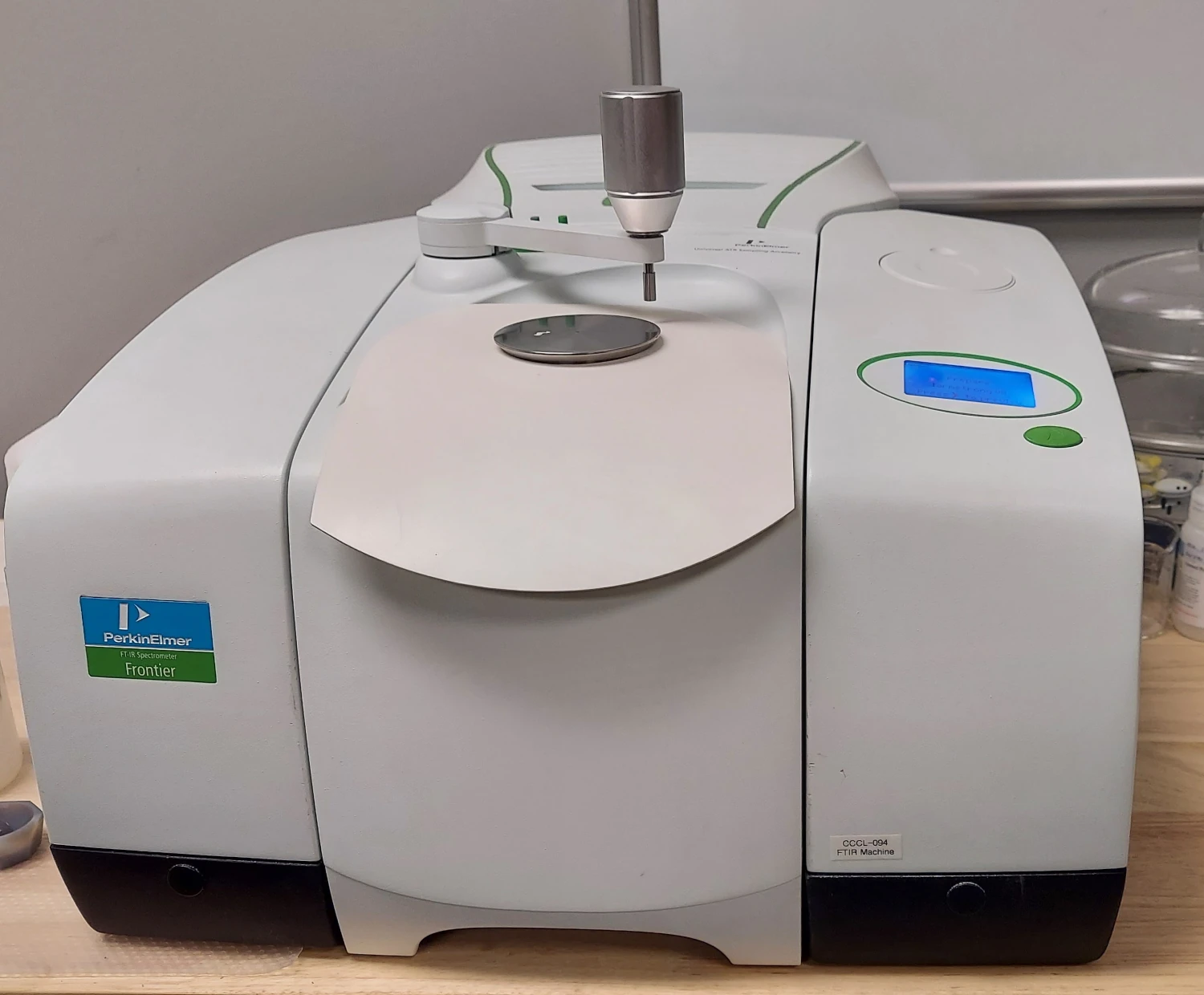
GPI Labs uses FTIR spectroscopy to establish fingerprints for coating components, including base materials and curing agents, helping verify that supplied paints correspond to the materials submitted for ISO 12944-9 qualification.
Qualification fingerprint
The fingerprint records specified physical and analytical characteristics of each paint component. Depending on the product, this includes infrared spectra for the base material and curing agent together with density, nonvolatile matter, ash, and other applicable identification data. The resulting profile is tied to the products and batches used during qualification.
Routine batch comparison
ISO 12944-9 also requires routine batch checks within the paint manufacturer’s quality-assurance system. When independent confirmation is needed, GPI Labs can compare appropriate characteristics of a supplied batch with the qualification fingerprint under an agreed scope.
Application testing
The qualification process also considers whether each paint can be mixed and applied as specified without unacceptable running or sagging. Each paint is applied to a vertical test surface at not less than 1.5 times its specified nominal dry-film thickness for this application check. Products are evaluated within their shelf life and pot life using the manufacturer’s current application instructions.
Test-Panel Preparation and Coating Application
GPI Labs can test customer-prepared specimens or prepare the qualification panel sets in-house. Full-service preparation creates a documented link between the submitted paint, substrate condition, application process, and final exposure results.
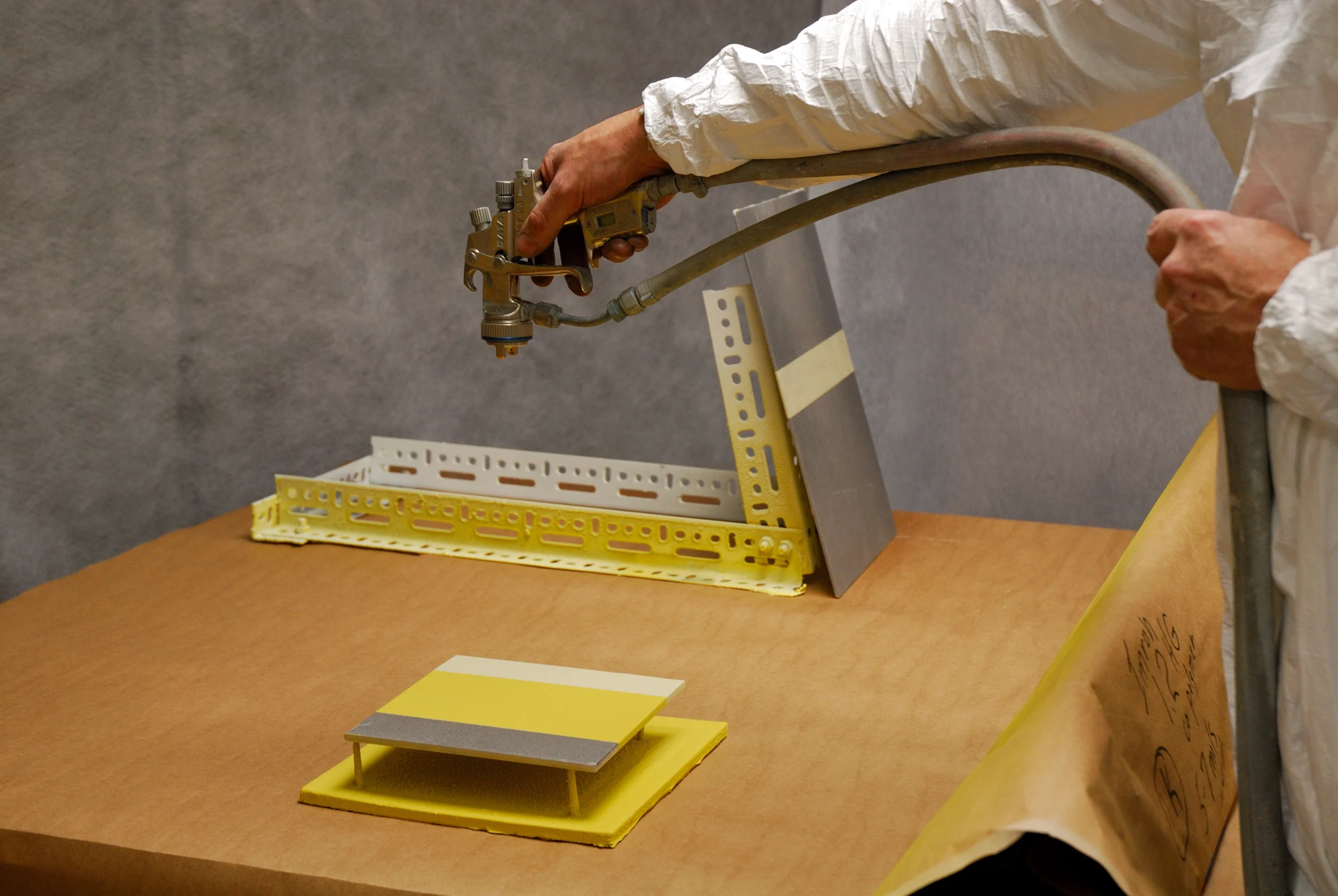
Controlled spray application of an offshore protective coating system to prepared test specimens using the manufacturer’s specified application, overcoating, and curing requirements.
Substrate and surface preparation
- Unless otherwise agreed, GPI Labs will use carbon-steel panels measuring at least 150 mm × 75 mm × 3 mm, with three panels assigned to each qualification exposure.
- Carbon steel is normally blast-cleaned to at least ISO 8501-1 Sa 2½ with an ISO 8503-1 medium (G) surface profile.
- Surface cleanliness, profile, dust, and other preparation parameters are recorded for the report.
- The metallic-layer thickness is measured before painting hot-dip galvanized or thermally sprayed substrates.
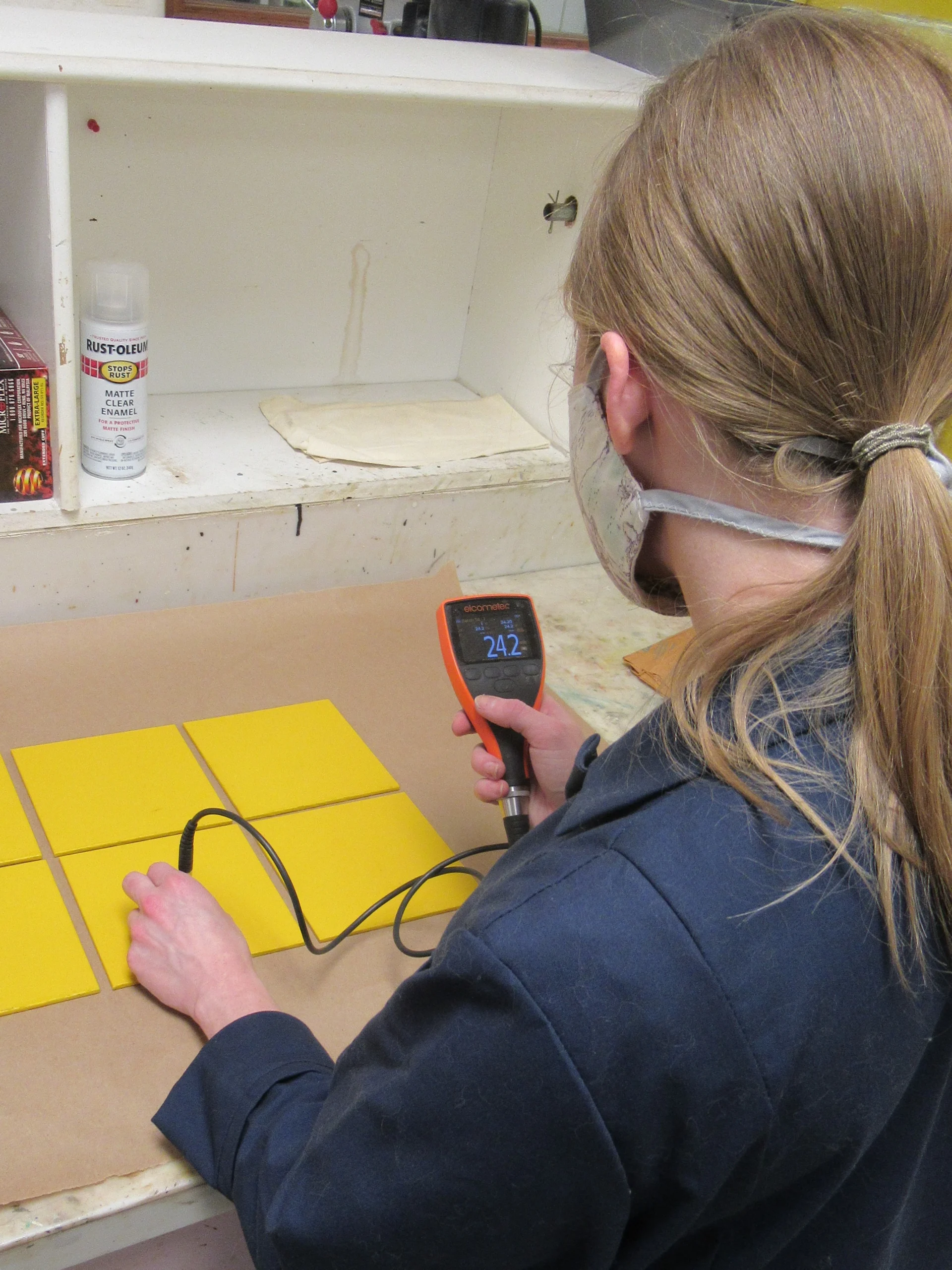
Per-coat dry-film thickness measurements document the applied offshore coating system before the next layer and before qualification exposure.
Per-coat application control
For panel sets prepared by GPI Labs, each coat is spray-applied and cured in accordance with the manufacturer’s written instructions. Before overcoating, GPI Labs measures dry-film thickness at five defined panel locations and records the minimum, mean, and maximum. The results are reviewed against the applicable ISO 12944-9 per-coat thickness limits so excessive film build does not distort the qualification. Overcoating times, cure conditions, backs, and protected edges are documented as part of the test history.
Porosity and pinhole inspection
Coated panels are checked for pinholes using a suitable ISO 29601 method before qualification exposure. ISO 12944-9 does not permit pinholes in the prepared test system, helping prevent a preparation defect from being mistaken for representative coating performance.
Mechanical scribing
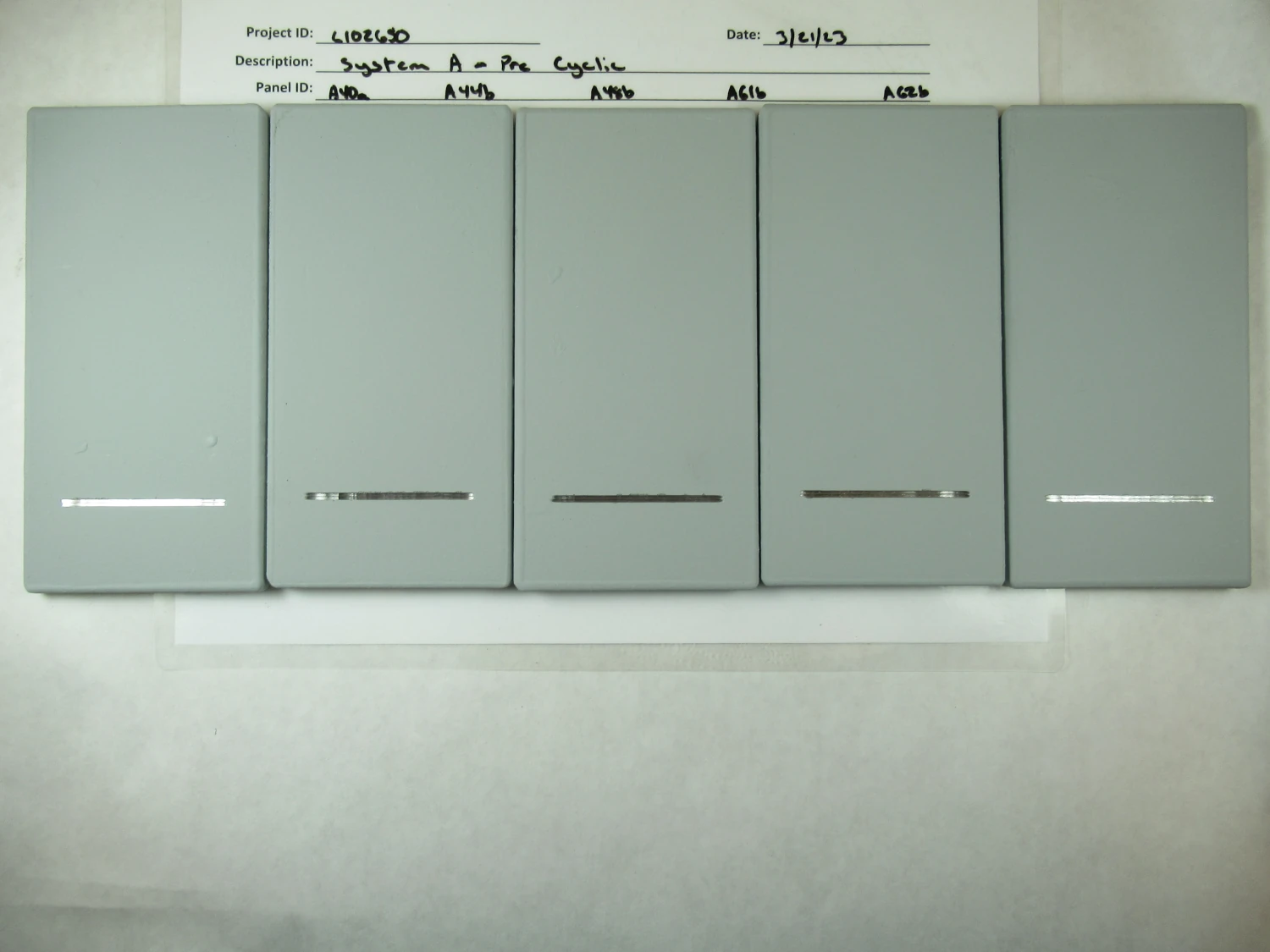
Test panels prepared with standardized artificial scribe lines following ISO 12944-6 Annex A and ISO 4628-8 procedures prior to cyclic corrosion exposure at GPI Labs.
Panels used for cyclic ageing and seawater immersion receive a controlled 50 mm × 2 mm scribe. The cut passes completely through the paint to the carbon steel; on galvanized or thermally sprayed substrates it also passes through the metallic layer. The scribe is positioned horizontally during cabinet exposure.
ISO 12944-9 Exposure Programs
Every ISO 12944-9 qualification is tied to the intended service zone. GPI Labs identifies the applicable exposure sets before testing so customers understand why CX, Im4, and splash-and-tidal systems do not follow the same laboratory program.
CX Offshore Atmosphere
Twenty-five weekly cycles combine fluorescent UV/condensation, neutral salt spray, and low-temperature exposure to assess atmospheric offshore coating performance.
Im4 Submerged Service
Separate panel sets evaluate resistance to artificial seawater and the ability of the coating to resist disbondment around a controlled holiday while under cathodic protection.
Splash & Tidal Zones
Combined CX and Im4 service requires cyclic ageing, artificial seawater immersion, and cathodic disbondment using separate qualification specimens.
Annex B cyclic ageing: UV, salt spray, and freezing
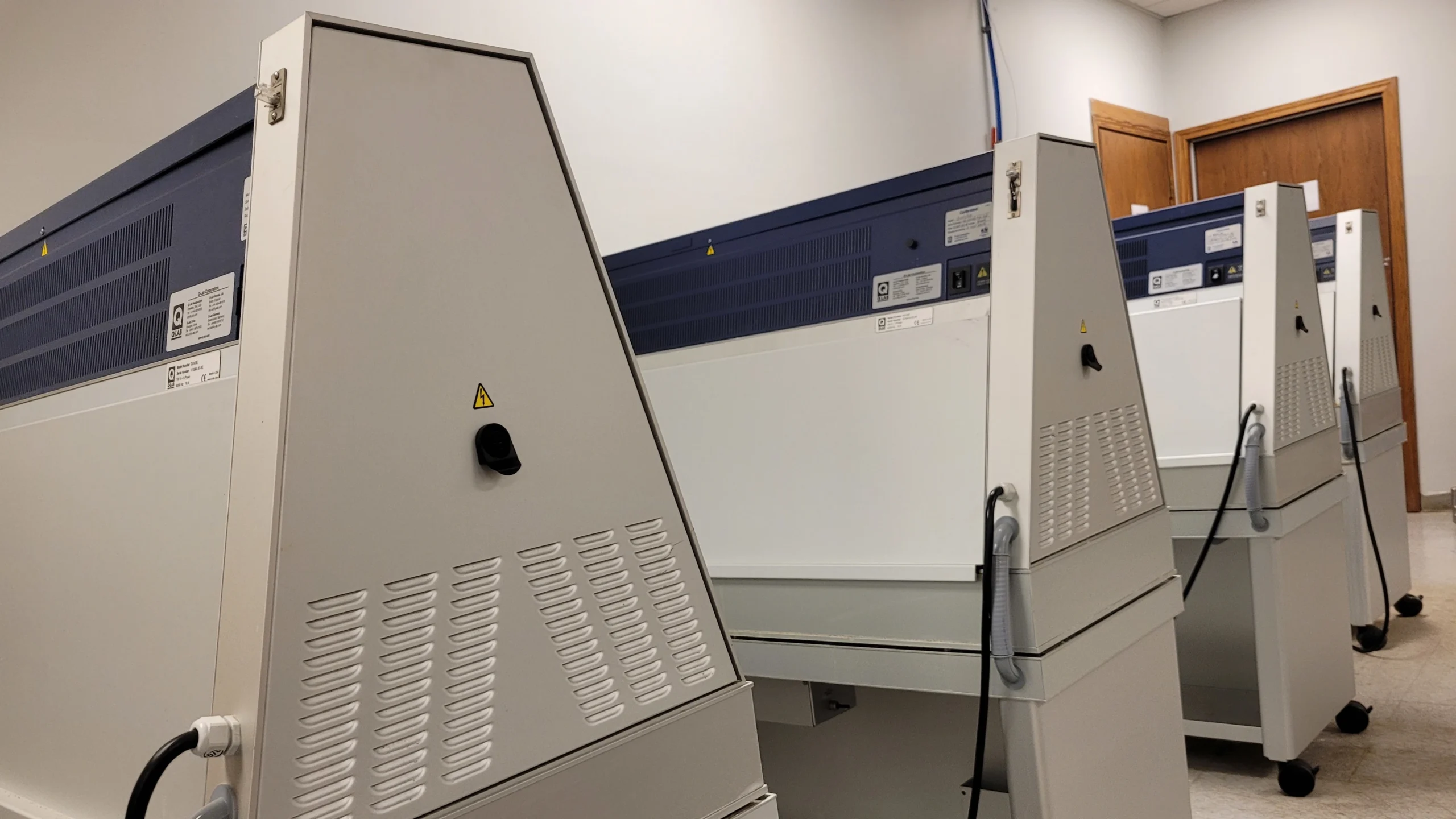
Fluorescent UV chambers perform the first 72-hour portion of each ISO 12944-9 Annex B cycle by alternating UV-A exposure and condensation.
One Annex B cycle lasts 168 hours. GPI Labs transfers the panels through the complete weekly sequence:
- 72 hours of UV-A and condensation: ISO 16474-3 Method A, Cycle 1 alternates four hours under UVA-340 lamps at 60 ± 3 °C with four hours of condensation at 50 ± 3 °C.
- 72 hours of neutral salt spray: Continuous ISO 9227 NSS exposure follows the UV/condensation portion.
- Rinse without drying: Panels are rinsed with deionized water between salt spray and low-temperature exposure.
- 24 hours at -20 ± 2 °C: The panel must reach the specified low temperature within 30 minutes.
The weekly sequence is repeated for 25 cycles, producing the required 4,200-hour qualification exposure.
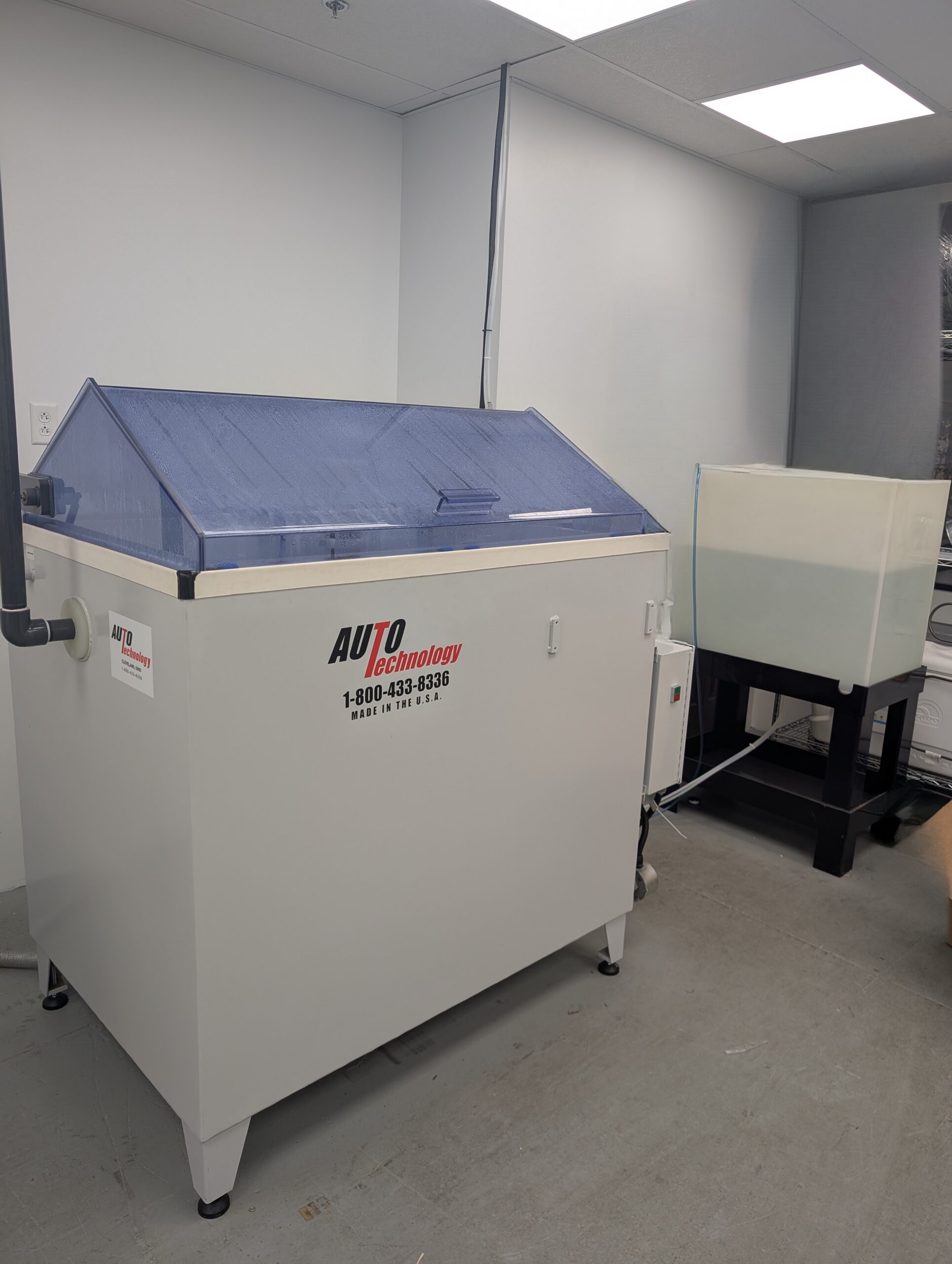
GPI Labs performs the 72-hour ISO 9227 neutral salt spray segment required during each week of ISO 12944-9 cyclic ageing.
Artificial seawater immersion
Im4 and splash-and-tidal systems receive 4,200 hours of immersion under ISO 2812-2 using the artificial seawater defined by ISO 15711. The panels are scribed before exposure so post-test corrosion spread can be evaluated as well as the general condition of the coating.
Cathodic disbondment
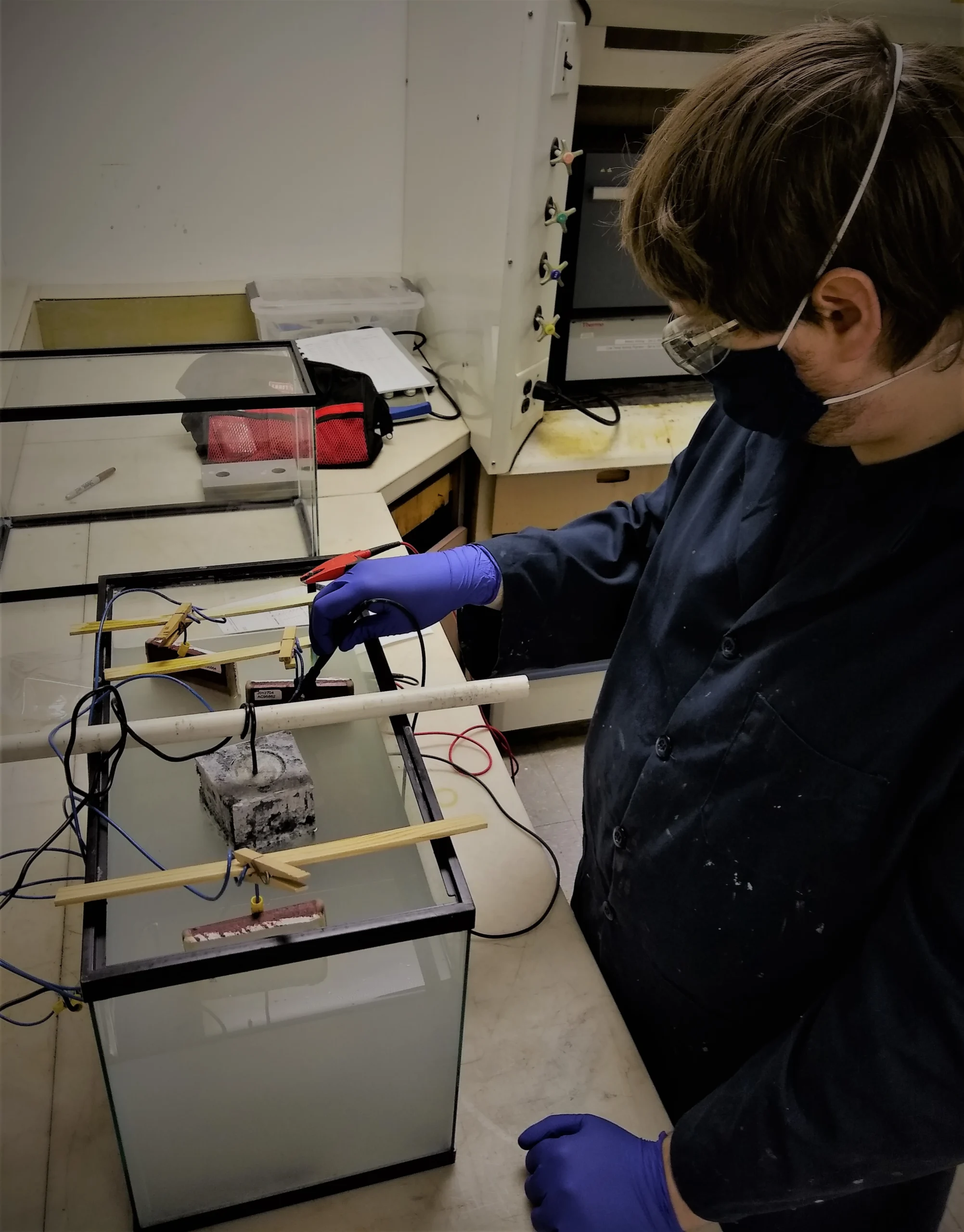
A technician verifies a cathodic disbondment setup used to expose coated specimens with controlled artificial holidays under ISO 15711 Method A.
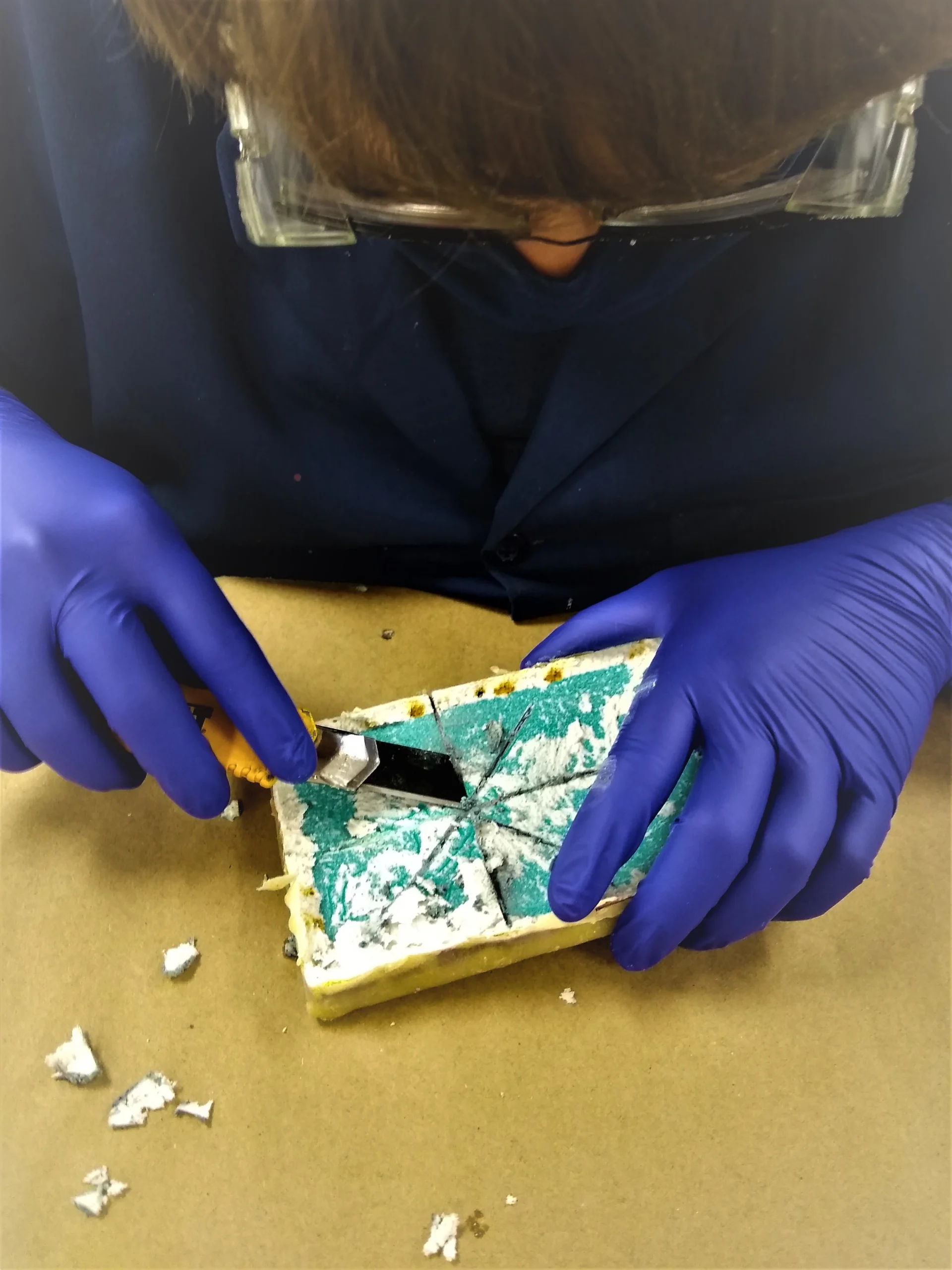
After exposure, radial cuts and controlled coating removal reveal the area separated around the holiday for equivalent-diameter evaluation.
Cathodic disbondment is performed for 4,200 hours using ISO 15711 Method A unless another method is agreed. After exposure, GPI Labs makes intersecting radial cuts, attempts to lift the coating with a sharp blade, determines the disbonded area, and calculates the corresponding equivalent diameter.
One chamber result is not an ISO 12944-9 qualification
The complete scope can involve analytical paint identification, application testing, multiple prepared panel sets, several 4,200-hour exposures, reconditioning, and post-test measurements. GPI Labs defines these components at quotation so the customer receives the qualification program required for the intended service zone.
Post-Test Evaluation and ISO 12944-9 Reporting
GPI Labs can perform the assessment methods applicable to each selected qualification exposure and documents the results for every panel. ISO 12944-9 requires at least two of the three panels assigned to a test to meet the applicable requirements. When acceptance evaluation is included in the agreed scope, GPI Labs can determine whether the panel set meets those requirements; otherwise, the customer can use the reported results for its final determination.
Visual condition and adhesion
- Blistering under ISO 4628-2.
- Rusting under ISO 4628-3.
- Cracking under ISO 4628-4.
- Flaking under ISO 4628-5.
- Chalking under ISO 4628-6 when agreed.
- Pull-off adhesion under ISO 4624 before qualification and after two weeks of post-exposure reconditioning, using equipment that applies a controlled, linear tensile force; push-off adhesion is not substituted.
Corrosion at the scribe
After removing non-adherent coating, GPI Labs measures the corroded width at nine defined points along the scribe. The original scribe width is removed from the calculation and the average corrosion result is reported to 0.1 mm. The applicable acceptance limit depends on the test exposure and, for cyclic ageing, whether the coating system is intended for a designated high-impact area.
Cathodic disbondment evaluation
For ISO 15711 Method A, the post-test evaluation distinguishes the original artificial holiday from coating that disbonded during exposure. GPI Labs records the exposed area and calculates the equivalent diameter for comparison with the ISO 12944-9 requirement.
Typical report content
- Laboratory and test dates.
- Complete coating-system identification and fingerprint data.
- Intended environment and qualification exposures performed.
- Panel substrate, preparation, coating application, DFT, and conditioning.
- Before-ageing and after-ageing results for every test panel.
- Photographs of the scribe before and after ageing and pull-off failure surfaces on panels and dollies.
- Metallic-layer thickness when applicable.
- Deviations from the specified or agreed procedures.
Information needed for a quote
- Target environment: CX, Im4, or splash-and-tidal service.
- Substrate and surface-preparation requirements.
- Primer type and complete coating-system build.
- Product technical data sheets and safety data sheets.
- Nominal DFT, recoat windows, cure requirements, and application instructions.
- Number of systems, colours, references, and comparative products.
- Required completion date and reporting or certification requirements.
ISO 12944-9 Testing FAQ
What is the difference between ISO 12944-6 and ISO 12944-9?
ISO 12944-6 covers C2-C5 atmospheric categories and Im1-Im3 immersion categories. ISO 12944-9 covers offshore CX, Im4, and combined splash-and-tidal service and adds requirements specific to offshore coating systems, paint identification, and 4,200-hour qualification exposures.
Which tests are required for splash-and-tidal-zone qualification?
Splash-and-tidal qualification requires separate three-panel sets for 4,200 hours of Annex B cyclic ageing, 4,200 hours of artificial seawater immersion, and 4,200 hours of cathodic disbondment testing.
Can GPI Labs prepare and coat the qualification panels?
Yes. GPI Labs can support substrate preparation, surface-profile and cleanliness documentation, coating application, per-coat DFT measurement, overcoating, curing, porosity inspection, masking, and mechanical scribing. Customer-prepared panels can also be evaluated after review of the preparation records.
Why does ISO 12944-9 require paint fingerprinting?
The fingerprint establishes reference characteristics for the actual base materials, curing agents, and other components used during qualification. Appropriate testing can later help determine whether a supplied paint corresponds to the material that was originally tested.
What happens during the 4,200-hour cyclic-ageing test?
The test consists of 25 weekly cycles. Each cycle includes 72 hours of UV-A and condensation, 72 hours of ISO 9227 neutral salt spray, a deionized-water rinse without drying, and 24 hours at -20 ± 2 °C.
Did ISO 12944-9 replace ISO 20340?
Yes. ISO 12944-9 cancelled and replaced ISO 20340 with technical revisions. Project specifications should still be reviewed to determine which standard the owner requires.
Does passing ISO 12944-9 guarantee a specific offshore service life?
No. Passing the laboratory program supports qualification of a high-durability coating system, but it does not guarantee an exact service period. Field performance also depends on design, preparation, application, curing, installation, operating conditions, and maintenance.
Request an ISO 12944-9 Testing Quote
Send GPI Labs the intended offshore environment, coating-system build, product information, substrate, and project specification. Our laboratory can quote customer-prepared specimens or a coordinated qualification program covering paint fingerprinting, panel preparation, 4,200-hour exposures, evaluation, photography, and reporting.